Helmets











Results for Helmets
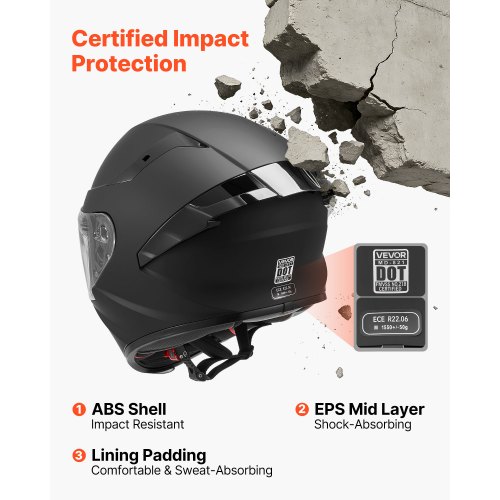
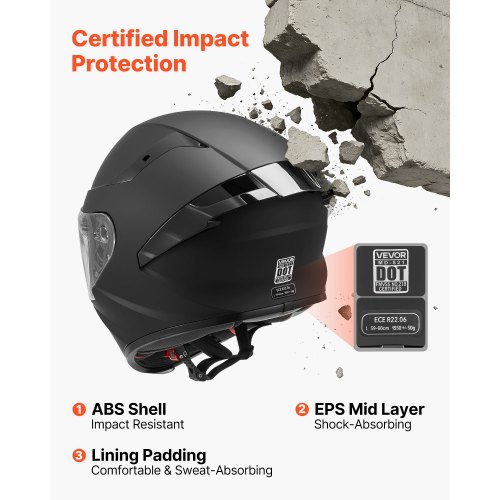
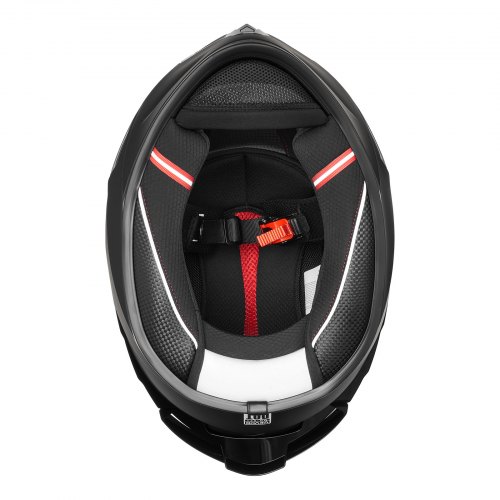
A helmet is protective headgear that guards the skull and brain against impact. It works in two layers. A hard outer shell spreads the force of a blow across a wider area and resists penetration from sharp objects or rough ground. Beneath it, an energy-absorbing foam liner crushes in a controlled way, slowing the head down and cutting the force that reaches the brain. Comfort padding and a chin strap keep the helmet snug and level, so it stays in place through a fall or collision and protects the head at the moment it is needed most.
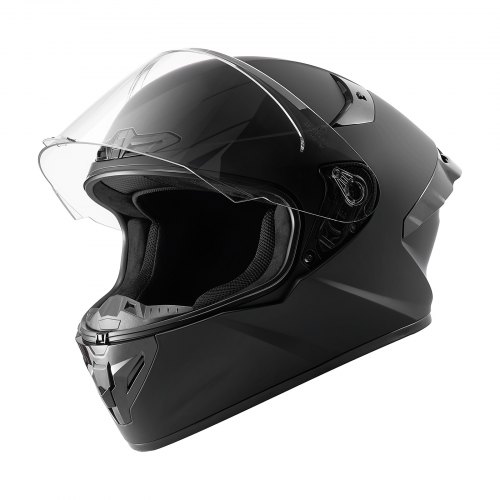
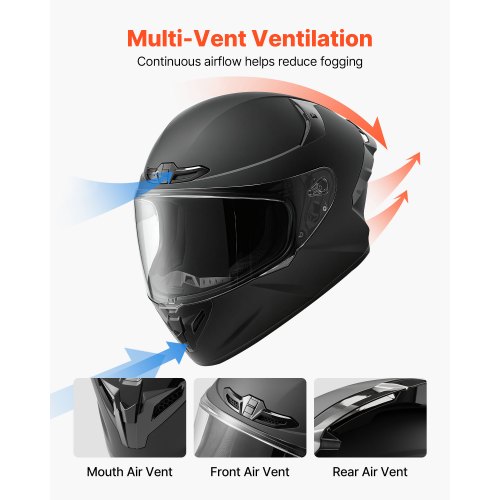
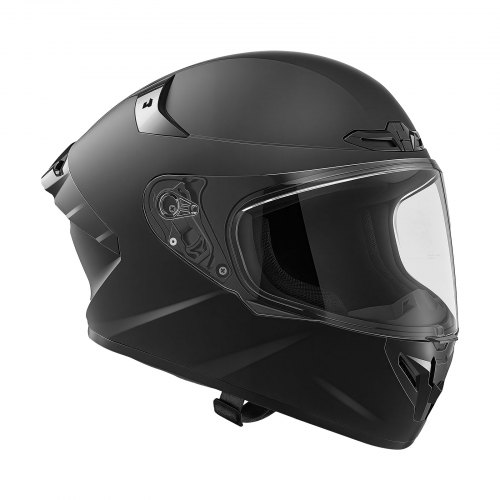
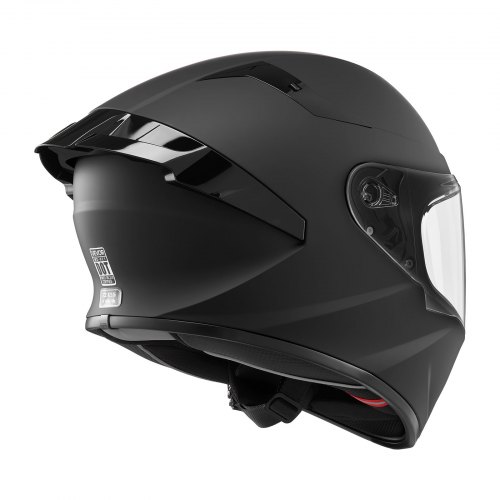
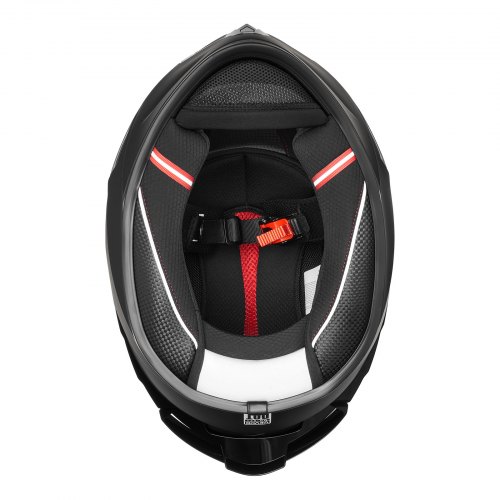
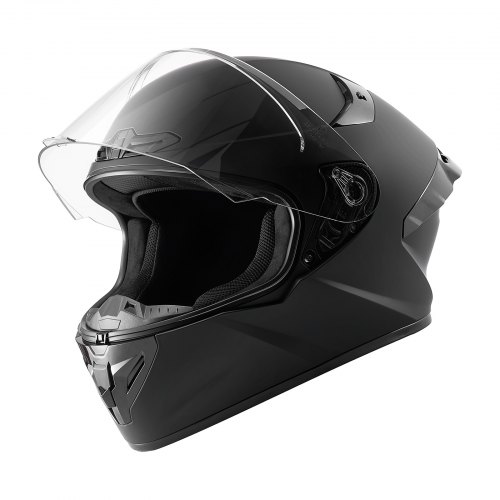
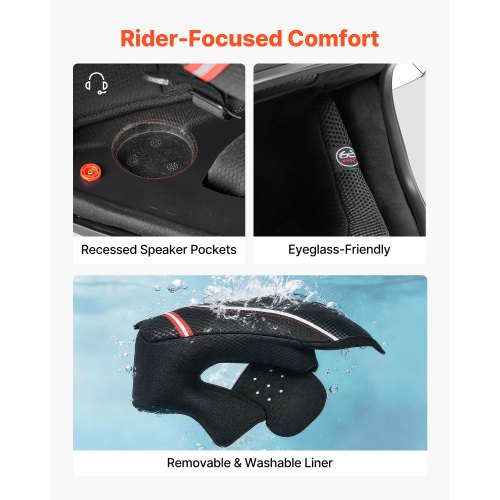
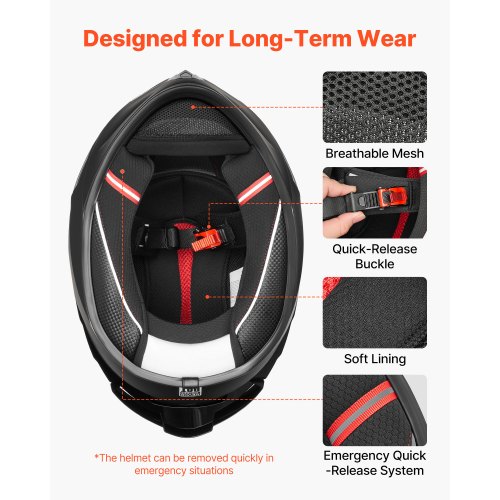
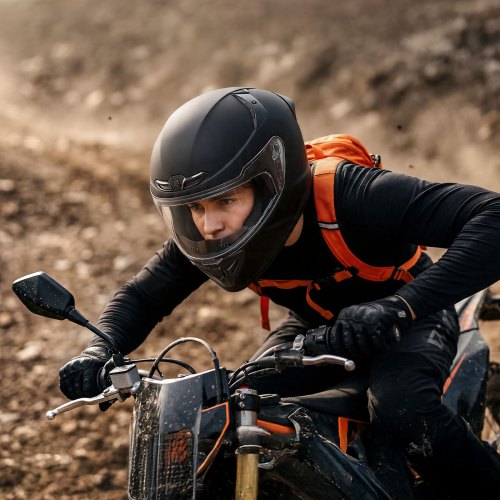
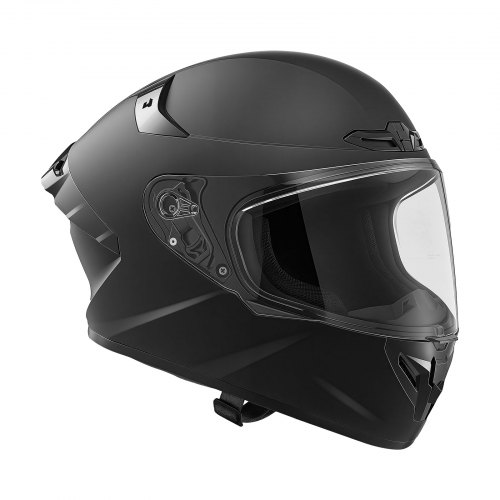
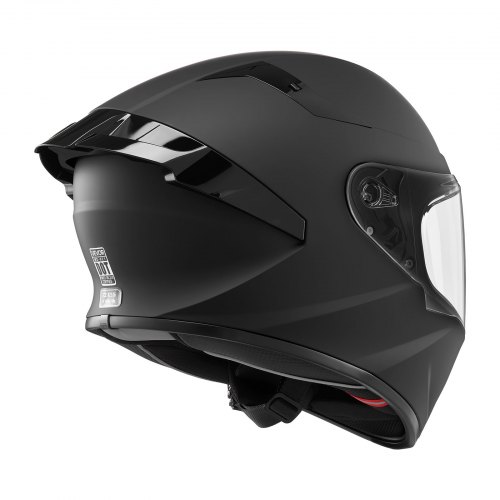
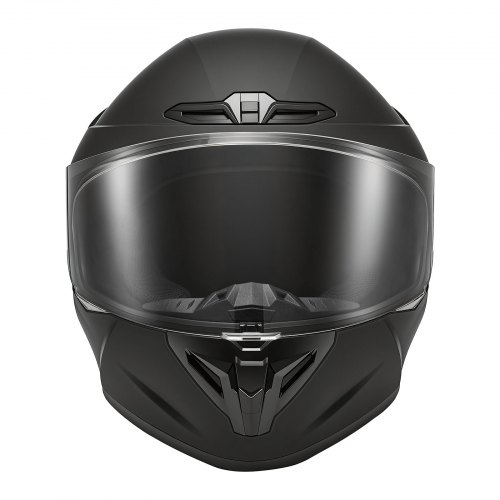
The VEVOR range centres on motorcycle helmets in three main styles. Full-face designs wrap the head and chin in one ABS shell, and dual-visor versions add a drop-down sun visor. Modular flip-up helmets have a chin bar that lifts, so you can talk, drink or put on glasses without taking the helmet off. 3/4 open-face helmets leave the face uncovered for more airflow and a wider view. Every model is DOT approved, several add ECE approval, and sizes run from M to XXL with removable, washable liners. Typical uses are daily street commuting, highway touring, short scooter trips around town and casual dirt bike riding.
Five things decide what you need:
- Riding style: highway speeds call for a full-face or modular shell, while slow city trips suit a 3/4 open face.
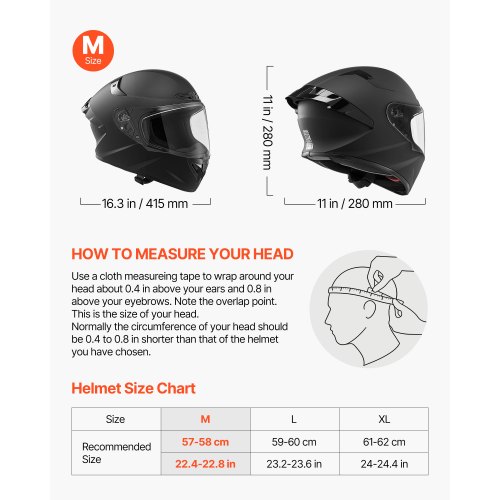
- Head size: measure around the widest part of your head and match the centimeter range, never your hat or clothing size.
- Certification: look for DOT approval for US road use, and ECE as well if you want a second recognized standard.
- Visor setup: a drop-down sun visor or a spare tinted visor handles bright sun without swapping eyewear.
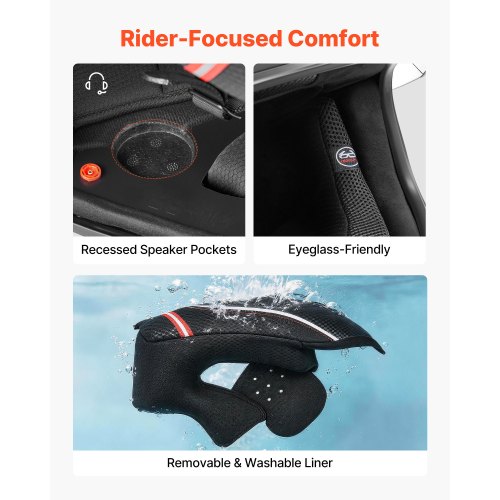
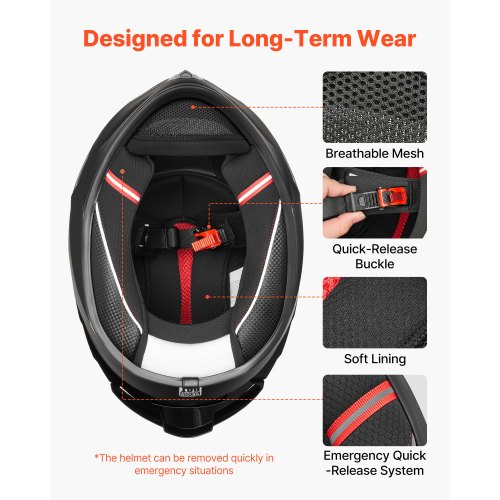
- Comfort features: weight, vents, speaker pockets and a washable liner decide how the helmet feels on long rides.
Compare every style, size and visor option in this collection to find your fit, then complete your kit with more sports protective gear or browse the wider sports and outdoors range.
Helmet Types at a Glance
Each helmet style trades coverage against convenience and airflow, so this summary shows where each one fits.
| Type | Chin Protection | Getting It On and Off | Airflow and Wind Exposure | Trade-offs |
|---|---|---|---|---|
| Full-face | Fixed chin bar, full coverage | Pulled over the head | Most sealed; least wind and noise | Most protection; warmest at low speeds |
| Modular (flip-up) | Chin bar locks down, lifts up | Chin bar flips for easy entry | Sealed closed, open when flipped | Glasses and chats easy; hinge adds weight |
| 3/4 open face | No chin bar; face exposed | Easiest to put on and remove | Most airflow, widest view | Coolest and lightest; no jaw protection |
VEVOR Helmets: Certified Safety Gear for Cycling, Motorsports, and Contact Sports
Are you looking for the best helmet for your sport, journey, or safety needs? Protecting your head should never be a sacrifice. Choosing a properly rated, well-fitted helmet is the most important safety choice you'll make, whether you're riding a mountain bike, playing hockey, or playing football. With impact-tested materials, long-lasting construction, and adjustable fit systems, VEVOR helmets protect every rider, player, and worker.
Types of Helmet Type & Sport Application
To make a smart buy, you should first learn about the different types of helmets. From road riding to contact sports, each helmet type is designed to handle specific impact, airflow, and fit requirements. They have many models in their catalog, so you can find the right one for you without sacrificing comfort or safety.
Bike Helmets for Road, Urban, and Trail Riding
A bike helmet is one of the most popular ways to protect your head. Commuters, recreational cyclists, and competitive riders all wear them. Most road bike helmets are light, aerodynamic, and feature large ventilation channels that let air flow while you're working hard. City models and commuter models are usually rounder, offer better coverage at the back of the head, and often come with LED lights or MIPS (Multidirectional Impact Protection System) technology.
You should look for an EPS (expanded polystyrene) foam liner with a high density, a secure retention dial system, and a polycarbonate outer shell if you're a daily rider. The size of the helmet is very important; here, even if it has the right safety grade, a bike helmet that doesn't fit properly won't protect adequately. Customizable fit systems in VEVOR bike helmets make it easy to achieve a snug, comfortable fit without pressure points or hotspots. These systems can handle a wide range of head sizes.
Mountain Bike Helmets for Off-Road Performance
You need a mountain bike helmet for trail and enduro riding because hits can come from more than one direction and at higher speeds than on paved roads, so you need more protection and coverage. Full-face mountain bike helmets protect the chin bar, which is important for fast downhill runs. Half-shell trail helmets are good for cross-country and all-mountain riding because they cover enough while still allowing airflow, keeping you safe and comfortable on a variety of terrain and riding intensities.
The helmet's material is very important for off-road safety. High-quality mountain bike helmets feature an ABS or polycarbonate shell on the outside and multi-density EPS foam on the inside. The EPS foam handles high- and low-energy hits differently. Some types use carbon fiber reinforcement to reduce weight without compromising the structure's strength. If you want a mountain bike helmet that will last on the road, VEVOR has options with longer rear coverage, stronger visors, and designs that work with goggles.
Motorcycle Helmets for Road Safety and Long-Haul Comfort
A motorcycle helmet is one of the safety items with the strictest rules in any sport or mode of transportation. Helmets must meet certain basic standards for impact and penetration resistance before they can be sold legally in many markets. These standards are set by organizations such as DOT, ECE 22.06, and SNELL. Full-face helmets protect the head and chin the most. Still, open-face and modular helmets offer greater coverage, improving comfort, visibility, and ease of use in both urban and rural environments so that they can accommodate a range of riding styles and comfort preferences.
For motorcycle use, helmets usually have more than one shell size (so they fit best on different head types), an EPS liner with multiple layers, and a DOT-approved face shield with UV protection. More and more, mid-range to high-end types come with built-in noise cancellation, ventilation systems, and Bluetooth connectivity. If motorcycle helmet safety is important to you on the highway or in city traffic, VEVOR offers DOT-rated helmets with aerodynamic shells and moisture-wicking liners. Helmet size is especially important for motorcycle helmets; never use your clothing size as a guide; instead, measure your head circumference and consult the manufacturer's size chart.
Football and Hockey Helmets for Contact Sport Protection
Hockey and football helmets are both designed to withstand repeated, hard hits that are a part of contact sports. Modern football helmets feature multi-layer foam padding systems, polycarbonate shells, and facemask integration with a secure chin strap to absorb and transfer energy from direct collisions. There are different certifications for youth and adult football helmets. These certifications include strict rules on rotational force management, impact attenuation, and fit requirements to ensure that all players are safe, regardless of age, level of play, or how hard they hit the ball on the field.
When pucks, sticks, and players hit the boards, they put different stresses on hockey helmets. The shell design must withstand both concentrated and distributed forces. A stiff ABS shell and VN (vinyl nitrile) foam padding make up the bulk of hockey helmets; the VN foam molds to the wearer's head over time. Attachments such as a cage or face shield are necessary for full-face protection. How well these helmets hold up over several seasons depends on the quality of the materials used to make them. To increase product longevity and maintain helmet safety through seasons of hard play, VEVOR's football and hockey helmet options are constructed with certified materials, adjustable retention systems, and replaceable padding components.
Matching the Helmet to the Activity
Helmets look alike, but each is built for one kind of impact, so here is what to wear for each activity and what never to substitute.
| Activity | Helmet to Choose | Do Not Substitute With | Why It Matters |
|---|---|---|---|
| Road and city cycling | Vented bike helmet | Motorcycle helmet | Too heavy and hot for steady pedalling effort |
| Downhill mountain biking | Full-face mountain bike helmet | Standard road bike helmet | No chin bar for fast, multi-direction off-road crashes |
| Highway motorcycling | Full-face or modular motorcycle helmet | Bicycle helmet | Not built or rated for road-speed motor vehicle impacts |
| Scooter and city commuting | 3/4 open-face motorcycle helmet | Bicycle helmet | Motorized traffic still needs a DOT-rated shell |
| Ice hockey | Hockey helmet with cage or shield | Bike or football helmet | Built for puck, stick and board strikes from every angle |
| Football | Football helmet with facemask | Hockey helmet | Not designed for repeated full-speed tackling collisions |
How to Choose the Right Helmet for Safety Rating & Fit Features
It's not enough to just choose a style when you buy a helmet. You also need to make sure the safety level, fit system, and material are appropriate for the activity you'll be doing. A good helmet works better, lasts longer, and makes you feel confident every time you wear it. Check out these things before you buy.
Understanding Helmet Size, Fit Systems, and Safety Ratings
When it comes to safety, helmet size is the most important thing. If your helmet is too loose, it will shift on impact and fail to absorb the force properly. If it's too tight, pressure points will form, leaving you tired and distracted. To find the right size, put a soft tape measure around the widest part of your head, just above your eyebrows. The majority of helmets are sized by head circumference in centimeters, so compare that number to the manufacturer's size chart.
Fit methods differ significantly between helmet types, in addition to raw sizes. A dial-adjust locking ring is usually found on the back of cycling helmets. Motorcycle helmets depend on having the right shell size and perfectly fitting cheek pads. With head pads and occipital locks, football and hockey helmets use combination systems. The CPSC rating for bicycle helmets, the DOT/ECE rating for motorcycle helmets, the NOCSAE rating for football helmets, and the CSA/CE rating for hockey helmets all show that they have been tested separately to meet minimum impact standards. Don't buy a helmet without a license; you can get in trouble. All types of VEVOR helmets have the right safety standards, so you know they will work before you even use them.
Helmet Material Guide: What's Inside Your Helmet and Why It Matters
The material of the helmet affects how well it absorbs impact, how long the shell lasts, and how comfortable the inside is to wear for long periods. Common materials for the shell's outside include polycarbonate, ABS plastic, fiberglass composite, and carbon fiber. Each has a different mix of weight, stiffness, and impact resistance. Shells made of carbon fiber and fiberglass are pricier but lighter and less likely to break when hit. Polycarbonate and ABS are less expensive choices that can still provide good protection when rated correctly.
Most of the energy control occurs within the liner. EPS (expanded polystyrene) is the industry standard. When it hits something, it contracts to absorb the force and keep it from reaching the head. Some helmets use different materials to withstand high-speed impacts better. Adding antimicrobial fabric to the inside of shoes for comfort significantly extends their lifespan. No matter what kind of helmet it is, a bike helmet, a motorcycle helmet, or a hockey helmet, always look at both the shell material and the liner specifications at the same time. You can see the materials of VEVOR helmets so that you can be sure of the level of safety you'll get before you buy.
Best-Seller Comparison
These five best sellers show how weight, visor kit and certification change from one VEVOR helmet to the next.
| Product | Style | Approval | Net Weight | Visor Kit | Speaker Pockets | Head Size | Best For |
|---|---|---|---|---|---|---|---|
| Full Face Motorcycle Helmet, Clear Visor | Full face | DOT | 3.3 lbs / 1.5 kg | Clear visor plus spare tinted visor | Yes | M: 57-58 cm | Lighter full-face pick; swap-visor street commuting |
| Modular Motorcycle Helmet, Matte Black L | Modular | DOT | 3.2 lbs / 1.45 kg | Large clear visor | / | L: 59-60 cm | Lightest flip-up here; frequent stops and chats |
| 3/4 Open Face Helmet, Matte Black | 3/4 open face | DOT | 2.6 lbs / 1.2 kg | Wide-angle clear visor | / | L: 59-60 cm | Lightest helmet in the table; hot city rides |
| Flip Up Modular Helmet, Dual Visor | Modular flip-up | DOT and ECE | 4.2 lbs / 1.9 kg | Drop-down sun visor, clear outer, spare clear | Yes | M: 57-58 cm | Only dual-rated flip-up; touring with glasses |
| Dual Visor Full Face Helmet, XL | Full face | DOT and ECE | 3.7 lbs / 1.7 kg | Drop-down sun visor, clear outer, spare gold tinted | Yes | XL: 61-62 cm | Only dual-rated full-face; highway riding in sun |
Shop VEVOR Helmets for Certified Protection Across Every Sport
Every rider, player, and worker who needs reliable head protection can find it in VEVOR's helmet line. Every model in the line, from football and hockey helmets to mountain bike and motorcycle helmets, is made to certified safety standards with premium materials and adjustable fit systems. You don't have to choose between protection and price when prices are competitive. Check out all of VEVOR's helmets to find the right one for your sport.
FAQs
How do I find the right helmet size?
Measure the widest part of your head, about 1 inch above your eyebrows, using a soft tape measure. Match that circumference in centimeters to the manufacturer's sizing chart. Always try the helmet on if possible; it should feel snug without creating pressure points.
What helmet material offers the best protection?
EPS foam liners provide the core impact absorption in most helmets. For outer shells, carbon fiber and fiberglass are among the lightest and most rigid options, while polycarbonate and ABS offer reliable protection at a lower cost. The best choice depends on your activity level and budget.
Are VEVOR helmets certified for safety?
Yes. VEVOR helmets carry relevant certifications depending on type, including CPSC for cycling, DOT for motorcycle use, and sport-specific standards for football and hockey helmets. Always check the product listing for certification details before purchasing.
Can I use a bike helmet for mountain biking?
A standard road bike helmet can be used for light trail riding. Still, a dedicated mountain bike helmet offers extended rear coverage, a reinforced visor, and a shell designed for multi-directional off-road impacts. For technical trails, a full-face mountain bike helmet is strongly recommended.
When should I replace my helmet?
Replace any helmet immediately after a significant impact, even if there's no visible damage; EPS foam compresses permanently and won't protect you again. Even without impacts, most manufacturers recommend replacement every 3–5 years due to material degradation from UV exposure, sweat, and wear.
Can you recommend the best bike helmets for mountain biking?
The best choice is a dedicated mountain bike helmet matched to your trails. A half-shell trail helmet suits cross-country and all-mountain riding, while a full-face helmet with a chin bar is the safer pick for downhill and enduro. Look for extended rear coverage, a visor and multi-density EPS foam.
What are the most important features to consider when choosing a bike helmet?
Fit comes first, because a helmet that shifts on your head cannot absorb an impact properly. Next, confirm the right safety certification for your riding, a secure retention system, enough vents for your effort level, and an EPS liner under a tough polycarbonate or ABS shell.
What motorcycle helmet should I buy?
Buy the style that matches how and where you ride. A full-face helmet gives the most protection at highway speeds, a modular helmet suits touring and glasses wearers, and a 3/4 open face works for slower city trips. A DOT and ECE approved full-face helmet meets both standards.
How much is motorcycle helmet
There is no single figure, because the cost of a motorcycle helmet changes with its style, certification and features. Simpler open-face designs usually sit at the lower end, while dual-certified full-face and modular helmets with drop-down sun visors cost more. Check each product page for current pricing.
Are all bike helmets the same
No. Road bike helmets prioritise light weight and ventilation, commuter helmets add rear coverage, and mountain bike helmets add visors and extended protection. A dirt bike helmet is different again: it is a DOT-approved motorcycle helmet built for motorized riding, not pedal cycling.