Motorcycle Helmet












Results for Motorcycle Helmet
VEVOR offers a wide selection of motorcycle helmets for touring riders, track enthusiasts, and commuters. Whether you need an open-face motorcycle helmet for urban riding comfort or a full-face helmet for optimal safety, VEVOR has options for every style and situation. Discover feature-rich, certified, and well-fitting helmets at affordable prices, backed by trustworthy post-purchase assistance.
VEVOR Motorcycle Helmets for Certified Protection, Comfort & Every Riding Style
Looking for a helmet that strikes a balance between all-day comfort and true safety? The best motorcycle helmet is the most important gear you can have; it's not just for looks. Fit, visibility, and rider comfort are key to the design of VEVOR's full-face, open-face, and modular motorcycle helmets, all of which are constructed to meet verified safety requirements.
Safety Ratings & Helmet Types: What Every Rider Needs to Know Before Buying
Purchasing a motorbike helmet without understanding safety certifications and helmet types is like buying a seatbelt without checking whether it has undergone crash testing. Prioritizing these two aspects over other features is crucial because they determine the minimum level of protection your head receives in an impact.
Safety Certifications Explained: DOT, ECE, and SNELL
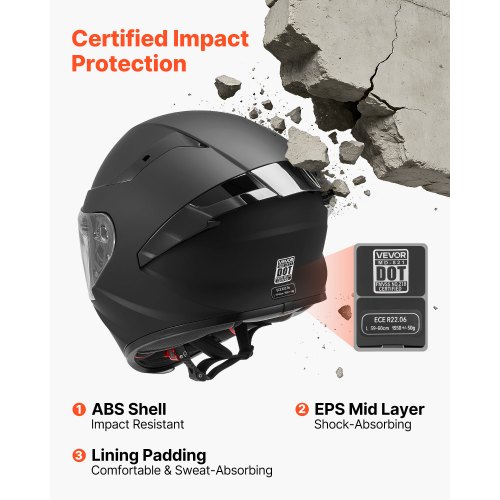
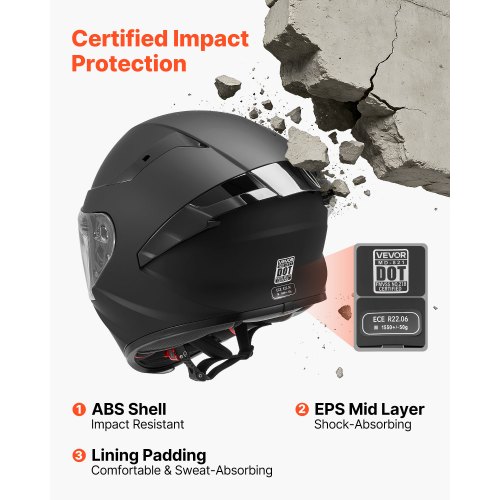
When it comes to motorcycle helmets, safety certifications are more significant than brand, color, or cost. The three most often used standards worldwide are DOT, ECE 22.06, and SNELL. For motorcycle helmets sold in the US, DOT is the bare minimum legal requirement. Instead of requiring independent lab testing, it relies in part on manufacturer compliance. It establishes a strong baseline through manufacturer self-testing against the FMVSS 218 impact criteria and NHTSA spot-check verification.
Widely considered to be more stringent than DOT, ECE 22.06 is the current European standard. A helmet must pass independent laboratory testing encompassing impact absorption, rotational force management, retention system strength, and field of vision before it can be given the ECE mark. Motorcycle full-face helmets with ECE 22.06 certification provide more robust independent pre-market validation. In impact severity testing, SNELL certification outperforms both DOT and ECE, and track riders who value the highest level of protection choose it. Each product listing for VEVOR's line clearly shows the certification criteria, so you can easily match the protection level to your riding conditions.
Full Face Motorcycle Helmets: Maximum Coverage for Serious Riders
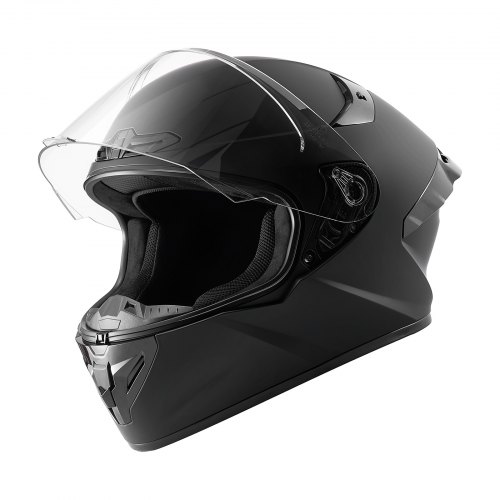
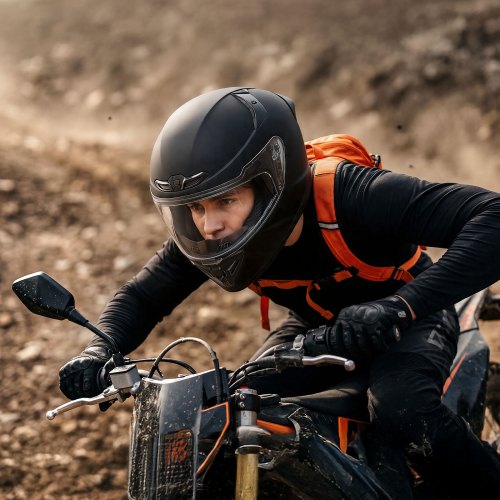
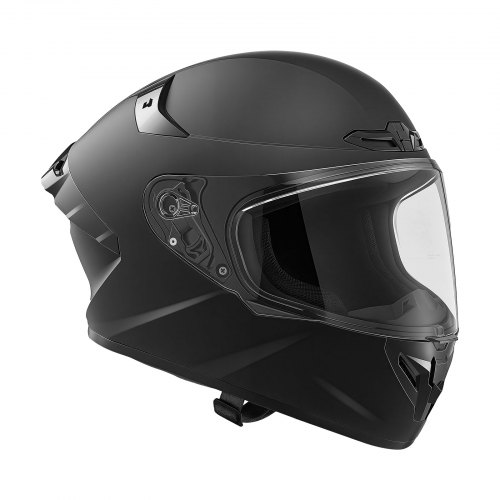
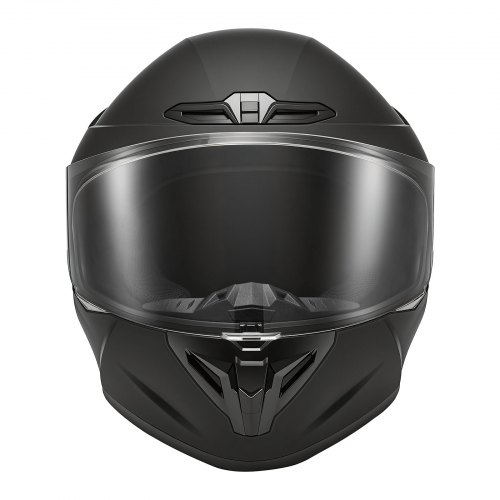
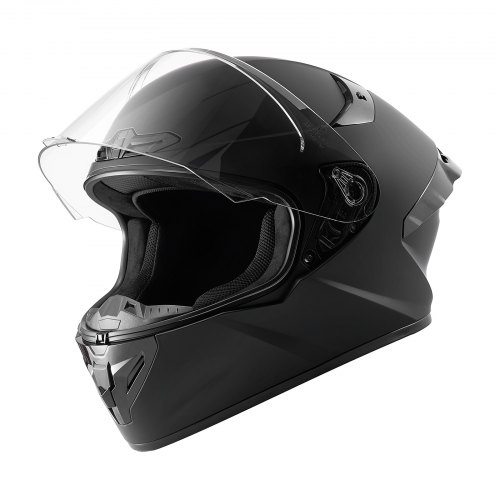
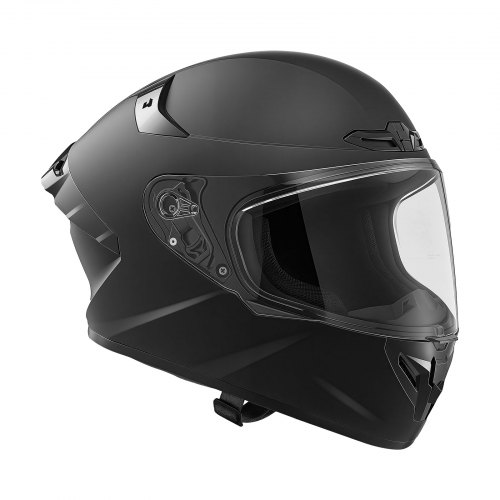
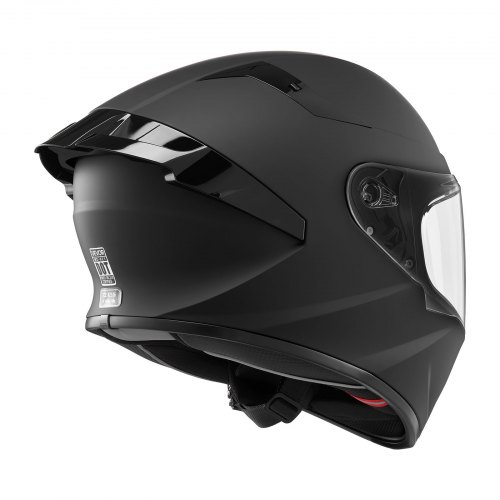
Full-face motorcycle helmets provide the most comprehensive head and facial protection. In real-world accident statistics, the lower face is most often affected by a rigid chin bar. A drop-down visor protects against wind, rain, debris, and UV rays.
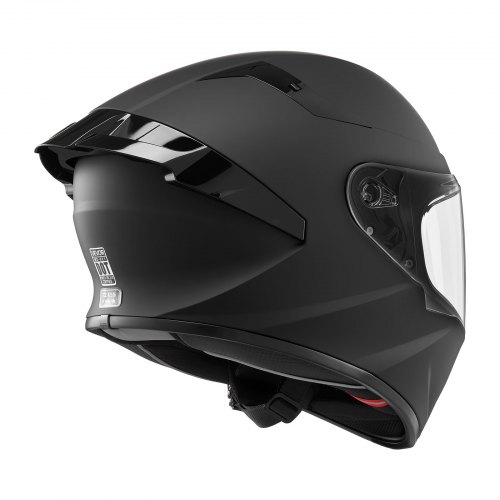
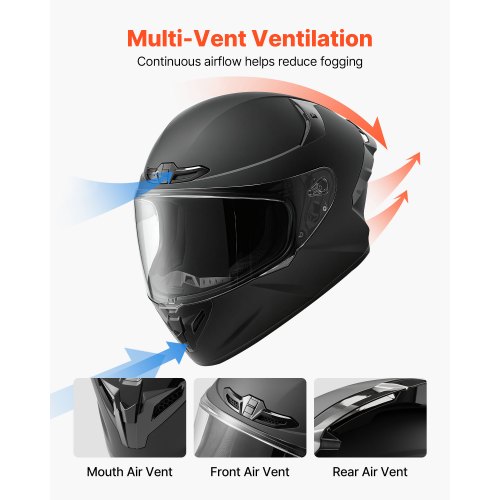
A full-face helmet significantly reduces wind noise fatigue for highway and touring riders compared to open designs. To avoid the heat buildup that older sealed designs experienced, modern full-face motorcycle helmets incorporate ventilation channels that draw air over the head and exhaust heat at the back.
The outer shells of VEVOR's full-face motorcycle helmets are made of ABS or a polycarbonate composite, which balances controlled deformation with impact energy absorption. Instead of sending kinetic energy to the skull, interior EPS liners gradually crush upon contact, transforming it into deformation. You should start your search for a licensed full-face helmet if you ride year-round, commute on fast roads, or simply want the best possible protection.
Open Face and Modular Motorcycle Helmets: Balancing Protection with Practicality
The top, sides, and back of the head are covered by open face motorcycle helmets, but the face is uncovered. They are ideal for scooter users, cafe racers, and city commuters who like easy communication and natural ventilation. Without a chin bar, open face designs provide no lower facial protection in a frontal impact; the trade-off is obvious.
Modular motorcycle helmets provide a useful compromise. To switch between full-face and open-face configurations without removing the helmet, the chin bar and visor pivot upward as a single unit. Modular helmets are therefore perfect for commuters who need to speak at intersections, touring riders who stop frequently, and people wearing glasses who find it challenging to put on a fixed full-face helmet.
You do not have to sacrifice your safety rating for the convenience of the flip mechanism, since VEVOR's modular motorcycle helmets meet full-face certification standards when the chin bar is secured. The most reliable way to choose one of these three helmet types is to determine which riding style best suits your riding regimen.
Helmet Construction Materials: Shell, Liner, and Long-Term Protection
Before impact energy reaches the inner liner, it is first controlled by the outer shell. In the consumer market, ABS thermoplastic and fiberglass or composite construction are the two most common materials. ABS shells are regularly manufactured to exacting specs, are inexpensive, and are injection-molded. Before delivering the impact energy to the EPS liner, the most popular component in mid-range approved motorcycle helmets, they absorb and distribute it across the shell surface. They are engineered to meet applicable DOT and ECE testing requirements when properly designed and manufactured.
In addition to providing more sophisticated impact energy management through controlled shell flex, fiberglass and composite shells are lighter than ABS while providing comparable protection. When it comes to comfort during extended rides, they are the preferred material in luxury full-face motorcycle helmets. The inside EPS liner is just as important. Using multi-density EPS zones, such as softer foam at the temples for oblique hits and stronger foam at the crown for high-energy impacts, quality liners protect in real-world impact situations outside of conventional lab drop tests. The shell and liner combinations used in VEVOR motorcycle helmets are acceptable for the certification and intended use of each helmet.
Fit & Features: What Separates a Comfortable Helmet From One That Gets Left at Home
An ill-fitting or feature-deficient motorcycle helmet will wind up on the shelf instead of protecting your head, and no one is protected by an unworn helmet. A properly certified helmet is more likely to become one you will wear on every ride thanks to its fit and useful features.
Getting Helmet Fit Right: Sizing, Shape, and Retention Systems
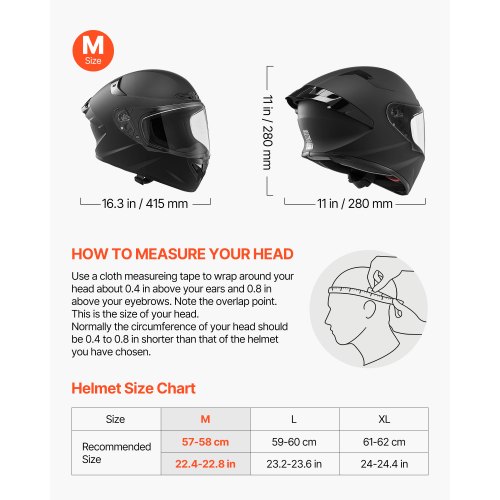
After a motorcycle helmet's safety certification, fit is its most crucial physical feature. Since testing is done with the helmet securely attached to a headform, a helmet that moves during an impact offers much less protection than certification testing presumes. In general, there are three types of head shapes: long oval, intermediate oval, and round oval. The majority of helmets have an intermediate oval baseline in their design. Before buying a helmet, riders with distinct round or long oval shapes should test it in person. XS through XXL are the sizes available from VEVOR and correspond to head circumference in cm.
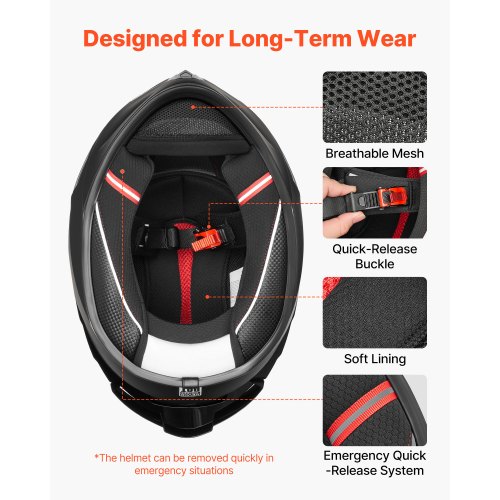
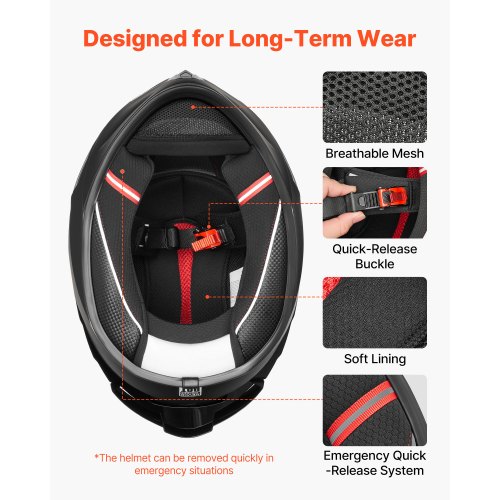
When the chin strap is secured, a well fitted motorcycle helmet sits level on the head, has strong crown contact, has uniform cheek pad pressure on both sides, and does not move side to side. Under your chin, the retention strap should accommodate no more than two fingers. Before accepting the fit, try a different shell shape or size down if the helmet rocks forward or backward while the strap is fastened.
Visors, Ventilation & Inner Features That Make Every Ride Better
Optically clear, scratch-resistant polycarbonate visors provide distortion-free vision throughout the entire field of view. Pinlock-compatible visor systems are a big improvement for commuters who ride in cold or rainy weather since they use a secondary lens insert to prevent fogging from breath condensation. The full face motorcycle helmets from VEVOR come with visor systems that work with anti-fog inserts.
It is no longer necessary to carry separate tinted visors for different light conditions, thanks to drop-down, tinted sun visors controlled by a lever on the outside of the helmet. When traveling between shaded roads and open highways, touring bikers appreciate this function.
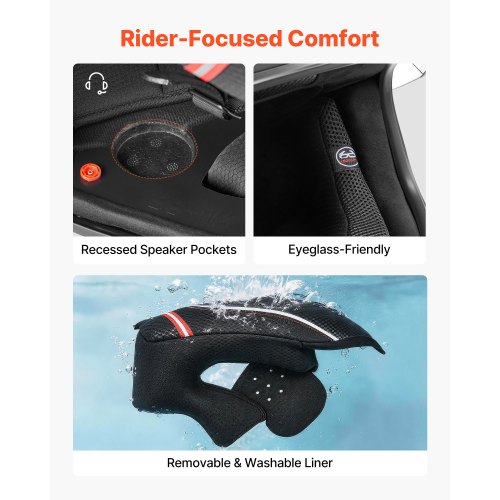
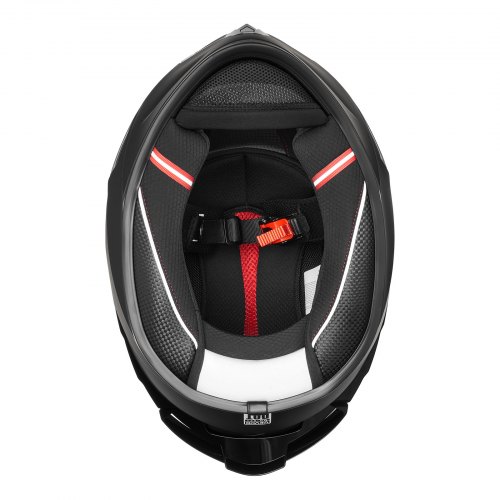
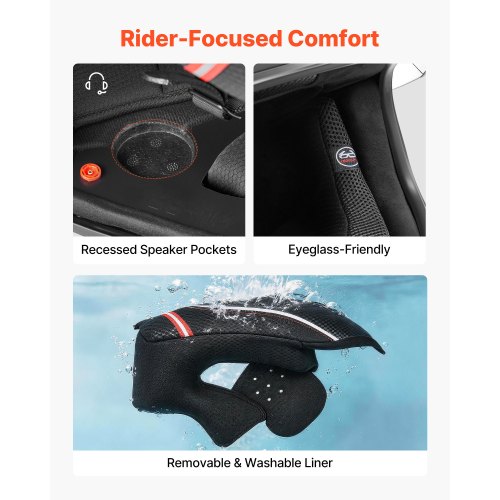
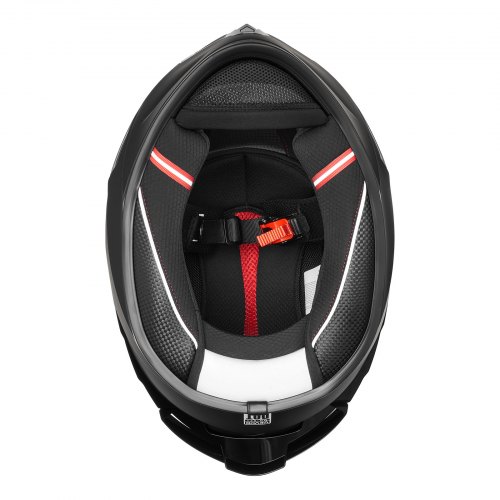
A crucial comfort feature of full-face motorcycle helmets is ventilation: intake vents at the brow and chin direct airflow through internal ducting, then exhaust heat through rear spoiler vents. For any helmet worn frequently, removable, washable internal linings are a hygienic necessity. The cheek pad and crown liner systems on VEVOR motorcycle helmets are fully detachable, making them easy to clean and extending their lifespan.
Why Choose VEVOR Motorcycle Helmets for Your Next Ride?
VEVOR motorcycle helmets offer proven protection, high-quality construction, and useful features at affordable pricing so that every rider may afford proper safety. Every rider type is covered by VEVOR, which offers everything from full face motorcycle helmets made for highway miles to modular designs for flexible commuting and open face types for riding in cities. Every helmet comes with dependable post-purchase assistance. Browse the entire collection and start preparing right now.
FAQs
What is the difference between DOT and ECE certified motorcycle helmets?
Manufacturer self-testing with spot-check verification is the foundation for DOT certification. Independent pre-market laboratory testing covering impact absorption, rotational forces, and retention strength is required by ECE 22.06; this is typically considered a more stringent verification procedure for motorcycle helmets before they are released to the market.
How do I know if a motorcycle helmet fits correctly?
When the chin strap is securely tightened, a properly fitted helmet rests level on your head with even cheek pad pressure, firm crown contact, and no side-to-side movement. Under your chin, the retention strap should accommodate no more than two fingers.
When should I replace my motorcycle helmet?
EPS liners permanently shrink and lose their protective capacity; replace your helmet right away after any incident. Because of shell deterioration from sweat, UV rays, and normal wear, most manufacturers also advise replacing the entire helmet approximately every five years, even when damage is not readily apparent.
Are modular motorcycle helmets as safe as full face helmets for motorcycles?
The complete face certification requirements are met by high-quality modular motorcycle helmets when the chin bar is fastened closed. Before making a purchase, be sure a modular helmet has full-face certification rather than open-face certification to ensure you are obtaining the level of protection you want.
What size motorcycle helmet do I need?
Take a centimeter measurement of the broadest part of your head, which is about an inch above your eyebrows. Compare this to the manufacturer's size chart. Size down if you are in between sizes for a more snug fit that will become a little more accommodating as the internal liner develops.