VEVOR Striping Machines Built for Accurate, Adjustable Line Marking
Are you getting ready to paint athletic fields, refresh parking lot lanes, or mark safety lines in factories? With adjustable line widths, reliable paint flow, and tough construction, VEVOR striping machines make it easy to get straight, even markings. These striping machines make field preparation easier and improve overall marking efficiency by handling both dry-chalk and paint-based striping jobs.
Line Width & Paint Capacity for Clear, Consistent Marking Applications
Control over the line width and the amount of material the machine can hold affects how well the machine performs and how visible the line is.
Choosing the Right Line Width for Fields, Parking Lots, and Facility Markings
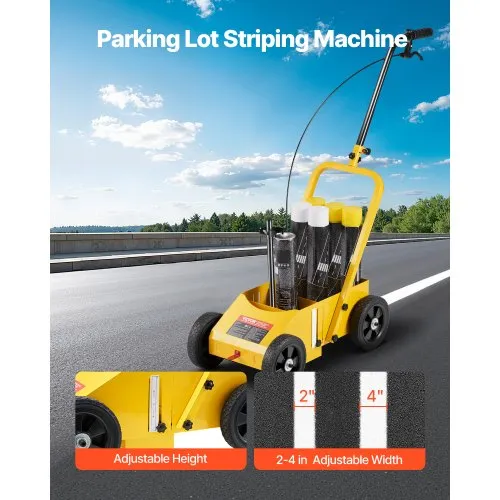
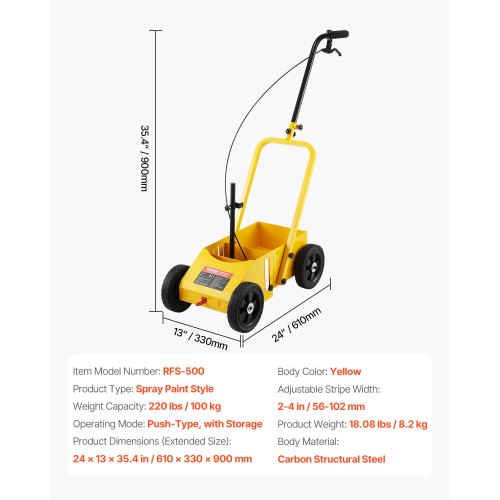
The line width is very important for how clear, long-lasting, and professional your markings look. Sports fields often need clear boundaries that follow the rules for size, so being able to change them is very important. To guide traffic and ensure safety regulations are followed, parking lots require stripes that are easy to read and provide a striking contrast. To accommodate these various requirements, VEVOR striping machines allow users to adjust the line width to 2-4 inches. Because of its adaptability, operators may quickly switch between various marking surfaces and require fewer tools.
By maintaining consistent patterns and distinct edges, a striping line marking machine with width adjustment minimizes errors and guarantees a neat appearance. Exact width control ensures lines are visible from any angle, whether you're marking warehouse aisles, creating safety lines, or resurfacing sports fields. The width you select impacts the amount of paint you use, how quickly it flows, and how well it performs overall. Narrow lines are useful for cramped layouts and indoor areas. Wider lines make things simpler to notice in outdoor areas where weather and lighting conditions can change. By understanding your unique environment, you can select striping machines that consistently produce the appropriate width.
Evaluating Paint or Chalk Capacity for High-Demand Marking Sessions
Capacity affects how long a machine can run before it needs to be refilled. It directly affects how well work flows during big projects. Dry chalk striping machines, often used on baseball and softball fields, require hoppers that hold enough chalk for extended periods without needing to be refilled. A paint striper machine needs tanks or spray systems that evenly distribute paint, so having enough reservoir space means less time spent waiting. VEVOR striping machines feature large paint or chalk storage areas, so operators can finish large jobs like parking lots, sports complexes, or multi-lane road markings without frequent stops.
Higher capacity also ensures the application remains consistent, as the flow stays steady even when material levels drop. If the capacity is too low, the operator may notice uneven lines, weak color coverage, or changes in traction as the unit becomes lighter during use. If you're working on a large athletic field or a project with multiple lots, a machine with greater capacity can save you significant time. Using powdered chalk for grass or liquid paint for pavement, capacity helps ensure consistent performance throughout the entire project cycle. Users can choose the best capacity level for their needs by knowing the size of their workload and how often they need to stripe lines.
How Line Width and Material Volume Influence Cost Efficiency and Results
Finding the right balance between line width and material volume affects both the cost and the quality of the marking. More paint or chalk is needed for wider lines, so each project requires more materials overall. But striping machines also make things easier to see and last longer, which makes them great for outdoor areas that get a lot of foot traffic or are exposed to the weather. Narrower widths save resources while still making it easy to see the boundaries on small sports fields or indoor spaces. VEVOR striping machines feature adjustable width settings and ample space, allowing operators to find the right balance for each project.
Properly distributing materials helps reduce waste and keeps surfaces from receiving excessive application, which can cause chalk to clump, paint to drip, or coatings to become uneven. Using a line-spraying machine that lets you control how much material is released helps you achieve professional-level results while cutting cleanup time. When line width and volume planning are in sync, users can expect consistent costs and results across all surfaces. For municipal maintenance teams, schools, or private facilities that repaint often, the choice is even more important. Taking these things into account makes long-term budgeting easier and markings that are easier to see and of better quality.
Matching Machine Specifications to Field Layouts and Project Scale
Striping machines need different features for different marking environments. Baseball infields, for instance, need lightweight dry chalkers that don't sink into soft soil and spread powder evenly. Pavement stripers, on the other hand, need wheels that last a long time, stable frames, and spray systems that evenly spread paint on asphalt or concrete. VEVOR striping machines come in both types, so operators who work on different surfaces can use them. Choosing the right specifications ensures the equipment moves smoothly and can handle complex layouts.
The wheel size, hopper capacity, spray tube stability, and the ability to adjust all affect how well a machine can handle curves, long lanes, or markings that go in more than one direction. A machine with strong traction and ample space is necessary for larger areas, such as tournament fields or large parking lots. Compact striping machines are better for smaller or more complex spaces because striping machines can navigate tight areas more easily. When the machine's settings are right for the project's size, it works better and more accurately. Carefully reviewing these specifications will help you achieve better results and give you more control over the machine, especially when you use it frequently or for extended periods.
Features & Ease of Use That Improve Accuracy, Comfort, and Productivity
The overall performance of striping machines is determined by how easy they are to use and how well each machine operates.
Handle Design, Wheel Stability, and Maneuverability for Smooth Operation
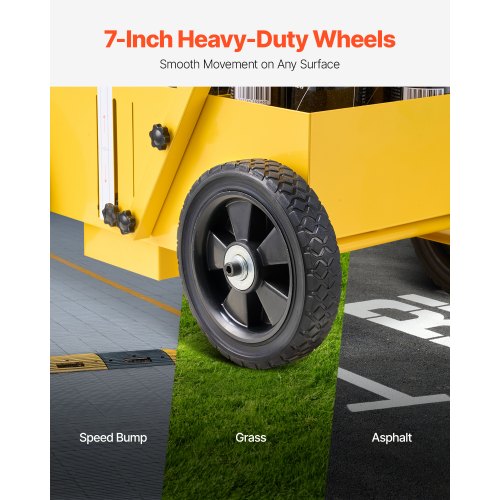
When using striping machines over long distances or on uneven surfaces, comfort and control are crucial. The ergonomic handle design makes the machine easier to hold, reduces fatigue, and allows operators to maintain a straight path even after long periods of use. To keep clean edges, the wheels need to be stable. If striping machines wobble or bounce, the lines can get messed up, and quality can suffer. VEVOR striping machines feature strong rubber wheels, sturdy four-wheel frames, and smooth bearings, making them easy to move forward.
Balanced weight distribution is beneficial for a paint striper machine because it maintains a consistent spray pattern regardless of the operator's speed. For turf applications, the front and back wheels must have the same amount of pressure so that chalk doesn't build up or the lines don't get thicker. Maneuverability also makes it easier for the operator to navigate corners, curves, and complex layouts. Striping machines with easy-to-use steering and low-friction movement make it easier for operators to do their jobs while still producing clear, clean markings. Stable wheel traction and ergonomic controls ensure the machine performs consistently from start to finish, whether on athletic fields or rough pavement.
Paint Flow Control, Chalk Release, and Adjustable Spray Systems
Flow regulation controls how evenly the marking material is put on. When painting lines on pavement or concrete that are easy to see, a line-spraying machine needs to evenly cover the whole area without splatter or gaps. VEVOR striping machines feature adjustable spray widths, flow-control valves, and tanks that maintain steady pressure to support accurate distribution. Chalk release adjustments help keep powder-based machines from forming clumps or sections that are too thick when cutting grass.
Operators can adjust flow rates to match surface conditions, humidity, or marking goals. This customization makes sure that the results are always professional, no matter where striping machines are used. Smooth flow also reduces material waste and minimizes rework. When the output isn't consistent, it can cause edges to be unclear, lines to be incomplete, or colors to be uneven, all of which lower the quality. Whether you're using dry materials or liquid paint, precise flow control makes every project look better when it's done. Users feel more confident knowing their striping machines will produce the same patterns at any speed.
Why Choose VEVOR Striping Machines?
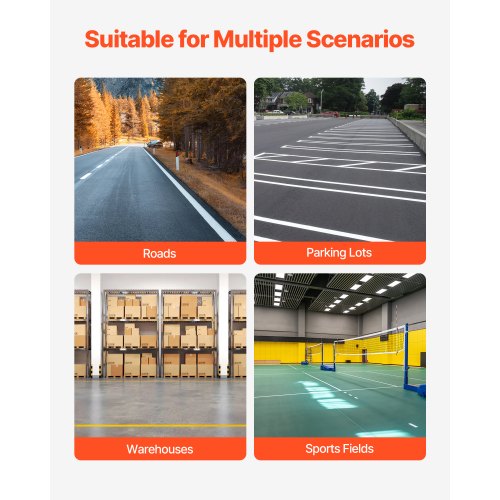
VEVOR striping machines are great for marking fields, parking lots, warehouses, and other facilities because they work well, let you adjust the line width, and are built to last. Striping machines are designed for consistent use and come with large-capacity options, easy-to-use controls, and smooth movement, helping any marking project go more quickly. VEVOR offers reliable solutions for both professional and casual users at competitive prices, with reliable post-sale support. Explore the full selection today and choose the striping machines that best suit your marking needs, from athletic field preparation to roadway or parking lot maintenance.
FAQ
What line width ranges do VEVOR striping machines support?
Most striping machines let you change the width from 2 to 4 inches, making them suitable for safety markings, parking lots, and athletic fields.
Are these striping machines suitable for both paint and chalk applications?
Yes. Some striping machines use chalk to mark turf fields, while others use paint to mark pavement. This makes them useful in a variety of marking situations.
How do I ensure straight, consistent lines?
Walk at a steady pace, keep a firm grip on the handle, and ensure the wheels are aligned correctly. The striping machine's frame stability also helps it track straight.
What maintenance is required after each use?
Cleaning the spray nozzles, emptying the chalk hoppers, and wiping down the moving parts are all essential. Regular maintenance keeps the lines clear and ensures consistent quality.
Can striping machines be used on uneven surfaces?
Yes. Stable frames and durable wheels help keep lines straight, even on ground that isn't perfectly level, but very rough ground may make it harder to be precise.