Paint Sprayers








Results for Paint Sprayers
Explore VEVOR's full line of paint sprayers, including airless paint sprayers, pneumatic paint sprayers for walls, fences, and furniture, texture sprayers, automotive paint spray guns, and line stripers for more specialized jobs. This category also includes powder coat machines, paint spray booths, pressure pots, and paint sprayer accessories, covering everything from DIY painting to shop-level finishing work. Whether you’re repainting a room or striping a parking lot, VEVOR has paint sprayers for the material and finish you’re actually working with.
VEVOR Paint Sprayers for Walls, Vehicles, and Specialty Coatings
Tired of roller marks in a big wall job or wanting an even coat on a car panel? VEVOR’s paint sprayers have you covered, from an airless sprayer for quick wall coverage to an automotive paint spray gun for a smooth clear-coat finish. Instead of guessing what will fit the material you’re spraying, compare airless, pneumatic, and texture options side by side and choose the sprayer designed for the job at hand. Every listing includes tip size and pressure output, so you'll know what fits before you order.
Paint Sprayer Types by Application
VEVOR categorizes paint sprayers by paint atomization and the surface they’re designed for, so you can match the sprayer to the job instead of guessing at specs.
Airless Paint Sprayers for Walls and Large Surfaces
If you need to cover a large wall, fence, or deck, an airless sprayer is the best option. Airless paint sprayers don’t mix in compressed air. Instead, they use a high-pressure pump to force the paint through a small tip. This pushes out thicker, unthinned paint faster than most other sprayer types, significantly cutting the time a large interior or exterior job takes compared to rolling by hand. This speed comes at a cost: airless units produce more overspray than a controlled pneumatic system, so masking off trim, floors, and fixtures is more important with this type than with a finer, more targeted gun.
The tip size on an airless sprayer determines the spray pattern width and paint-layer thickness. Using the right tip size for the paint or stain helps prevent a starved, streaky coat or a heavy, drippy one. An airless paint sprayer covers surfaces in hours that would take much longer by brush or roller, making it the standard choice for large-surface residential and light commercial painting jobs where speed matters more than fine detail, like fences, siding, or ceilings.
Pneumatic and Automotive Spray Guns
Fine detail and smooth finishes are not the same as airless power spraying. Pneumatic sprayers use compressed air to atomize paint into a finer mist than an airless unit can create, giving you more control over the spray pattern and a smoother finish on cabinetry, trim, and furniture where visible texture matters more than raw coverage speed. This precision comes at the cost of speed, as pneumatic guns typically require thinned paint and cover less area per minute than an airless setup.
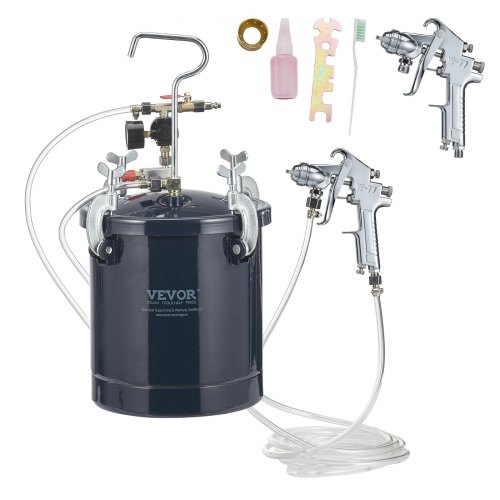
Pneumatic technology goes even further with automotive paint spray guns, designed specifically for the thin, precise coats automotive base coat and clear coat finishes require, where an uneven pass or heavy pooling ruins the finish in a way that’s less noticeable on a wall or fence. These guns work with pressure pots for larger automotive or cabinetry jobs. Instead of a small cup mounted directly on the gun, the paint comes from a separate container under consistent pressure. This matters because you can spray continuously without stopping to refill the gun mid-panel. It comes down to how fine and even the finish needs to be up close, and whether you want to use a standard pneumatic sprayer or a dedicated automotive gun.
Texture Sprayers and Powder Coat Machines
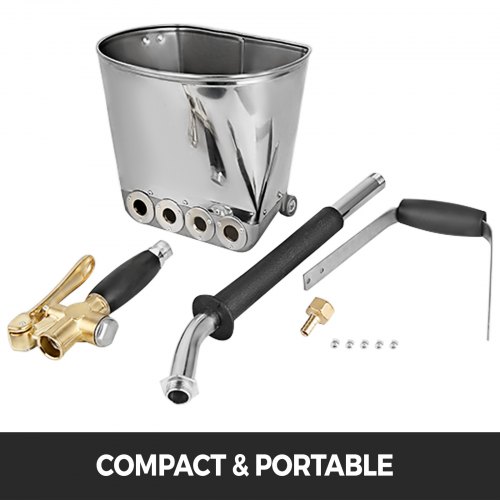
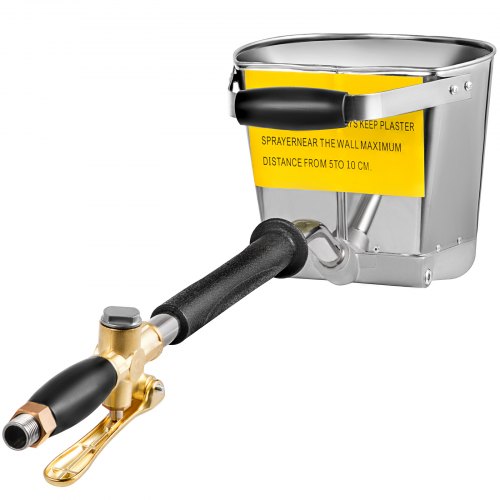
A smooth, even coat is not needed for all finishing jobs. Texture sprayers differ from a regular paint sprayer because of their nozzle and pump setup, as they apply thicker materials such as popcorn or knockdown ceiling texture, or heavier wall coatings. The material is thicker and often contains aggregate that would clog a fine-tip gun. These are necessary for plasterboard repair work or matching existing texture on ceilings and walls where a smooth paint sprayer just isn't designed to handle the material.
Powder coat machines work on a totally different principle. They spray a dry, electrostatically charged powder onto metal parts, rather than wet paint. The powder is then cured under heat to form a hard, durable finish. This type of finish is common on automotive parts, outdoor furniture, and equipment that needs more chip and corrosion resistance than liquid paint can provide. This setup is more complex than a standard paint sprayer, but it produces a noticeably tougher final coat and often requires both spray equipment and an oven or heat gun for curing. Both powder coat equipment and texture sprayers are solving finishing problems that regular wet paint spraying alone can’t handle.
Line Stripers and Spray Booths
Some paint sprayer uses differ greatly from normal wall or vehicle painting. Line stripers and striping machines spray straight, uniform lines of paint for parking lots, warehouse floors, athletic fields, and roadways. Instead of requiring a pass by hand down a long stretch of pavement, a wheeled frame guides the spray gun along a controlled path. Typically, they require a special pump and nozzle system designed for the thicker, harder paint formulations made for asphalt and concrete, not regular wall or automotive paint.
Paint spray booths handle the other end of the process by containing overspray and filtering airborne paint particles for anyone spraying indoors or in a shop setting where uncontained overspray would create health and cleanup problems. This is especially important for automotive refinishing or furniture shops that do a lot of spray work; a dedicated, ventilated space provides a more consistent finish and better air quality than spraying in an open garage. This whole category is rounded out with paint sprayer accessories such as replacement tips, filters, hoses, and cleaning kits to keep any of the above sprayer types working properly between jobs.
Choosing Paint Sprayers by Features and Accessories
The sprayer type is only part of the story. The best paint sprayer for you has the right features and accessories to do the job well.
Matching Features to Your Project
When selecting a paint sprayer for a particular job, pressure output and tip size are more important than horsepower alone. If you are spraying heavier materials rather than thin, watered-down paint, airless paint sprayers with a higher PSI rating will push thicker, unthinned coatings like exterior latex or deck stain better than lower-pressure units. Knowing the maximum tip size a sprayer’s pump can handle prevents you from buying a device that looks powerful on paper but cannot actually push thicker paint through a wider tip without struggling.
For pneumatic and automotive spray guns, it’s good practice to compare CFM requirements versus your air compressor’s actual CFM output. This keeps the gun from running out of air mid-spray, which can cause an uneven pattern or a sputtering finish. On each paint sprayer product page, VEVOR provides pressure output, compatible tips, and CFM requirements, making it easier to match a sprayer to the material and job rather than guess based on price alone.
Accessories and Maintenance Features Worth Checking
Accessories and maintenance matter as much as the unit itself for long-term performance. Paint sprayer accessories like extra tips in different sizes let one sprayer handle more than one paint viscosity and job type without buying a separate unit for each material, a key consideration for those doing both thin stains and heavy latex paint on different projects. Replacement filters prevent pump clogging with lower-quality or older paint, and checking filter availability for a particular model helps prevent the sprayer from sitting idle. While you wait for a hard-to-find part.
For pneumatic systems with pressure pots, compare pot capacity to your average job size. This will save you from constantly refilling on larger projects. A properly sized pot will keep a steady feed going through longer automotive or cabinetry sessions. Cleaning kits matter for all types of sprayers because dried paint left in a pump or gun after use is one of the most common reasons a sprayer stops working properly, no matter how well-built the unit was initially. By checking these details on a paint sprayer product page before you buy, you’ll get equipment that reliably does the job project after project, rather than clogging or failing after the first few uses.
Why Choose VEVOR Paint Sprayers?
VEVOR’s selection of paint sprayers is extensive, from airless and pneumatic to texture and specialty spray guns, including automotive spray guns and line stripers. Each has clear pressure output and tip compatibility, so you don’t have to guess before you buy. Prices are fair, and they don’t skimp on the pumps and parts you need to keep a sprayer going job after job. Whether you need to spray a large exterior job with an airless sprayer, apply texture to a ceiling with a texture sprayer, or use a powder coat machine for a tougher finish, VEVOR has it all in stock. Check out the full lineup and find the right paint sprayer for your project.
FAQs
What's the difference between an airless and a pneumatic paint sprayer?
Airless sprayers use high pressure to force unthinned paint through a small tip, enabling you to cover large areas quickly. Pneumatic sprayers use compressed air to produce a finer, more controlled finish, ideal for detail work and smooth surfaces.
Do I need a spray booth for automotive painting at home?
Yes, if you paint regularly, it can contain overspray and maintain consistent air quality. If you are only doing occasional small touch-ups, a well-ventilated garage is sufficient. If you do a lot of automotive work, a spray booth is better for finish quality and safety.
Can texture sprayers use the same tips as standard paint sprayers?
No, texture sprayers use larger nozzles and different pump setups to handle thicker material with aggregate. Ceiling or wall texture compounds will clog standard fine-tip paint sprayer equipment.
What PSI do I need for exterior house painting?
Higher-PSI airless sprayers are better suited to spraying thicker exterior paints and stains than lower-PSI sprayers. Check the pressure rating recommended for your paint type on the product packaging or the sprayer listing.
How often should paint sprayer filters be replaced?
This depends on paint quality and how often you spray. Change filters if the spray pattern is uneven or the pump cannot hold pressure. Spare filters mean no project downtime.