Deals
VEVOR Magnetic Drill Press, 1300W Low Profile Mag Drill, Light Weight Portable Mag Drilling Machine with Cooling Device and Overload Protection, Mag Press for Equipment Installation, Industrial

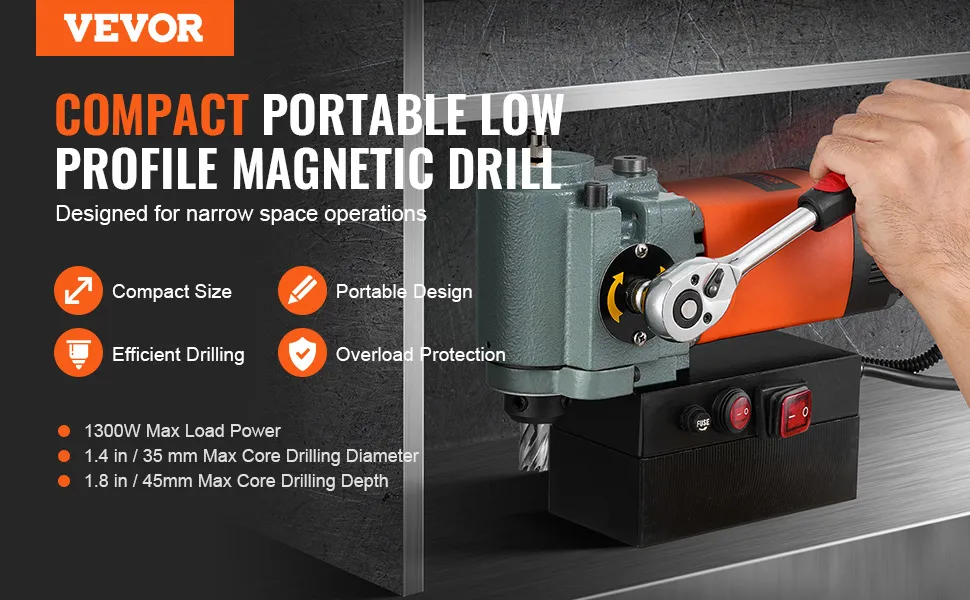
- Adaptable for Tight Spaces: The compact and lightweight design of our magnetic drill press allows you to tackle even the narrowest and hardest-to-reach work areas with ease. Its compact size makes it easy to transport to various job sites and store in limited spaces.
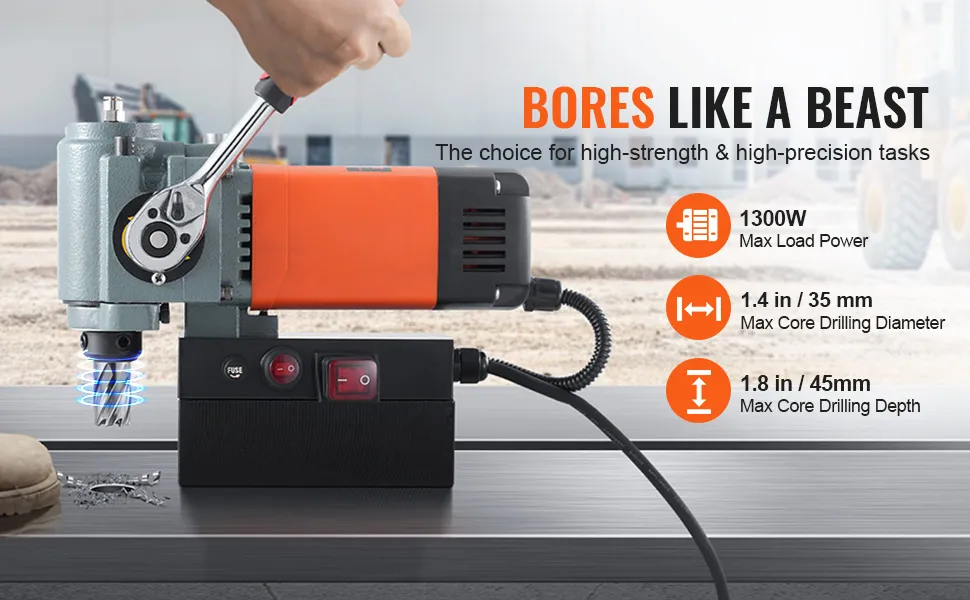
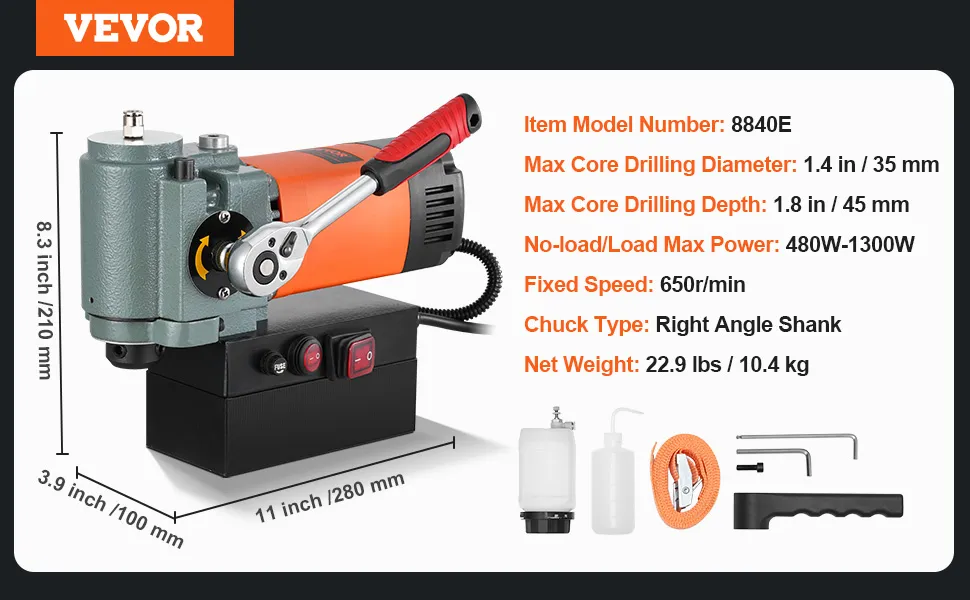
- Efficient Drilling: With a maximum core drilling diameter of Φ1.4 in / Φ35 mm and a maximum core drilling depth of 1.8 in / 45 mm, along with 1300W max load power, this mag drill enables you to quickly complete large diameter and deep drilling tasks, saving you valuable time and ensuring high precision.
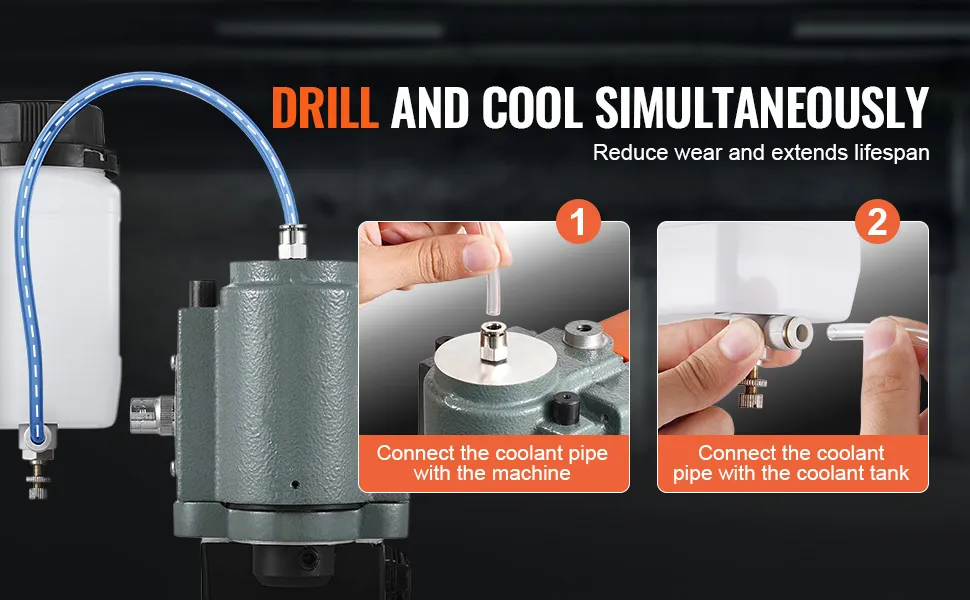
- Safe and Durable Design: The overload protection function effectively prevents damage from excessive load, while the cooling device keeps the mag press at low temperatures during high-load operation, extending its lifespan. The 10000N strong magnetic force enhances safety during use. We are dedicated to providing you with an efficient, safe, and stable working environment.
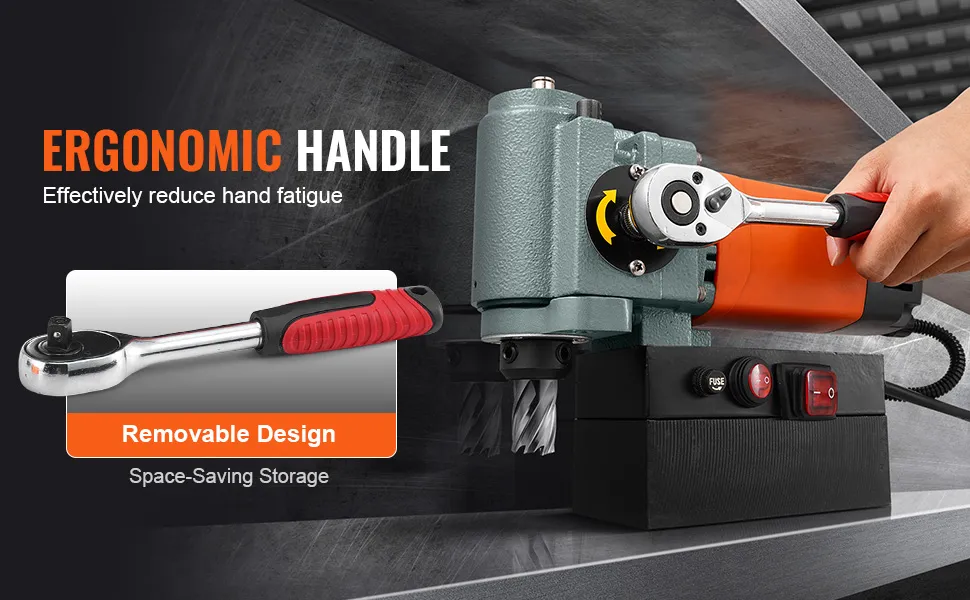
- User-Friendly Features: The handle features an ergonomic lever structure, allowing you to operate the magnetic drill with minimal effort. Its detachable design makes it easy to carry and store, taking up very little space. The product is simple to use, making it very friendly for beginners.
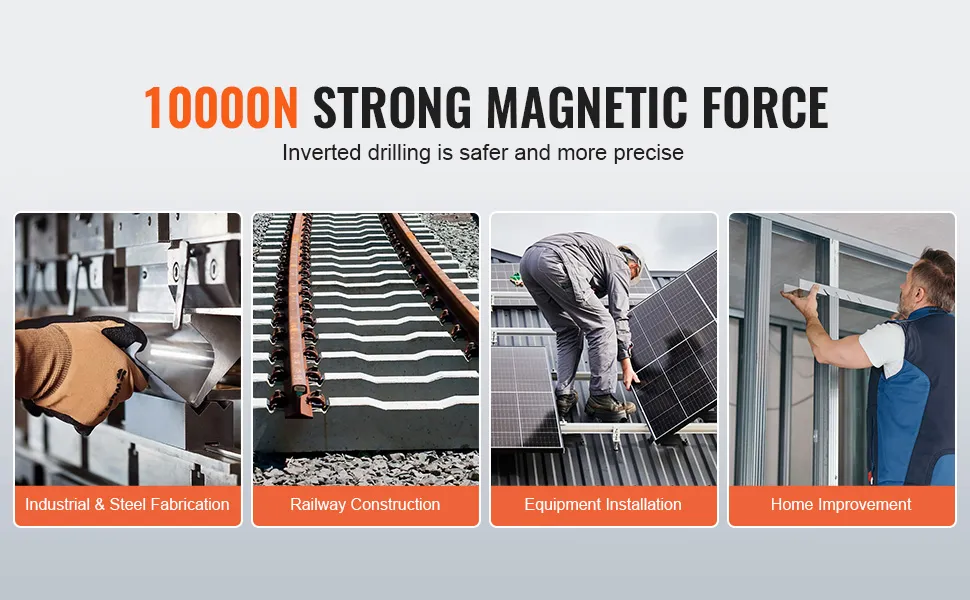
- Wide Application: This compact mag drill press is ideal for equipment installation, industrial and steel fabrication, shipbuilding or bridge construction, railway manufacturing, wind power generation, power plant construction, home improvement, and many other fields.
Frequently Bought Together
Reviews
About this item


1300W Motor in the Low Profile Mag Drill Built for Tight-Space Coring Work
This low profile mag drill has a 1300W copper-wound motor and a fixed 650 RPM spindle speed, providing consistent torque output in structural steel, fabricated plate, and beam sections without the complication of variable speed. Fixed speed operation simplifies the drilling process. The operator only needs to worry about the feed rate and the drill bit position, not the gear selection. It reduces the likelihood of errors in tight work areas where the operator is already distracted by the tool and the surrounding structure.
It features a coring capacity of Φ1.4 in / Φ35 mm in diameter and 1.8 in / 45 mm in depth. This ability is suited to the hole sizes required for equipment mounting, cable penetrations, and structural connections in installation environments where space constraints influence tool choice. This machine fits where larger mag drills physically can't reach and delivers professional grade drilling quality within the coring diameter range most often needed for installation and fabrication work.
3.9 in Slim Profile and 22.9 lb Frame for Access in Restricted Work Areas
The machine body measures 11.0 × 3.9 × 8.3 in / 280 × 100 × 210 mm, and the 3.9 in / 100 mm width is what sets this unit apart from typical mag drills. The slim profile enables its use in tight spaces between structural members, inside equipment enclosures, and in wall sections where a conventional mag drill body cannot be placed flat on the work surface. The slim form factor is not a compromise on build quality; it’s an engineering decision that opens up where the machine can physically operate.
It weighs 22.9 lb (10.4 kg) and is the lightest unit in the VEVOR magnetic drill line. That weight allows true single-person repositioning between work points without the fatigue buildup over a full shift. Installation crews moving around a multi-level structure or drilling frequently on a fabrication job will find that a lower carry weight means less physical effort per tool move and higher productivity throughout the working day.
Right Angle Shank Chuck for Stable Bit Engagement in Confined Drilling Positions
The right-angle shank chuck is the mechanical interface that defines how this machine engages its cutting tools and differs from the Weldon shank standard used on larger mag drill platforms. The right-angle shank geometry is designed to fit the compact drivetrain of low-profile machines, with the added benefit of efficient torque transfer at a shorter chuck depth, directly contributing to the machine's overall slim profile without compromising bit retention under load.
The structural steel in the right-angle shank system provides lateral and axial forces that lock the bit in place. The chuck must grip the bit without movement, regardless of orientation, in tight drilling positions, horizontal on a beam web, angled inside an equipment cabinet, or overhead in a ceiling void. The right-angle shank design ensures retention at all operating angles, giving the operator confidence that the bit position won't shift during a pass in a location where repositioning would be difficult.
Low Profile Mag Drill with 10,000 N Electromagnetic Base for Secure Steel Clamping
The magnetic base produces a holding force of 10,000 N / 2250 lbf through a solid iron contact surface, which firmly holds the low profile mag drill machine to the steel workpiece during operation. In confined spaces, base stability is even more important than in open environments, since the operator has less chance to brace himself against reaction forces manually. The 10,000 N magnetic hold absorbs these reaction forces through the base, allowing the machine to remain stationary and maintain the bore path's true position without the operator having to physically counter movement.
The electromagnetic system requires a sufficient thickness of steel plate to achieve complete magnetic saturation and does not work with stainless steel or cast iron surfaces. Where the drilling position is inverted or horizontal, a safety rope should be used as a mechanical backup in conjunction with the magnetic clamp. This two-layer approach is the correct safety protocol even in confined spaces where access may make rigging a safety rope more difficult. It should not be skipped due to access difficulty.
Overload Protection and Integrated Cooling Device for Extended Safe Operation
The overload protection circuit automatically cuts power to the motor if the current draw exceeds safe operating limits. This can happen if the bit catches in hard material, if you set the feed rate too high, or if the workpiece shifts unexpectedly during a pass. Automatic protection is especially useful in confined work areas where the operator’s visibility into the cutting zone is limited and buildup of resistance may not be noticed before damage occurs. The circuit will automatically reset itself when the fault is removed.
The integrated cooling device keeps motor operating temperatures low during high-load drilling cycles, avoiding heat buildup that reduces motor life and the risk of surface burns to the workpiece when handling the tool. In confined areas where the surrounding structure inherently limits airflow around the machine, active cooling is more important than in open areas. It offsets the reduced airflow around the machine and keeps it within safe thermal limits during continuous back-to-back drilling cycles on production installation jobs.
Detachable Ergonomic Handle and Wide Industrial Application Range
The ergonomic lever-style handle is detachable from the machine body for transport and storage, reducing the overall package dimensions when the drill needs to fit inside a tool bag, equipment locker, or vehicle storage compartment. This handle quickly reattaches on-site and locks into the operating position, providing the leverage needed for controlled manual feed without the bulk of a fixed handle during transport. That ability to detach is a practical benefit for crews who often move equipment between sites.
Application range covers equipment installation, industrial and steel fabrication, shipbuilding, bridge construction, railway manufacturing, wind power generation, power plant construction, and home improvement tasks. When a standard mag drill cannot be used because of access restrictions, this low profile mag drill, with its slim profile, lightweight, detachable handle, and 1300W coring power, is the right tool to make previously inaccessible drilling locations routine operations.