

Rebar & Accessories












Results for Rebar & Accessories
Rebar accessories are the supporting hardware used to position, secure, join, shape, and anchor steel reinforcing bar during concrete and ground work. They do not form the structure themselves; instead they hold reinforcement in the correct place and configuration so the finished concrete gains its intended strength. Some hold bars steady while wet concrete is poured, some connect or bend bars to suit a layout, and others fix bars or materials firmly to the ground. Together, this hardware turns loose lengths of bar into an organized, stable reinforcement system that is ready for a dependable pour.
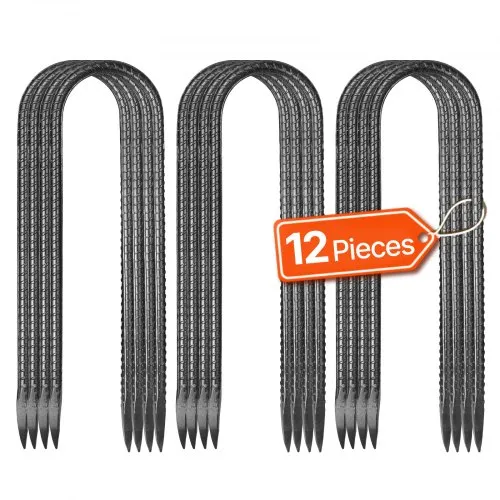
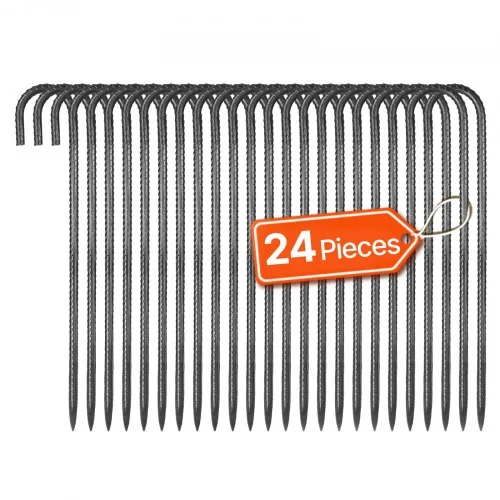
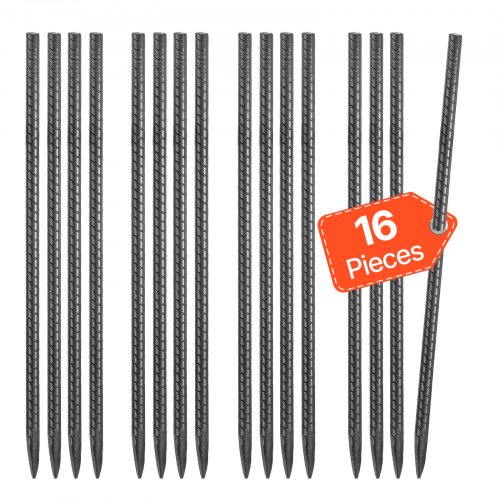
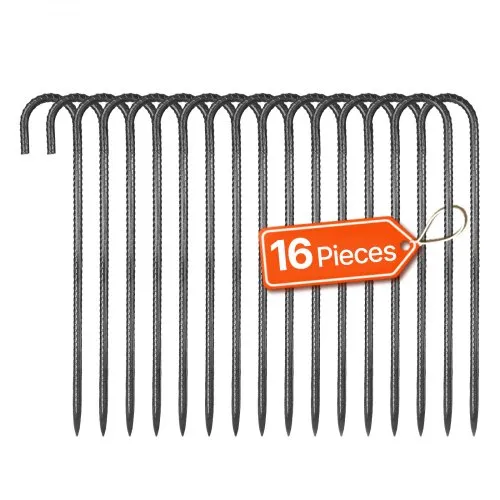
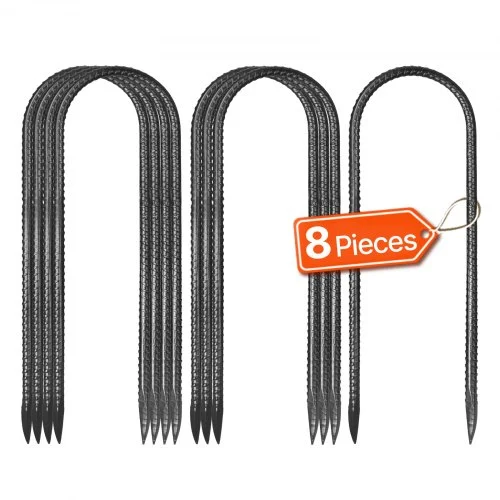
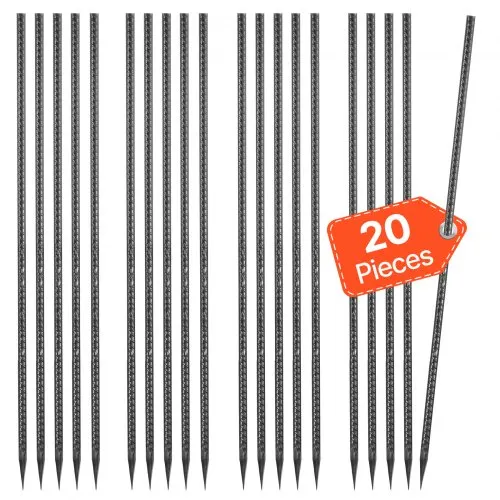
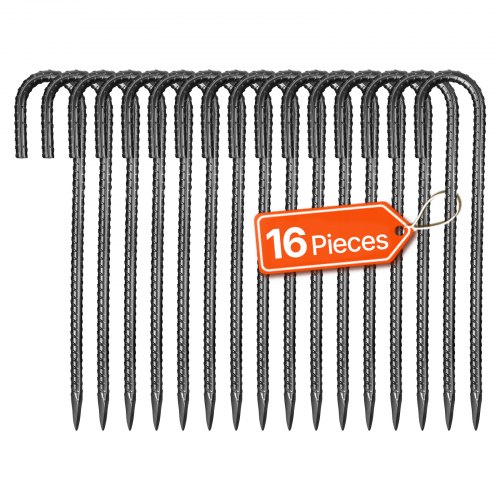
VEVOR groups its rebar accessories by what each one does on site. Ground-anchoring rebar stakes come in J-hook, U-shaped, and straight profiles, in lengths from roughly 12 to 24 inches and diameters near 0.32 to 0.47 inches, for pinning and holding material at ground level. Tie wire products, including bag ties, loop-end wire ties, and bundled coil wire, secure bar intersections by hand or with a tying tool. Couplers and connectors join bar end to end, while positioners set the correct concrete cover and benders shape bar for corners and stirrups. Typical uses are foundations, slabs, retaining walls, landscape edging, and tent or fabric anchoring.
Four things decide what you need:
- Shape: J-hook and U-shaped heads hold material down, while straight stakes and couplers run bar in a continuous line.
- Length and diameter: longer, thicker stakes anchor deeper in loose or windy ground, while shorter, thinner ones suit light fabric pinning.
- Connection method: hand-tied wire secures intersections, couplers splice bar continuously, and positioners hold the cover depth.
- Site conditions: soft soil, frozen ground, and heavy loads each call for a different stake profile and pack quantity.
Browse the full VEVOR rebar accessories range to match the right stake, tie, or connector to your pour, or step up to heavier ground anchors for demanding outdoor work.
Rebar Accessory Types at a Glance
The table below separates the main accessory types by what they do, what they are made of, and how they go to work, so you can tell them apart before you shop.
| Type / Sub-type | Primary Function | Material | How It Is Used | Selection Note |
|---|---|---|---|---|
| Rebar stakes (J-hook, U-shaped, straight) | Anchor rebar, edging, and material at ground level | Hardened, galvanized steel | Driven into the ground by foot or mallet | Match head shape and length to soil and the hold you need |
| Tie wire (bag ties, loop-end, bundled) | Secure rebar intersections | Annealed low-carbon steel | Twisted by hand or with a tie tool | Annealed wire bends without snapping and needs no tools |
| Couplers and connectors | Join two bars end to end | Machined or forged steel | Threaded as a mechanical joint between bar ends | Saves bar versus lap splicing and keeps bars aligned |
| Positioners | Hold rebar at the correct cover depth | / | Set under or around bars to fix height | Right height protects the steel cover for the slab's life |
| Benders and tie wire wheels | Shape bar and feed tie wire faster | / | Leveraged by hand or machine to bend or feed wire | Worth it on repetitive, bend-heavy or tie-heavy layouts |
VEVOR Rebar & Accessories for Stronger, More Efficient Concrete Reinforcement
For your next concrete project, VEVOR offers reliable rebar stakes, durable tie wire, and precise couplers and connectors. VEVOR designs its rebar & accessories to support precise placement and strong connections during concrete pours. Contractors, landscapers, and do-it-yourself builders can use the entire line of products to help them complete reinforcement work faster and with greater confidence in the structure.
Rebar & Accessories by Type and Shape
Choosing the right rebar & accessories becomes easier when you understand the different types available. VEVOR organizes rebar & accessories by what they do and how they look, so builders can quickly find what they need to stake, tie, connect, or place rebar on any job site. Each category serves a specific function during reinforcement work.
Rebar Stakes: J Hook and U Shaped Options
To keep rebar, edging, and landscaping materials securely in place, use rebar stakes. VEVOR has two main types of stakes to meet different grounding needs. J-hook rebar stakes have a bent top that fits over rebar or edging strips and locks them in place while you pour concrete or work on the ground. The hook design prevents lateral movement without the need for extra closures, so placement is quick and safe.
Rebar stakes in the shape of a U have a wider saddle grip that can hold rebar or garden edging across a larger contact area. It's better for soft soils, where a narrow stake might move under load, because the U shape spreads downward pressure more evenly. Both types of stakes come in different lengths to fit different soil types and project needs. If you need to fix something, you should choose between j hook rebar stakes and U-shaped rebar stakes.
Bag Ties, Loop End Wire Ties, and Bundled Wire
One of the most repetitive tasks in concrete reinforcement work is securing rebar at the points where two beams meet. Bag ties are short, pre-cut wire pieces used to quickly secure rebar intersections by hand. VEVOR bag ties are made from flexible, heat-treated wire that bends easily without breaking. Most of the time, workers can make tight, secure knots without using tools.
Since loop-end wire ties already have a loop on one or both ends, it is easier to hook and twist them at rebar corners, especially when using a tie wire wheel or a twister tool. Coil or spool forms of bundle wire are available for use with mechanical tying tools or for on-site cutting to specific lengths. Bag ties, loop-end wire ties, and bundled wire support a wide range of manual and tool-assisted tying methods.
Couplers, Connectors, and Positioners
With couplers and connectors, you can connect two pieces of rebar end to end, making a continuous line of reinforcement without having to overlap the bars. Machined to fit standard rebar diameters, VEVOR couplers make a strong mechanical link that keeps the bars straight during the pour. When you use couplers instead of traditional lap splicing, which needs a lot of bar contact to be strong, you waste less material.
Positioners ensure the rebar is at the correct height within the formwork, providing sufficient concrete cover above and below the bar. For long-term structural stability, the appropriate cover depth is crucial. Over time, rebar will rust if it isn't adequately protected. There are different heights of VEVOR positioners to accommodate slabs of varying thickness. When you use the right positioners, couplers, and links, the rebar will sit exactly where the engineering drawings specify.
Benders and Tie Wire Wheels
With rebar benders, workers can turn straight bar stock into the angled or bent shapes needed for corners, footings, and stirrups. When you use a VEVOR rebar bender, you can make controlled bends at certain angles over and over again without damaging the bar's structural stability. You can choose between manual and mechanical benders depending on how much bending you need.
As you tie the knots, the tie wire wheel holds a coil of tie wire and feeds it easily through the loops. A good tie wire wheel keeps the wires from tangling, speeds up the tying process, and helps keep your hands from getting tired during big pours with lots of rebar crossings. This VEVOR tie wire wheel works with both loop-end wire ties and normal bundled wire coils. Adding a tie wire wheel to the toolbox speeds up and improves the consistency of repetitive tying work on big rebar layouts.
Matching Rebar Accessories to the Job
Once you know the types, the next question is which one to reach for on a given task. This table pairs each job with the accessory, the spec to size it against, and the catch to watch for.
| Task on Site | Accessory to Reach For | Spec to Match | What to Watch For |
|---|---|---|---|
| Anchoring fabric or edging at ground level | J-hook or U-shaped stakes | Stake length to soil depth and pull load | Go longer and thicker in loose or windy ground |
| Tying rebar intersections | Bag ties or loop-end wire ties | Wire gauge to bar diameter | Loop-end ties speed up work with a twister tool |
| Running continuous reinforcement | Couplers and connectors | Coupler bore to bar diameter | Mismatched diameters will not thread; confirm bar size first |
| Holding cover depth in a slab | Positioners | Positioner height to slab thickness | Too short a chair leaves steel under-covered and exposed |
| Shaping bar for corners or stirrups | Benders | Bender capacity to bar diameter | Over-bending thick bar by hand risks cracks; use leverage |
Material Quality and Application Range of VEVOR Rebar & Accessories
A lot of what determines how well rebar & accessories work is the materials that were used to make them and how they are used. VEVOR chooses materials that can withstand the physical demands of construction work, from working in wet concrete to anchoring things in the ground, in all sorts of weather and soil.
Steel Construction Built for Job Site Demands
Most VEVOR rebar accessories are made from steel chosen for its strength, flexibility, or corrosion resistance, depending on the product type. Hardened steel is used to make rebar stakes, which drive easily into hard dirt without bending or breaking. During concrete pours or landscaping, J-hook and U-shaped rebar stakes maintain their shape under lateral forces.
Low-carbon, annealed steel is used to make tie wire products, including loop-end wire ties, bundled wire, and bag ties. When you anneal wire, you loosen it just enough so it can be bent and twisted easily, yet retain enough tensile strength to hold rebar in place. To make a strong mechanical rebar joint, couplers and links are machined or forged to very close tolerances. Each choice of material is based on the function that each type of rebar attachment needs to perform.
Broad Application Across Construction and Landscaping
There are many more uses for VEVOR's rebar & accessories besides normal concrete slabs. Putting in and securing rebar correctly is important for foundation work, retaining walls, roads, paths, pool surrounds, and precast concrete elements. Landscapers also use rebar stakes a lot to hold down edging strips, erosion control fabric, and plant borders that need to be stable at ground level.
Couplers and connectors are especially helpful for projects where full-length rebar can't be transported or moved around on site. They allow shorter sections to be joined without affecting the structure's strength. Positioners are very important in elevated slab buildings, where the cover depth must remain constant across large floor areas. The full line of VEVOR rebar & accessories works just as well for professional contractors working on big commercial pours as it does for do-it-yourself builders working on smaller domestic projects.
Best-Seller Comparison
The stakes below are compared side by side so you can see which length, shape, diameter, and pack size fits your ground and your load before you buy.
| Product | Shape | Length | Material | Diameter | Pack Quantity | Best For |
|---|---|---|---|---|---|---|
| 24 in Straight Stake, 0.47 in, 20-Pack | Straight (I-tip) | 24 in | Galvanized Steel | 0.47 in | 20 | Longest and thickest here; deepest anchoring for tents and heavy loads |
| 16 in J-Hook Stake, 0.4 in, 24-Pack | J-hook | 16 in | Galvanized Steel | 0.4 in | 24 | Largest pack of hook stakes; big fabric and fence runs |
| 16 in Straight Stake, 0.45 in, 16-Pack | Straight | 16 in | Galvanized Steel | 0.45 in | 16 | Thickest 16-inch straight; firm mid-depth hold in harder soil |
| 16 in J-Hook Stake, 0.4 in, 16-Pack | J-hook | 16 in | Galvanized Steel | 0.4 in | 16 | Smaller hook pack; everyday fabric and edging hold-downs |
| 12 in U-Shape Stake, 0.32 in, 8-Pack | U-shaped | 12 in | Galvanized Steel | 0.32 in | 8 | Only U-saddle here; pins wide material flat over soft soil |
Why Choose VEVOR Rebar & Accessories?
VEVOR has everything you need for every step of the reinforcement process, including rebar & accessories. We sell a wide range of high-quality products at reasonable prices. These include j hook rebar stakes, U shaped rebar stakes, couplers, positioners, benders, and tie wire wheels. Getting professional results starts with having the right tools. You can find everything you need for your next concrete or building project in one place when you look through the VEVOR rebar & accessories collection.
FAQs
What is the difference between j hook rebar stakes and u shaped rebar stakes?
A curving hook on a J-hook rebar stake fits over rebar or edge from one side. Stakes in the shape of a U hold the bar in place across a wider seat grip. The U shaped design works best on soft ground or bigger edge materials, while the J-hook design is best for standard rebar anchoring.
What type of tie wire should I use for hand tying rebar?
The most useful tool for hand binding is a bag tie. When used with a twisting tool or tie wire wheel, loop-end wire ties make the job go faster. The best way to do big jobs with mechanical tying tools is to use wrapped wire that comes on a spool or coil.
How do rebar couplers compare to lap splicing?
Compared to overlapping lap splices, rebar couplers use less bar because they create a straight mechanical joint between two bar ends. Couplers save material, make it easier to work with tight forms, and keep bars aligned without needing extra rebar length for a lap join.
What do rebar positioners do?
Positioners for rebar keep the rebar at a specific height within the formwork before and during the pour. With proper placement, the required concrete cover will surround the rebar on all sides, keeping the steel protected from water and corrosion for the life of the building.
What are the most common types of rebar accessories used in construction?
The most common rebar accessories are rebar stakes for ground anchoring, tie wire products such as bag ties and loop-end ties for securing intersections, couplers and connectors for joining bars, positioners for setting cover depth, and benders for shaping bar. Most jobs use a mix of several.
How do I choose the right rebar bender for my project?
Match the bender to the bar diameter you will shape and the volume of bends your project needs. Manual benders suit occasional corners and stirrups, while mechanical benders handle repeated, heavy bending without straining the bar or the operator. Confirm the tool's rated bar capacity first.
Can rebar stakes be used for heavy-duty ground anchoring?
Yes. Longer, thicker rebar stakes anchor securely for heavy-duty tasks like tents, fencing, and formwork in tough or windy ground. For the deepest hold, 24-inch rebar stakes with a larger diameter resist pulling better than short, light stakes in loose soil.
How do I choose the right rebar anchor for my construction project?
Match the anchor to the material and the ground. Choose J-hook stakes to hook over fabric or edging, U-shaped rebar stakes to pin wide material flat on soft soil, and straight stakes for deep, firm holding. Longer and thicker stakes suit loose or high-wind sites.
