Specialty Power Tools






Results for Specialty Power Tools
A specialty power tool is a motorized tool built to perform one focused task that a general-purpose drill, saw, or sander cannot do cleanly or efficiently. Instead of a broad all-round design, each unit concentrates its motor, heating element, or vibrating mechanism on a single material behavior. Some apply controlled heat to slice or shape soft materials along a precise line. Others convert motor energy into rapid, repeated motion that settles and consolidates a dense mixture. The defining idea is purpose over breadth: a working head, element, or action matched exactly to the job so the result is accurate, repeatable, and consistent every time.
The range centers on two main tool families. Foam cutter machines use a heated blade (hot knife) or an electrically heated nichrome wire (hot wire) to slice expanded polystyrene, sponge, KT board, and insulation panels, with working temperatures that commonly run from about 120 to 930°F depending on model. Concrete vibrators use a motor-driven poker head, typically 1 to 2 inch diameter on a 6.6 to 14.75 ft flexible shaft, vibrating at 13,000 to 16,000 VPM to drive trapped air out of a fresh pour. Motor outputs across the lineup span roughly 58 to 1,300 W, from tabletop craft units to jobsite compaction tools. Typical uses are foam fabrication, packaging, model and prop making, and consolidating slabs, footings, columns, and precast panels.
Four things decide what you need:
- Material and density: match heat output to foam density, or poker size and frequency to how stiff the concrete mix is.
- Project scale: a weekend patio or craft piece needs a small handheld or tabletop unit; foundations and long pours need higher wattage and longer reach.
- Working element: a hot knife gives straight clean seams, a hot wire frees you to cut curves and 3D shapes, and a poker head consolidates wet mixes.
- Power source: corded units give steady continuous runtime for shop and jobsite work, while portability matters most for remote casting sites or mobile setups.
Browse the full specialty power tools range to compare every tool type, power rating, and project size in one place, or jump straight to the concrete vibrator lineup to find the poker and shaft length that fit your next pour.
Specialty Power Tool Types at a Glance
The table below sorts the main sub-types by how they work and what separates them, so you can see at a glance which family suits your task before comparing individual models.
| Type / Sub-type | Working Element | Primary Action | Portability | Selection Note |
|---|---|---|---|---|
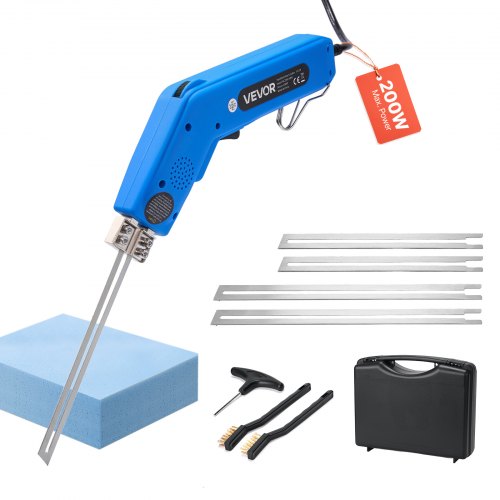
| Hot knife foam cutter | Heated flat blade | Straight, clean cuts through insulation and panels | Handheld, portable | Pick when you want fast, straight seams on sheet foam and KT board |
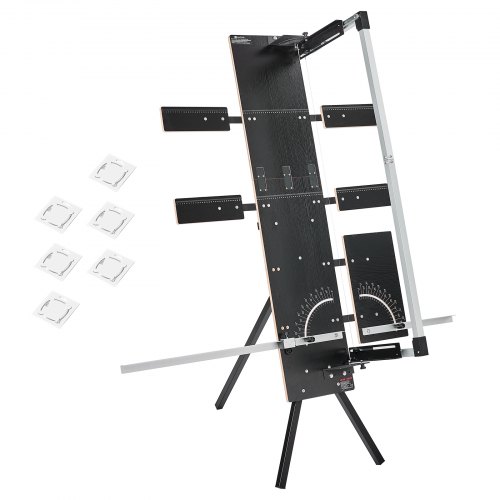
| Hot wire foam cutter | Tensioned heated nichrome wire | Curved, angled, and 3D shaping of foam blocks | Tabletop or benchtop | Pick for sculpting, models, and props where free-form shapes matter most |
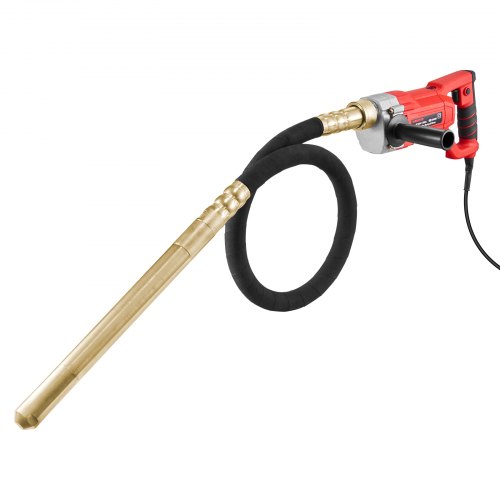
| Handheld concrete vibrator | Pencil poker on short flexible shaft | Light consolidation in tight pours | Compact, one-hand | Pick for patios, footings, posts, and decorative casts in close quarters |
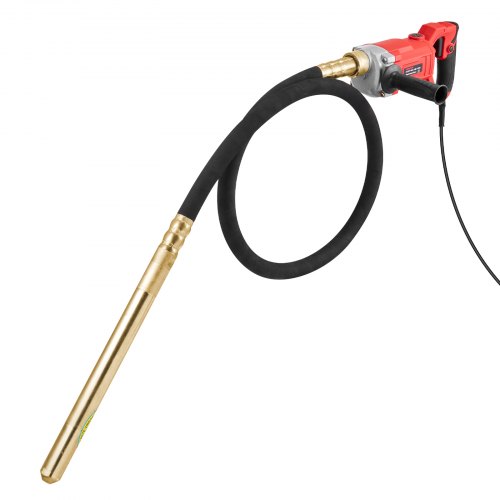
| Electric concrete vibrator | Larger poker on long flexible shaft | High-amplitude consolidation of deep, stiff pours | Corded, mains or generator | Pick for foundations, walls, and precast where reach and power decide the finish |
VEVOR Specialty Power Tools Foam Cutters, Concrete Vibrators & More for Every Project
Do you need to shape foam insulation or pack down newly poured concrete? Picking the right specialized power tool can mean the difference between a perfect finish and paying a lot of money to correct mistakes. Expertly designed, reliable power sources and user-friendly controls make VEVOR's specialty power tools perfect for any job, from delicate hot-wire foam-cutting work to heavy-duty electric concrete-vibrator work on busy construction sites.
Tool Types & Power Sources: Choosing the Right Specialty Power Tool
To make better buying choices, first understand the purpose of each specialty power tool and its power source. You can be sure you are using the right machine for the job because VEVOR offers tools designed for real-world use.
Foam Cutter Machines: Hot Knife vs. Hot Wire Technology
Both hot knife foam cutters and hot wire foam cutters are types of foam cutter tools, but they each do different things. For cutting expanded polystyrene (EPS), upholstered foam, or closed-cell insulation panels, a hot knife foam cutter is the best tool for the job. Its heated blade cuts through materials cleanly and smoothly. For fast and clean seams, it is the best choice for packaging fabricators, florists, and insulation workers. It can make straight or slightly curved cuts. A hot wire foam cutter, on the other hand, uses a nichrome wire heated electrically and stretched between two points. With this design, users have much more freedom to be creative; they can bend, curve, or mold the wire into foam blocks to create three-dimensional shapes. Many architects, prop makers, model builders, and set designers use this kind of foam-cutter machine to make custom molds, detailed relief maps, and artistic panels.
There are tabletop hot-wire models with adjustable wire tension, handheld hot-knife models for trimming on the go, and benchtop units with temperature-control knobs in VEVOR's foam cutter machine line. Temperatures are usually between 100°C and 400°C, which gives workers fine-grained control over the cut quality and the rate of material melting. Choosing the right type of foam cutter machine is important, whether you are working with low-density EPS or denser polyurethane foam. This way, you can make sure that every cut has less drag, cleaner lines, and less material waste.
Concrete Vibrators Handheld vs. Electric Models
A concrete vibrator is an important tool for any job that involves pouring concrete. If you pour freshly mixed concrete into a mold, air bubbles and holes will naturally form throughout the pour. Failure to fill those gaps weakens the structure of the finished slab, wall, or column. A concrete vibrator fills in those holes by shaking the mixture, allowing the heavy aggregate to settle and the air to rise to the top. Handheld and electric concrete vibrators are both available from VEVOR, each best suited to a different job size. A handheld concrete vibrator is small, portable, and easy to move around in tight areas. This makes it the best choice for small decorative concrete projects, patios, and the bases of fence posts. The flexible shafts on these units are usually 1 to 2 meters long, and the moving heads, also called pokers, are 25 to 45 mm in diameter.
An electric concrete vibrator gets its power from a normal wall outlet or a generator. It can handle larger pours, such as structural foundations, retaining walls, precast panels, and commercial slabs, with higher-amplitude vibration. Variable-speed controls, long-lasting, flexible shafts, and adjustable vibrating heads make VEVOR's electric concrete vibrators versatile enough to work with a range of concrete mixes and pour depths. Most motor outputs are between 800W and 1500W, which provides enough power to compact stiff, low-slump concrete that a smaller handheld model might have trouble with.
Power Sources Across the Specialty Tool Range
The power source is one of the most important factors to consider when buying specialty power tools. Depending on the tool type, VEVOR's line includes corded electric, battery-powered (cordless), and pneumatic options. The power output of corded electric models is steady and continuous. This includes most electric concrete vibrators and foam cutter machines. They work best in workshops, on job sites with access to generators, or anywhere else where runtime is more important than portability. These tools often provide strong performance and can be cost-effective over time.
In return for the freedom of cordless battery-powered specialty power tools, they may trade some peak power and runtime. Being able to work without a power cable is very helpful for a handheld concrete vibrator used on remote casting sites or a hot knife foam cutter taken to a movie set.
Some nailing and fastening jobs require pneumatic tools, even though they are rare. Professionals in trades who already have air compressors on site will appreciate that they need one, but want a lighter body and steady torque. Instead of automatically choosing the most powerful choice, you should always choose a power source that works with your workspace.
Matching the Right Tool to Your Material and Scale
Each project has different needs, and the best specialty power tool for one job might not be suitable for another. When deciding between a foam cutter machine and a concrete vibrator, or the level of specification within each category, you should consider three factors: the type of material, the size of the project, and how often it will be used. The right cutting element for foam depends on its density. For low-density EPS foam (less than 20 kg/m³), a lower-temperature hot wire foam cutter setting works well. High-density polyurethane or polystyrene, on the other hand, requires higher temperatures and a stronger hot knife foam cutter blade to prevent dragging or melting nearby materials.
The water-to-cement ratio and aggregate size determine the size of the vibrator head you need for concrete work. Wetter mixes with higher slump are easy to compact with 25–30 mm heads. For stiffer mixes, you need larger heads (38–45 mm) and a higher shaking frequency.
Depending on the size of the project, you may need only a handheld concrete vibrator or a full-electric concrete vibrator setup. You might need a small unit for a single patio pour over the weekend, but you will need a heavy-duty motor and a longer shaft reach for foundation work at a business building that will take several days. All of these types of specs are available for VEVOR's specialty power tools, so whether you are a weekend DIYer or a full-time tradesperson, you can find a model that fits your needs.
Matching Foam Density and Mix Type to the Right Settings
The section above explains which tool family fits which job; this table goes one step further and pairs each common material situation with the setting, risk, and workaround a buyer has to get right before the first cut or pour.
| Material Situation | Recommended Element / Setting | Common Mistake to Avoid | What to Watch For |
|---|---|---|---|
| Low-density EPS foam | Hot wire at a lower temperature setting | Running the wire too hot | Excess heat melts edges; move at a steady, unhurried pace |
| Dense polyurethane or polystyrene | Hot knife blade at higher temperature | Using a thin wire that drags | Thin wire stalls in dense stock; the blade stays cleaner |
| Wet, high-slump concrete | Smaller 1 to 1.2 inch poker head | Over-vibrating the mix | Too much shaking segregates aggregate and weakens the surface |
| Stiff, low-slump concrete | Larger 1.5 to 1.8 inch head, higher VPM | Under-powered handheld unit | A small motor cannot consolidate stiff mixes; size up first |
| Decorative or countertop casts | Handheld poker, brief insertions | Leaving the poker in too long | Short dips clear air without disturbing fine surface detail |
Features & Applications: What to Look for in VEVOR Specialty Power Tools
What makes a specialty power tool comfortable, safe, and effective in real life is not just the type of tool it is, but also its features. VEVOR designs its tools with professionals in mind, and each model features thoughtful features that set it apart.
Key Features That Improve Performance and Safety
Functionalities are much more important than specs when looking at specialty power tools. Adjustable temperature control, a stable cutting table or guide fence, and quick-heating elements that reach working temperature within seconds are the most important parts of foam cutter machines. The nichrome wire in VEVOR's hot wire foam cutters heats in 10–15 seconds, so there is less downtime between cuts, and work keeps going. For concrete vibrators, protecting the motor box is essential. Job sites are often dirty, wet, and uncertain places to be. VEVOR's electric concrete vibrators have motor covers that keep out water, handles that reduce shaking to help you work longer without getting tired, and strong steel shafts. You can get vibrating poker heads made of stainless steel or an alloy that has been chrome-plated. These materials resist rust, even when they are regularly in contact with wet concrete.
Different types of tools also have different safety measures. Foam cutter machines should have insulated handles, an easy-to-reach power switch, and thermal overload protection, which cuts off the heating element if the tool gets too hot. Anti-vibration grips on concrete vibrators make long-term use safer by lowering the risk of hand-arm vibration syndrome (HAVS). Instead of selling these safety features as extras, VEVOR builds them into all of its specialty power tools as standard.
Real-World Applications Across Industries and Project Types
Numerous industries use VEVOR's specialized power tools. Knowing which industries those are helps buyers choose the right model for their needs. Building and insulation (to shape rigid EPS boards for cavity wall insulation), retail and events (to cut custom inserts for foam packaging and point-of-sale display blocks), film and theater production (to carve props and set pieces), and education (to build models in architecture and industrial design classes) all use foam cutter machines.
There are many uses for concrete vibrators. People who build homes use a handheld concrete vibrator to strengthen the footings for decks, fence posts, and garden walls. Electric concrete vibrators are essential for pouring foundations, constructing retaining walls, and creating precast elements in the building industry. Specialists in specialty concrete, such as those who make countertops, sinks, furniture, and artistic panels, use smaller vibrator units to create surfaces that are completely flat and smooth as glass. People in fields other than construction also use VEVOR's specialty power tools. For example, food processing plants use vibrating equipment to separate and settle ingredients; farming uses powered specialty tools to open the soil and prepare postholes; and marine fabricators use foam cutters to shape buoyancy core material. VEVOR ensures that workers across all these fields consistently achieve results that meet industry standards by offering custom designs for each function rather than retrofitting general-purpose tools.
Best-Seller Comparison
With the tool families and features covered, the comparison below lines up five of the range's most-bought models side by side so you can match a specific unit to the work you have in mind.
| Product | Tool Type | Power | Working Element | Key Capacity | Control | Best For |
|---|---|---|---|---|---|---|
| Electric Concrete Vibrator 1300W | Electric concrete vibrator | 1300 W | 16,000 VPM poker | 14.75 ft shaft reach | Corded, 2 HP motor | Longest reach here; deep foundation and retaining-wall pours |
| Handheld Concrete Vibrator 800W | Handheld concrete vibrator | 800 W | 13,000 VPM poker | 6.6 ft shaft reach | Corded, one-hand | Lightest vibrator here; patios, footings, and tight spaces |
| Hot Knife Foam Cutter 200W | Hot knife foam cutter | 200 W | Heated blade cutting | 122 to 932°F range | Handheld, dial | Only blade unit here; straight seams in dense panels |
| Hot Wire Foam Cutter 58W Tabletop | Hot wire foam cutter | 58 W | Bevel wire cutting | 10.24 in cut height | Tabletop, variable | Widest bevel here, -80 to +80°; angled craft shapes |
| Hot Wire Foam Cutter 22 in Table | Hot wire foam cutter | 3 A input | Wire with circle mold | 22 in cut width | Benchtop, stepless | Widest table here; large blocks and circular cuts |
Shop VEVOR Specialty Power Tools for Precision, Performance & Value
VEVOR's specialty power tools are ideal for those who want accuracy, performance, and value.
From small handheld concrete vibrators to hot-wire foam cutters with many features, VEVOR's specialty power tools offer professional-level features at prices that are competitive for many buyers. Our line-up includes every major tool type, power configuration, and project size. We also offer dedicated post-sale support and replacement parts. VEVOR has the right tool for the job, whether you are mixing your first pour of concrete or running a shop that makes a lot of foam furniture. See the whole range and place your order right now.
FAQs
What's the difference between a hot knife foam cutter and a hot wire foam cutter?
A hot knife has a heated blade that makes straight cuts, while a hot wire has a tensioned wire that makes three-dimensional shapes. When cutting insulation, hot knives work best. For sculpting, making models, and cutting with curves, hot-wire models work better.
What size vibrating head should I use for my concrete pour?
For regular home pours with a mild slump, a 25–38mm head works well. When using a larger 38–45mm head with a higher-wattage electric concrete vibrator, you can ensure the mix fully consolidates without overworking it. This is especially helpful for industrial mixes that are stiff and do not slump.
Can a handheld concrete vibrator be used for countertop casting?
Yes. For making decorative panels, countertops, and sinks, a handheld concrete vibrator with a 25–30 mm poker is the best tool. It shakes your mold enough to eliminate air pockets without moving the aggregate or messing up the fine surface details.
How do I control cut quality on a hot wire foam cutter?
The quality of the cut relies on how fast and how hot the wire is. If you move too quickly, the wire will drag and leave rough edges. If you move too slowly, the wire will melt the extra material. Find the best temperature setting for your foam density with the temperature dial, and then keep your hand speed steady throughout the cut.
Are VEVOR specialty power tools suitable for professional daily use?
Yes. With sealed motor housings, reinforced shafts, and thermal protection features made for long-term expert use, VEVOR's specialty power tools are tough. Many models also have replacement parts that are easy to find, helping them last longer in high-volume trade settings.
What are the main types of power tools used in construction?
Construction relies on cutting, drilling, fastening, and finishing tools, plus specialty units for specific stages. For concrete work, a concrete vibrator consolidates fresh pours, while foam cutters shape insulation board. Choose by the material and the stage of the build.
What are the most popular power tools available today?
Drills, impact drivers, circular saws, grinders, and sanders lead everyday use, but specialty tools sell steadily for focused jobs. Foam cutters dominate fabrication and craft work, and concrete vibrators are standard on any pour. Popularity follows the task rather than one single best tool.
What are the best types of vibrating machines for concrete work?
Internal poker (immersion) vibrators are the standard for slabs, footings, walls, and columns, consolidating from inside the mix. A handheld unit suits tight or decorative casts, while an electric concrete vibrator with a longer shaft handles deep structural pours best.
How do I choose the right size of concrete vibrator for my project?
Match poker diameter and motor power to the pour. Small 1 inch heads suit wet decorative mixes; 1.5 to 1.8 inch heads and higher wattage handle stiff structural concrete. Shaft length should reach the full pour depth. Compare options across the concrete vibrator range before buying.