

Concrete Vibrator




Results for Concrete Vibrator
A concrete vibrator is a power tool that consolidates freshly poured concrete by sending rapid, high-frequency vibrations through the wet mix. As the concrete is vibrated, trapped air pockets and voids rise to the surface and escape, while the aggregate, sand, and cement settle densely around steel reinforcement and into the corners of the formwork. The result is a denser, stronger, and more uniform finished surface with fewer honeycombs and surface defects. Proper vibration improves the structural strength, durability, and watertightness of slabs, footings, columns, and walls, making it a standard step in quality concrete placement.
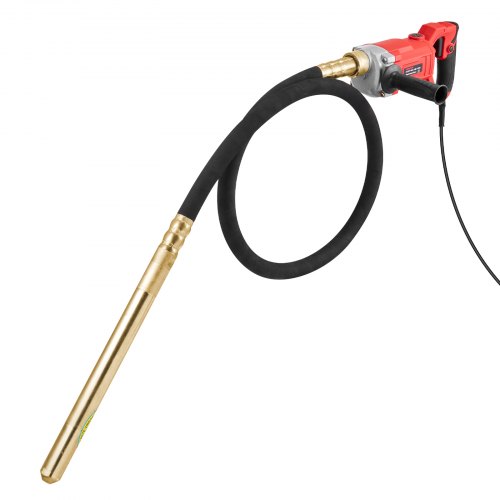
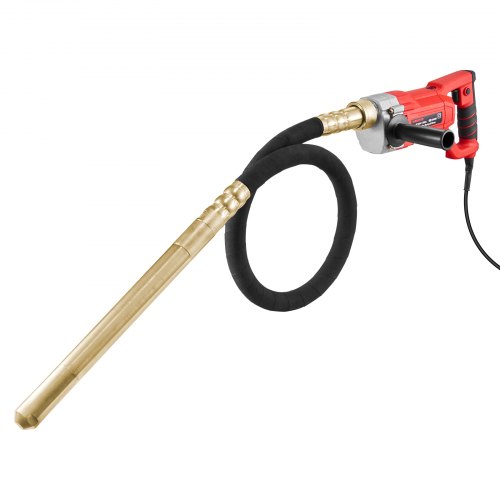
VEVOR concrete vibrators are internal (immersion) electric pencil vibrators that drive a slim vibrating head through a flexible shaft, and they are offered in two power classes. The compact 800W class runs at 13,000 VPM on a 6.6ft shaft for shallow to mid-depth work, while the 1300W class steps up to a 2 HP copper motor, 16,000 VPM, and a 14.75ft shaft for deep, high-volume pours. Alongside the handheld range, the broader concrete vibrator collection sits within VEVOR's wider concrete and masonry tooling for placing and finishing fresh slabs. Typical uses are residential slabs, footings, fence posts, countertop pours, columns, retaining walls, bridge decks, and large commercial foundations.
Four things decide what you need:
- Pour depth: match shaft length to how deep the form is, since the head must reach the bottom of the lift to consolidate it.
- Mix volume and frequency: occasional residential pours suit the lighter 800W tool, while daily or high-volume work rewards the higher-output 1300W motor.
- Rebar spacing: the head diameter has to fit between the reinforcement bars, so tightly spaced cages need a slim pencil head.
- Duty cycle: long, continuous pours generate heat, so a copper motor built for extended running protects against overheating and stalls.
Ready to pour with confidence? Browse the full VEVOR concrete vibrator range to compare power and shaft options, or explore the handheld electric concrete vibrator lineup and pick the model that matches your project depth and workload.
Concrete Vibrator Types at a Glance
The grid below separates the main concrete vibrator classes by the specifications that affect on-site performance, so you can narrow the field before comparing individual models.
| Vibrator Class | Power Class | Vibration Speed | Shaft Reach | Selection Note |
| Compact internal (pencil) vibrator | 800W single-speed | 13,000 VPM | 6.6ft flexible shaft | Lightest to handle; best where pours are shallow and occasional |
| High-output internal (pencil) vibrator | 1300W, 2 HP copper motor | 16,000 VPM | 14.75ft flexible shaft | Widest radius and deepest reach; chosen for continuous commercial pours |
VEVOR Concrete Vibrator: Eliminate Air Bubbles and Build Stronger Concrete Every Time
One of the most expensive construction errors is pouring wet concrete without proper compaction. Trapped air bubbles and voids in newly cast concrete make the final structure weak, induce surface cracking, and reduce the service life of slabs, foundations, columns, and walls. A VEVOR concrete vibrator solves this problem by sending high-frequency vibrations through wet concrete, forcing trapped air to the surface and ensuring the mix fully consolidates around rebar and into formwork corners. Whether you are a homeowner, contractor, or site manager, the right concrete vibration tool is essential to every quality pour.
Power and VPM: Selecting the Right Concrete Vibrating Tool for the Task
The two most critical specifications when selecting a concrete vibrator are motor power in watts and vibration frequency in VPM (vibrations per minute). These two factors together determine how effectively your concrete vibration tool consolidates the mix, how deep the vibration radius reaches, and how quickly each section of a pour can be fully compacted. VEVOR currently offers two concrete vibrators that cover the full range of residential and commercial requirements.
For Residential and Light Commercial Use. The VEVOR 800W Handheld Concrete Vibrator with 6.6ft Shaft operates at 13,000 VPM and is the ideal concrete vibrating tool for homeowners, small contractors, and DIY builders working on residential slabs, footings, fence posts, garden walls, and countertop pours. It provides the necessary energy of vibration to entrained cement mixes down to an 800W to consolidate conventional concrete mixes in shallow to mid-depth pours without excessive weight and wear of the mix over a long period of use. The 6.6ft flexible shaft reaches comfortably into standard residential formwork depths, making it one of the most practical concrete vibrators for sale for home and small commercial use.
Built for Deep Pours and Professional Job Sites. For larger, more demanding applications, the VEVOR 1300W Electric Concrete Vibrator with a 14.75ft Shaft steps up significantly with 1300W of power, a 2 HP copper motor, and 16,000 VPM, delivering a wider vibration radius and deeper compaction penetration. The extended 14.75ft shaft reaches deep into columns, retaining walls, bridge decks, and large commercial foundation pours where shorter concrete vibrators simply cannot reach the bottom of the form. This vibration concrete tool is the construction contractors' and construction crews' professional-level tool when significant volumes of concrete have to be poured and must be compacted by all means at any depth.
Choosing between these two concrete vibrators comes down to pour depth, mix volume, and frequency of use. Both models are very effective in the removal of air bubbles and honeycombing; the distinction lies in the reach, power output, and the magnitude of projects that each concrete vibrater is available to perform.
Matching a Concrete Vibrator to the Pour
Power and shaft length only tell part of the story. The table below maps common pour scenarios to the practical factors that decide whether a pour succeeds, including the on-site conditions the sections above do not tabulate.
| Pour Scenario | Priority Setup | Deciding Factor | What to Watch For |
| Countertops and thin slabs | Lighter 800W, slim head | Over-vibration risk | Short bursts only, or the surface segregates and weakens |
| Footings and residential walls | 800W, 6.6ft shaft | Lift depth | Keep each lift within shaft reach so the head hits the base |
| Columns and retaining walls | 1300W, 14.75ft shaft | Congested rebar | Insert the head between bars, never force it against steel |
| Large commercial foundations | 1300W, copper motor | Continuous run time | Heat builds fast, so a copper-wound motor avoids mid-pour stalls |
| Cold-weather or stiff mixes | 1300W, higher VPM | Lower mix slump | Stiffer concrete needs more energy to flow and release air |
Key Features That Make VEVOR Concrete Vibrators Perform on Any Job Site
Beyond raw power and VPM ratings, the practical features built into a concrete vibration tool determine how comfortable, safe, and efficient it is to operate during a real pour. VEVOR concrete vibrators are engineered with job site usability in mind across every component.
Copper Motor Construction. It is the best durability feature in the VEVOR line of concrete vibrators. The 1300W model has a 2HP pure copper motor, which does not heat up in prolonged continuous operation, which is a major demerit in the large pours when the concrete vibrating tool can take hours without having to stop. Moreover, copper wound motors perform consistently even when on a load and last much longer than the aluminum wound versions operating in the same operating environment.
Pencil Head Design. VEVOR concrete vibrators allow the vibration head to be inserted precisely between rebar and into tight formwork corners where air bubbles are most likely to become trapped. The slim pencil profile is the industry standard for internal concrete vibrators and allows full insertion into even closely spaced reinforcement configurations without damaging the rebar layout.
Flexible Shaft Rod. Both models have Flexible Shaft Rod construction to enable the shaft to bend to some degree when it is pushed through wet concrete without bending or breaking. This flexibility is essential for concrete vibrators used in angled pours, tapered forms, and any application where the insertion point is not perfectly vertical. The shaft connection points on both VEVOR concrete vibrators are reinforced to prevent the most common failure point in vibration concrete tool operation, shaft separation at the motor coupling during heavy use.
Correct Technique for Using a Concrete Vibrator for Best Results
Having the proper concrete vibrating tool is half of the battle; however, proper use makes the difference between properly consolidated concrete and a pour full of unseen vulnerabilities. It is important to insert your concrete vibrater properly so that it gives maximum performance at any job.
Insert the concrete vibrator vertically into the mix at regular intervals, spacing each insertion point no more than 18 inches apart to ensure the vibration radius from each insertion overlaps with the next. Allow the vibration concrete tool to remain in position with a time interval of 5 to 15 seconds per insertion point, enough time to notice air bubbles rising to the surface and ceasing, but not excessive time to allow the mix to segregate. Withdraw the concrete vibrators slowly at a rate of approximately 3 inches per second to allow the hole left by the shaft to close fully. Do not drag the concrete vibrating tool horizontally against the mix since this will result in the segregation of the aggregate and the slab that has been completed becomes weaker.
Best-Seller Comparison
The lineup below places VEVOR's handheld concrete vibrators alongside its gas vibrating power screeds, so you can see across the range of VEVOR tools that consolidate and level fresh concrete and pick the one that fits how you place and finish a pour.
| Product | Tool Type | Power Source | Output | Working Reach | Vibration Action | Best For |
| Handheld Vibrator 800W, 6.6ft | Internal pencil vibrator | Electric, corded | 13,000 VPM | 6.6ft flexible shaft | Immersion head in the mix | Lightest tool here; shallow residential slabs and footings |
| Electric Vibrator 1300W, 14.75ft | Internal pencil vibrator | Electric, corded | 16,000 VPM | 14.75ft flexible shaft | Immersion head in the mix | Deepest internal reach; high-volume commercial columns and walls |
| Gas Power Screed 6ft Board | Vibrating power screed | Gas, 4-stroke 1.16 HP | 6,500 RPM | 6ft aluminum board | Surface vibration and strike-off | Most maneuverable screed; tighter patios and single-pour pads |
| Gas Power Screed 11ft Board | Vibrating power screed | Gas, 4-stroke 1.16 HP | 6,500 RPM | 11ft aluminum board | Surface vibration and strike-off | Widest screed span; large flat slabs leveled in fewer passes |
| Gas Power Screed 12ft, Support Legs | Vibrating power screed | Gas, 4-stroke 1.16 HP | 6,500 RPM | 12ft aluminum board | Surface vibration with support legs | Only screed here with support legs; driveways needing a stable rest |
VEVOR Concrete Vibrators: Professional Compaction Performance at Every Budget!
VEVOR offers the most reliable concrete vibrator for sale options for both residential and professional use, from the portable 800W concrete vibrating tool perfect for DIY home projects to the high-output 1300W concrete vibrater built for demanding commercial pours. Every VEVOR concrete vibration tool is backed by a 30-day money-back guarantee and a one-year warranty. Browse the full VEVOR concrete vibrators collection today, click any product to view complete specifications and current pricing, and get the right vibration concrete tool to guarantee stronger, bubble-free concrete on every pour.
FAQs
Are cordless concrete vibrators as effective as corded ones?
For sustained compaction, corded electric vibrators remain the dependable choice because they deliver constant power without battery fade. VEVOR's current concrete vibrators are corded electric models, so vibration frequency stays steady across a long pour rather than tapering as a battery drains.
What are the main types of concrete vibrators and their uses?
The most common type is the internal (immersion) pencil vibrator, which is inserted into wet concrete to consolidate deep pours around rebar. Surface tools such as vibrating power screeds instead level and finish the top of slabs and flatwork.
What maintenance is required for concrete vibrating machines?
After each pour, clean wet concrete off the head and shaft before it hardens, then check the flexible shaft and coupling for wear. Keep the motor housing free of grit, inspect the cable for damage, and store the tool dry so the pencil head and bearings stay in working order.
Are there any tips for using concrete vibrators effectively?
Yes. Insert the electric concrete vibrator vertically, space insertion points about 18 inches apart so vibration radii overlap, and hold each spot for 5 to 15 seconds until bubbles stop rising. Withdraw slowly, roughly 3 inches per second, and never drag the head sideways.
Should I choose a gas-powered, electric, or cordless battery concrete vibrator?
Choose by power access and job type. VEVOR's internal concrete vibrators are corded electric, ideal for deep immersion compaction near a power supply, while its gas power screeds suit open slabs where no outlet is nearby.
What should I look for when buying a handheld concrete vibrator?
Match shaft length to your deepest pour, confirm the VPM and motor power suit your mix volume, and favor a copper motor for long continuous runs. A slim pencil head that fits between rebar and a reinforced shaft coupling are the practical details that separate a durable tool from a short-lived one.
What is the difference between handheld and high-frequency concrete vibrators?
Handheld refers to the form factor, a portable immersion tool you guide by hand, while high-frequency describes the vibration speed in VPM. VEVOR's handheld concrete vibrators are also high-frequency, running at 13,000 to 16,000 VPM, so a single tool delivers both portability and the rapid vibration needed to release air.
Is it hard to use a handheld concrete vibrator?
No. A handheld concrete vibrator is straightforward: switch it on, insert the head vertically, hold briefly until air bubbles stop, then withdraw slowly and move to the next point. The flexible shaft and lightweight body make it manageable even for first-time DIY users, provided you avoid over-vibrating the mix.
