Spindle Sanders
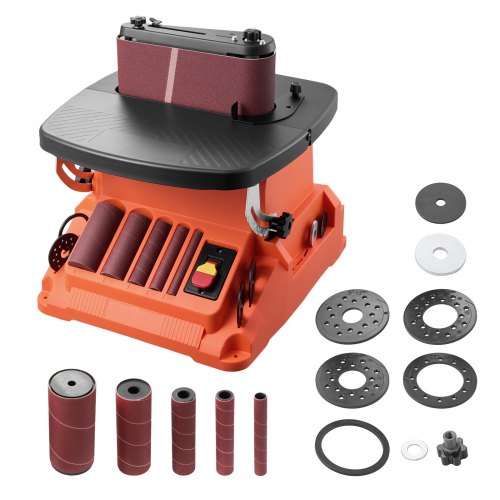


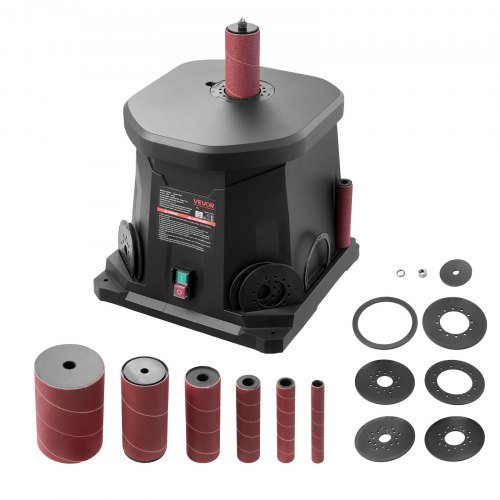


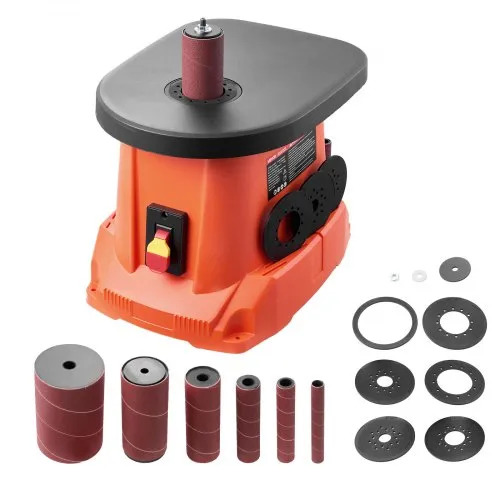


Results for Spindle Sanders
For woodworkers, cabinet makers, furniture builders, and hobbyists who require accurate, reliable sanding of curved, contoured, and irregular workpiece profiles that flat sanders cannot reach, VEVOR has designed spindle sanders. Every project size, wood species, and curve shape is covered by VEVOR's assortment, which varies from small benchtop spindle sander models for small workshop areas to fully functional benchtop oscillating spindle sander setups with extensive spindle size variations. With the full line of spindle sanders from VEVOR, you can sand curves more smoothly and with better control.
VEVOR Spindle Sanders: Oscillating Benchtop Sanding Machines for Smooth Curved and Contoured Woodwork
Are you having trouble finishing odd scroll saw profiles, arched cabinet doors, or tight inside curves with smooth, consistent finishes? VEVOR spindle sanders eliminate the typical flat-sander issues of inconsistent pressure and corner burning by combining oscillating spindle motion with various drum diameters that extend into every curve radius. VEVOR provides the ideal tool, whether you require a full oscillating spindle sander for production woodworking or a small benchtop spindle sander for a home workshop.
Spindle Size & Motor Power in VEVOR Spindle Sanders
The two main parameters that determine which curves a spindle sander can access and how well it removes material from various wood species and workpiece thicknesses are spindle diameter range and motor power. Aligning both with your regular tasks ensures accurate, effective sanding of all the contours you work with.
Spindle Diameter Range: Matching Drum to Curve Radius
The machine's ability to sand a minimal inside curve radius depends on the diameter of the sanding spindle; a wider spindle can cover greater radius profiles more rapidly, while a narrower spindle can reach tighter curves. With interchangeable spindle sets spanning diameters from ½ inch to 3 inches, VEVOR spindle sanders can handle the common range of inside curve radii used in decorative woodworking, cabinetry, furniture manufacturing, and toy making. The tightest interior curves, such as those created by a scroll saw or a jigsaw cutting thin stock with small-radius ornamental features, are reached with a ½-inch spindle.
The medium-radius curves seen in chair rail profiles, cabinet door arches, and furniture aprons are covered by spindles with diameters of up to 1 inch and 1½ inches. Where a narrow spindle would leave ripple marks from the drum edge, larger 2 to 3-inch spindles effectively sand the broad, soft curves of architectural millwork profiles, larger bracket feet, and tabletop edges. Woodworkers can switch between tight and broad curve profiles in a single project session without acquiring additional equipment, thanks to VEVOR spindle sander kits, which come with multiple drum diameters in a single purchase, spanning the full diameter range without separate accessory purchases. During active project work, choosing the appropriate size for each curve is simple thanks to the clear spindle diameter labeling on VEVOR kits.
Motor Power: Sustained Performance Across Hardwoods and Softwoods
When working against dense hardwoods like oak, maple, and walnut, which resist abrasion more than softwoods do, a spindle sander's ability to remove material under the strain of active sanding contact continuously depends largely on its motor power. The motor outputs of VEVOR spindle sanders range from ¼ HP for small hobby versions to ½ HP and higher for professional-grade benchtop setups.
On softwoods, MDF, and thin hardwood stock, where material removal requirements are low, and sessions are usually brief, a ¼ HP motor is sufficient for light sanding.
When actively sanding hardwoods, stepping up to a ½ HP motor gives you the sustained torque you need to keep the spindle speed constant under the lateral pressure. This feature avoids the speed drop that occurs when an underpowered motor bogs down in dense material, leading to uneven scratch patterns, burning, and poor surface quality. No matter how forcefully the workpiece is fed into the drum, VEVOR's more powerful benchtop oscillating spindle sander models maintain spindle RPM within a narrow operating range under load thanks to motor feedback systems that adjust for fluctuating contact pressure. This results in consistent scratch patterns and a high-quality surface finish. Motor power directly impacts surface quality and productivity for woodworkers who frequently work with hardwoods or conduct lengthy sanding sessions.
Table Size and Workpiece Support
The ability to safely support larger workpieces during sanding depends on the sanding table surrounding the spindle. Inadequate table size leads to uncomfortable cantilevered handling of the workpiece, compromising operator safety and surface quality. When sanding large panel components, tabletop edges, and long, curved furniture parts, VEVOR benchtop spindle sander tables are sized to support workpieces well beyond the immediate spindle contact zone, offering robust full-surface support.
Heavy-duty steel or cast-iron table structures on VEVOR models ensure a constant, flat reference surface that keeps the workpiece straight to the spindle during the sanding pass by resisting flexing under workpiece pressure. To prevent thin-workpiece edges from dipping into the table gap during sanding and to ensure consistent contact across the entire workpiece thickness, VEVOR sanders feature spindle table inserts that match each drum's diameter. These inserts are interchangeable rings that are sized to close the gap between the spindle and the table opening for each drum size.
Sanding Sleeve Grits and Consumable Availability
The choice of sanding sleeve grits at various stages of the sanding process affects the spindle sander's performance and wear on the machine. The standard-diameter sanding sleeves used by VEVOR spindle sanders come in grades ranging from fine 220 grit for pre-finish surface preparation to coarse 60 grit for quick material removal. Before switching to finer grits, coarse 60 to 80-grit sleeves manage the first shaping passes, eliminating saw marks, smoothing rough band-sawn curves, and setting the final profile geometry.
Sleeves with grits ranging from 100 to 120 blend the surface, eliminating rough scratches while further honing the profile. Sleeves of fine 150–220 grit bring the surface to a finish-ready state, free of noticeable sanding scratches and ready for painting, staining, or clear coating. Replacement sleeves are accessible through all major woodworking supply channels thanks to VEVOR's spindle size compatibility with standard sleeve dimensions. This feature eliminates the supply dependency that some rival machines' use of proprietary consumable sizes causes.
Features & Oscillation Range in VEVOR Spindle Sanders
Beyond spindle size and motor power, a benchtop oscillating spindle sander's oscillating mechanism and useful operational features influence how smoothly it produces a finish and how conveniently it operates for a variety of project types and session durations.
Oscillating Action: Why It Matters for Surface Quality
The characteristic that most sets a high-quality spindle sander apart from a low-end drum sander is oscillation, or the controlled up-and-down movement of the spindle during rotation. A spinning drum without oscillation concentrates sanding action in a fixed horizontal band, producing heat, rapidly loading the abrasive surface, and leaving circular scratch patterns that are challenging to remove during later finishing operations.
Usually covering a stroke range of ½ to 1 inch per rotation cycle, VEVOR oscillating spindle sanders move the drum vertically while it rotates. By distributing abrasive contact across the entire height of the sanding sleeve on each pass, this combined motion prolongs the sleeve's life, prevents heat concentration, and creates a finer, more uniform scratch pattern that requires less hand sanding before finishing. As the sleeve moves vertically, the oscillating motion also continuously introduces new abrasives into the workpiece's contact zone, minimizing loading and glazing that can cause the abrasives to cease cutting effectively. The oscillating mechanism in VEVOR's benchtop oscillating spindle sander models is the most significant performance attribute that sets the machines apart from non-oscillating competitors for woodworkers concerned about final surface quality.
Dust Collection Port and Workshop Integration
In confined workshop spaces, spindle sanding produces a lot of fine wood dust that quickly becomes airborne. This health risk necessitates active control through dust collection rather than relying solely on ambient air filtration to capture particles generated during active sanding. A regular 2½-inch shop vacuum hose connection, the most popular dust collection hookup in small to medium workshops without specialized ducted extraction systems, is compatible with the dust collection port on VEVOR spindle sanders.
To capture a large share of particles before they become airborne, the ports on VEVOR models draw dust directly from beneath the sanding table, where most of the generated dust falls. Woodworkers who have specialized dust collectors can integrate the spindle sander into an existing shop dust collection network without the hassle of locating adapters, thanks to VEVOR's interface, which accepts conventional reducer fittings that connect to 4-inch collector tubing. Efficient dust extraction shields the sander's motor internals and the woodworker's respiratory system from the fine dust buildup that can accelerate bearing wear and motor winding deterioration over time.
Why Choose VEVOR Spindle Sanders for Your Woodworking Shop?
Wide spindle-diameter ranges, powerful continuous motors, smooth oscillating action, and useful dust-collection integration are features that VEVOR spindle sanders combine to deliver professional-quality curved-sanding results to both production woodworkers and enthusiasts. Whether you need a full-featured benchtop oscillating spindle sander for demanding curved work or a small benchtop spindle sander for a home shop, VEVOR's portfolio covers a wide range of needs at competitive prices, backed by dependable after-sales service. Explore the VEVOR collection to find spindle sanders that help you achieve smooth, consistent curves.
FAQs
What spindle diameter do I need for tight inside curves?
A ½-inch to ¾-inch spindle can reach very small radii for tight interior curves created by jigsaw or scroll saw cuts. Architectural millwork profiles, furniture aprons, and cabinet arches with wider curves are better suited for larger 1½ to 3-inch spindles.
What is the benefit of oscillating spindle sanders over non-oscillating models?
To distribute abrasive contact along the entire sleeve height, oscillating spindle sanders move the drum vertically. This is superior to fixed-position, non-oscillating drum sanding because it avoids heat buildup, prolongs sleeve life, reduces loading, and produces finer scratch patterns.
What motor power do I need for hardwood sanding on a benchtop spindle sander?
Regular hardwood sanding with a benchtop oscillating spindle sander requires a motor with at least ½ horsepower. On dense species like oak and maple, lower-powered motors bog down under the pressure of lateral sanding, resulting in uneven surface finish quality and burning.
Can I connect a VEVOR spindle sander to my shop vacuum?
Yes. The dust collecting port on VEVOR spindle sanders is compatible with conventional 2½-inch shop-vac hose connections. For workshops that have already ducted extraction systems, reducer fittings enable connecting to a 4-inch dedicated dust collector hose.
How often should I replace sanding sleeves on a spindle sander?
Sanding sleeves should be replaced when they no longer cut effectively, as indicated by increased sanding pressure, increased heat, or a glazed abrasive surface visible on the sleeve. Regular use of a rubber abrasive cleaning stick significantly extends the time between sleeve replacements.