Sanders




















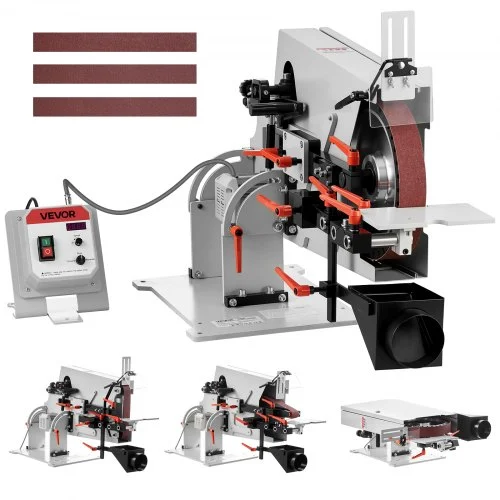


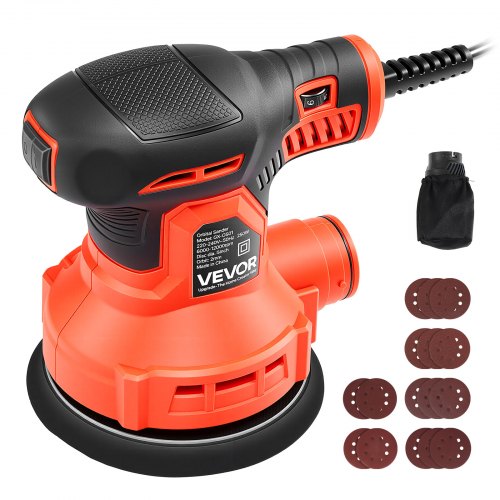


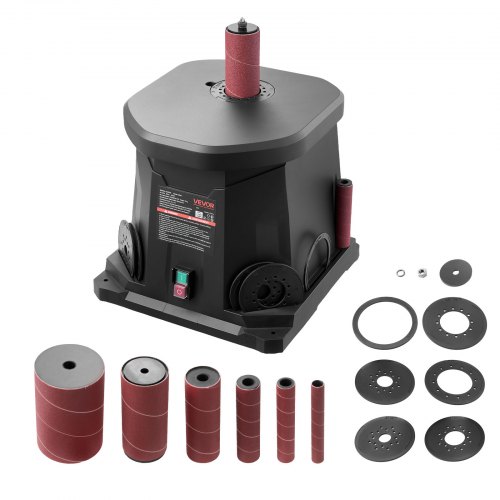


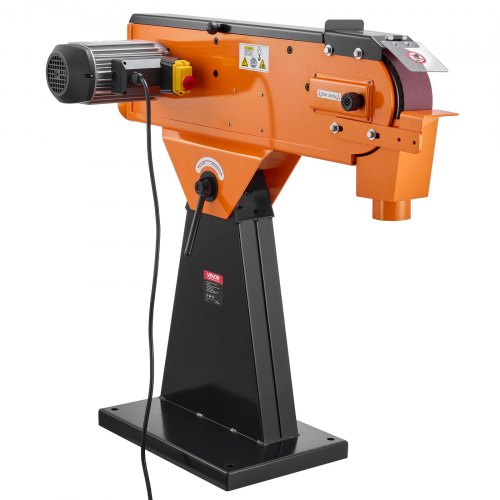


Results for Sanders
A sander is a power tool that smooths a surface by pressing a moving abrasive against it. An electric motor drives sandpaper or an abrasive belt in a loop, a circle, or an oscillating pattern, and the fast-moving grit shaves away a thin, even layer of material with every pass. Depending on the grit fitted, the same action can strip old coatings and level rough stock or bring a surface to a fine, finish-ready smoothness. By replacing slow, uneven hand sanding with steady mechanical motion, it removes material faster, leaves a more consistent surface, and spares the operator hours of effort.
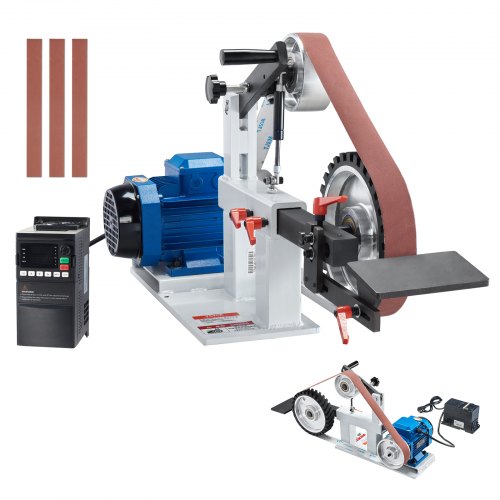
Sanders divide by the motion of the abrasive and the surface they suit. Belt grinders and belt sanders run a continuous belt for fast stock removal and metal or knife work, random orbital sanders move a pad in tiny random circles for swirl-free finishing, spindle sanders use an oscillating drum for curves and inside edges, and drum sanders feed wide panels under a rotating drum for even thickness. Motor power spans roughly 150W detail sanders to 1500W (2 HP) belt grinders, with variable or VFD speed on most. Typical uses are rough stock removal and paint stripping, fine furniture and cabinet finishing, shaping curved parts, and calibrating panel thickness.
Four things decide what you need:
- Sanding action: match the motion to the job, a belt for fast removal, a random orbit for swirl-free finish, an oscillating spindle for curves, a drum for thicknessing.
- Motor power: heavier stock and dense hardwoods need higher wattage (up to 1500W or 2 HP); detail and finish work runs fine on 150 to 450W.
- Speed control: variable or VFD speed lets one tool run fast on hardwood and slow on softwood or veneer to avoid gouging and burn-through.
- Dust collection: a sealed port that fits a shop-vac hose protects your lungs and keeps the surface visible during long sessions.
Ready to pick a sander? Browse the full sanders collection, or go straight to the belt grinder range for metal and knife work.
Sander Types at a Glance
Sanders separate by how the abrasive moves and the surface it suits, so the sub-types below are the categories a buyer chooses between before looking at specs.
| Type / Sub-type | Sanding Action | Best Surface | Material Removal | Selection Note |
|---|---|---|---|---|
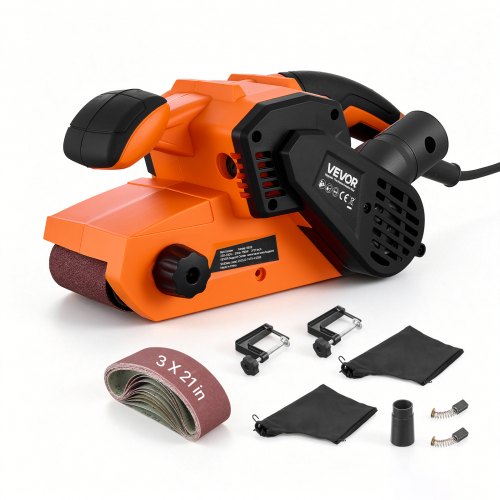
| Belt sander / grinder | Continuous belt in one direction | Large flat areas, edges, metal | Fast and aggressive | Rough a surface down first; too coarse for a final finish |
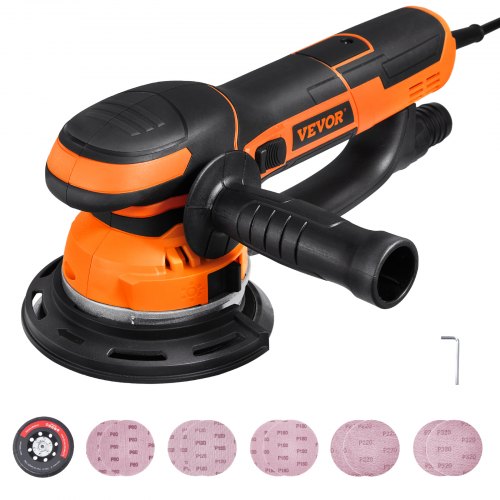
| Random orbital sander | Pad spins and orbits randomly | Flat panels and finishing | Moderate, swirl-free | The finisher; last smoothing before stain or paint |
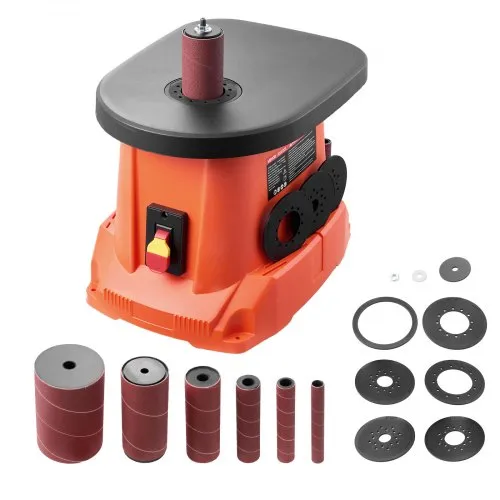
| Spindle sander | Oscillating vertical drum | Curves and inside edges | Moderate, controlled | The only pick for tight radii and contoured edges |
| Drum sander | Wide drum over a feed belt | Wide panels, thicknessing | Precise, uniform | Calibrates panel thickness evenly, not for freehand shaping |
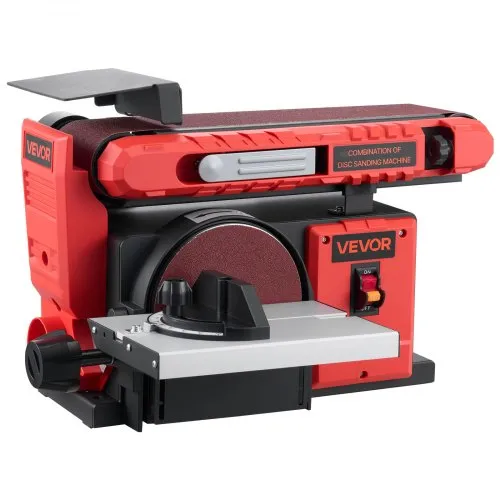
| Belt and disc combo | Belt plus a rotating disc on a bench | Mixed bench tasks | Varies by station | Two actions on one base; versatile for a small shop |
VEVOR Professional Sanders for Woodworking, Construction, and Finishing Projects
Are you looking for the finest way to sand your surface like a pro? The best sander turns rough wood into smooth, ready-to-finish surfaces, which saves people hours of work. VEVOR offers sanders for a range of applications, from heavy-duty stock removal to very fine finishing. Our extensive range of tools makes sure you'll find the right one for your project, whether you're prepping a car body, smoothing drywall, refinishing a deck, or restoring furniture.
Sander Type & Application: Choosing the Right Tool for Your Project
For your particular application, efficiency and final surface quality are determined by the choice of sander. You can achieve the best results while avoiding damage to your project by understanding how different sanders work and which materials they perform best on.
Belt Sanders for Rapid Material Removal and Large Surface Preparation
Belt sanders are widely used for smoothing rough surfaces, removing old coatings, and dimensioning rough lumber, as they can remove a lot of material quickly. These powerful machines cut evenly across large areas by using a continuous abrasive belt that runs between two drums. Professional contractors use belt sanders when they need to work quickly and efficiently, including when refinishing hardwood floors, smoothing large tabletops, or removing paint from deck surfaces.
A belt sander's capacity depends mainly on the belt width and motor power. For example, 76mm belts are good for detail work and edge sanding, while 100mm models are common for furniture and cabinetry projects. When sanding dense hardwoods like oak or maple, professional-grade belt sanders with 900–1200-watt motors maintain a stable belt speed under load, reducing the risk of belt stalling. Variable-speed control lets operators change how aggressive they are. It runs faster to remove tough materials and slower to avoid gouging softer woods.
A key difference between many entry-level and professional belt sanders is that professional models often have built-in dust collection systems. This is because they produce a lot of dust while working. High-quality belt sanders connect to shop vacuum systems via special ports to capture 85–90% of the dust they generate at the source. This feature protects your lungs when you sand for extended periods and keeps the work surface clearly visible. Belt-tracking adjustments keep the abrasive centered on the drums, reducing edge wear and substantially extending the belt's life.
Orbital Sanders Delivering Swirl-Free Finishing on Flat Surfaces
Because of their unique circular sanding motion, palm sanders produce smooth, scratch-free surfaces ideal for staining and finishing applications. Orbital sanders move abrasive pads in tiny circles, producing a random scratch pattern that vanishes under finish coats, whereas belt sanders cut in a single direction. For final smoothing of furniture, cabinets, and trim work where surface quality directly affects the final appearance, woodworkers use palm sanders.
One of the most adaptable types of sander is the random orbital sander, which eliminates directional scratching by combining orbital motion with pad rotation. These sanders are perfect for figured woods, veneers, and cross-grain applications because of their dual-action movement, which helps reduce swirl marks even when sanding across the grain. With hook-and-loop backing systems that allow rapid abrasive changes without adhesives or tools, pad sizes range from 125mm for general work to 150mm for larger areas.
Rectangular pads that accept standard sandpaper sizes are used by quarter-sheet and half-sheet sanders, providing affordable abrasive alternatives for consumers on a tight budget. These palm sanders are useful additions to random orbital versions because they perform very well in corners and along edges that round pads cannot reach. With variable-speed capabilities, operators can adjust the aggressiveness of the sanding to match the material's hardness. For example, higher speeds level solid wood surfaces before finishing, while lower speeds prevent burn-through on veneers.
Spindle Sanders for Curved Surfaces and Intricate Detailing
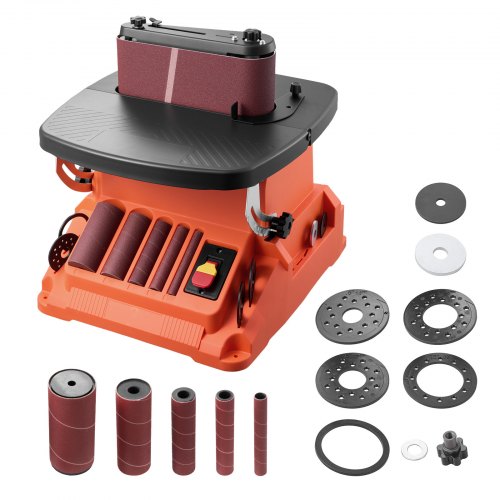
Spindle sanders can smooth out curved surfaces, internal cuts, and complicated profiles that flat sanders can't reach. These specialized machines can sand guitar bodies, furniture curves, scrollwork, and turned parts with great precision because their vertical oscillating drums are covered in abrasive sleeves. People who work with curved shapes say spindle sanders are essential tools for achieving professional results.
Benchtop spindle sanders can handle a range of drum sizes, from 13mm for tight-radius work to 75mm for soft curves. The oscillating action keeps the sandpaper from getting grooves and spreads wear evenly across the abrasive sleeve by moving the drum up and down as it spins. This action also keeps heat from building up, which could make adhesives in laminated assemblies less strong or burn delicate woods.
With tilting tables, you can sand curved edges, and the tabletop work surfaces around the spindle provide a strong base while workpieces are being sanded. As the oscillating drum drops debris, it falls through dust holes under the table that are linked to collection devices. Professional spindle sanders have several table inserts that closely surround the drum, reducing gaps that could catch small workpieces or cause uneven sanding pressure.
Drum Sanders for Thickness Calibration and Wide Panel Surfacing
For large panels that are too wide for many planers or require more precise control than thickness planers can provide, drum sanders offer precise thickness reduction and surface calibration. These stationary devices remove a consistent amount of material across the entire width in a single pass by feeding stock beneath a revolving drum covered with abrasive. Cabinet shops and furniture manufacturers use drum sanders to produce consistently thick, very flat panels for doors, tabletops, and case components.
Depending on the material hardness and the desired surface quality, conveyor feed systems can move material past the sanding drum at preset speeds, usually between 1 and 3 meters per minute. While quicker speeds boost productivity when smoothing pre-planed materials, slower feed rates can remove more material per pass and often produce finer surface finishes. Operators can achieve precise final dimensions without trial-and-error adjustments thanks to digital thickness gauges that display exact drum height settings.
By enabling stock to stretch beyond one side, open-end drum sanders may accommodate panels slightly wider than the nominal drum width, hence increasing capacity for large glue-ups. In addition to feed rate modifications, variable-speed drum rotation provides greater control over material removal rates and surface quality. Compared to full-wrap sleeves, segmented drums with removable abrasive strips lower consumable costs. This is especially useful in production settings that process hundreds of panels each month.
Which Sander for the Job and Grit
The section above explains how each sander works; this table turns that into a plan, pairing a common task with the sander, a starting grit, and the pitfall to avoid.
| Task | Sander to Reach For | Starting Grit | What to Watch For |
|---|---|---|---|
| Strip old paint or a thick coat | Belt sander or belt grinder | 60 to 80 grit | Keep it moving; pausing in one spot digs a hollow |
| Dimension rough lumber | Belt sander, then drum sander | 80 grit, then 120 | Finish on the drum for a flat, even thickness |
| Smooth a flat panel before stain | Random orbital sander | 120 to 180 grit | Let the tool's weight do the work to avoid swirl marks |
| Sand a curved or scrolled edge | Spindle sander | 100 to 150 grit | Flat sanders cannot reach the inside curve cleanly |
| Blend a knife bevel or metal edge | Belt grinder with flat platen | 120 grit and finer | Dip metal to cool it so the temper is not lost |
Power & Features: Performance Specifications That Define Capability
Knowing the motor power ratings, speed controls, and ergonomic characteristics makes it easier to match sanders to specific jobs and ensure the operator is comfortable when using them for extended periods. Consumer-grade gear struggles in tough conditions, whereas professional-grade gear performs consistently well.
Motor Power and Speed Ranges for Different Materials
When sanding dense hardwoods or removing difficult coatings without slowing down, a sander's motor wattage directly affects its performance. Palm sanders are perfect for tasks that require more expertise than strength, as they typically feature motors ranging from 200 to 450 watts. Professional belt sanders, on the other hand, feature motors ranging from 850 to 1200 watts that provide you with steady power while working with difficult materials. Since sheet and detail sanders must be accurate and simple to control, their motors typically consume 150 to 300 watts.
With variable-speed control, single-purpose sanders may perform a wide range of tasks. Higher speeds work better for hardwoods like oak and maple, which cut well without overstressing the board. Softwoods like cedar and pine require gentle motion to avoid gouging and removing fibers. By automatically adjusting as the sanding pressure increases, electronic speed control helps prevent excessive speed drops that could result in uneven surfaces. As a result, the tool performs more reliably when the load varies.
You can adjust the tool's speed without releasing your grip thanks to paddle switches and thumb-operated variable-speed knobs. Whether you transition between materials or between rough and finish sanding, this keeps the work going. Because you don't have to keep pulling the trigger, lock-on buttons make long-term sanding less taxing. Smoothing out large areas that require 20 to 30 minutes of continuous labor is a wonderful use for this instrument. To prevent sudden shocks that could harm workpieces or make them difficult to handle, soft-start features gradually accelerate the motor at startup.
Dust Collection Systems for Clean Working Environments
Integrated dust collection is a common feature that distinguishes many professional sanders from basic consumer models, which significantly enhances visibility and air quality while reducing cleanup time after jobs. During regular shop operations, effective dust collection protects respiratory health by capturing particles at the source before they become airborne. High-quality sanders have sealed dust chambers attached to suction ports the same size as shop vacuum hoses, eliminating the need for adapters.
By placing perforations where debris builds up during sanding operations, multi-hole pad designs maximize dust evacuation on orbital and sheet sanders. High-end random palm sanders feature 6–8 hole patterns that align with the hook-and-loop abrasive discs' matching holes, creating airflow channels through the pad interface. Compared to earlier systems that used only peripheral collection skirts, this through-the-pad collection method generally outperforms them by capturing fine dust produced at the workpiece surface.
When operating at remote project sites or without shop vacuum systems, micro-filtration dust bags offer self-contained collection. Particles down to 1–5 microns that would otherwise escape into the breathing zone are captured by these reusable or disposable bags, which fasten directly to the sander's exhaust port. By eliminating overflow, which lowers collection efficiency and causes a mess during bag changes, transparent bag windows allow operators to check fill levels without removing bags.
Best-Seller Comparison
The columns line up the action, abrasive size, power, and what comes in the box so you can see where each one pulls ahead.
| Product | Sander Type | Abrasive Size | Motor Power | Speed | Key Feature | Best For |
|---|---|---|---|---|---|---|
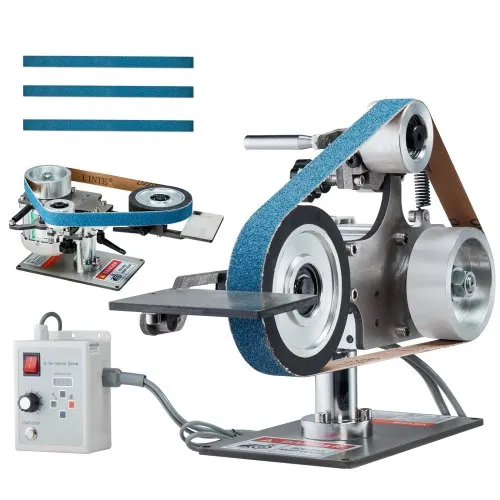
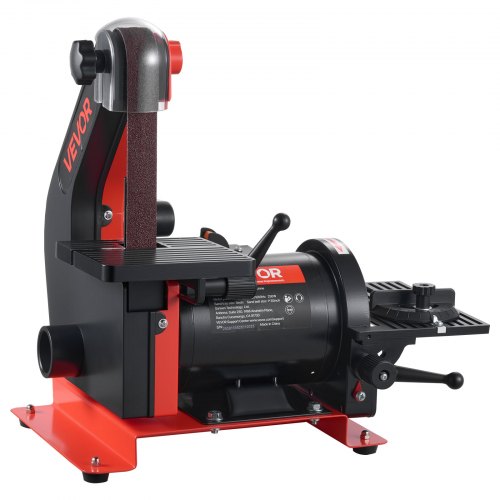
| Belt Grinder Sander, 30 x 1 in, 550W | Belt grinder | 30 x 1 in belt | 550W | VFD variable | 2 grinding moulds, 3 belts | Smallest belt here; light knife and metal detail work |
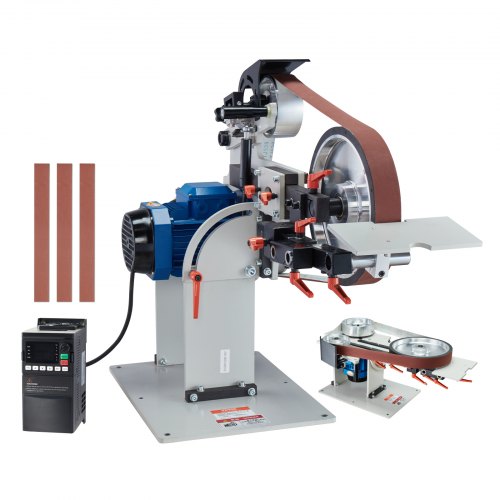
| Belt Grinder Sander, 72 x 2 in, 1500W 2HP | Belt grinder | 72 x 2 in belt | 1500W (2 HP) | VFD variable | 3 grinding moulds, 3 belts | Longest belt and most power; sustained metal grinding |
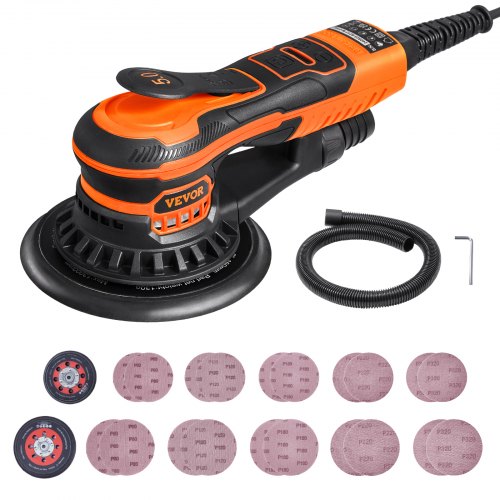
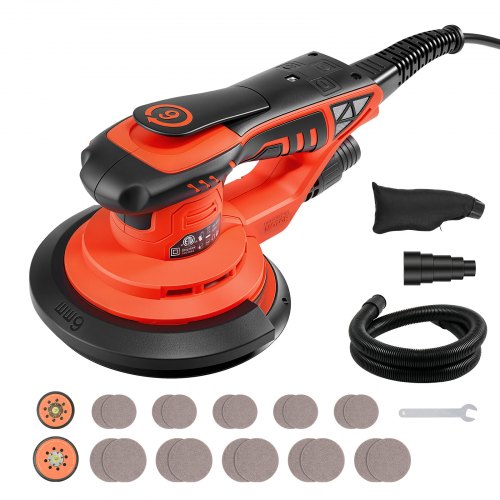
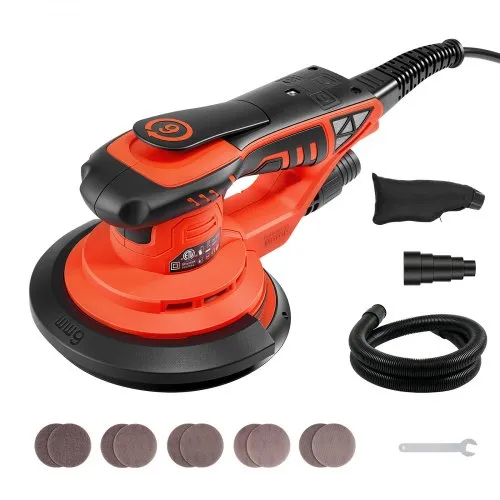
| Random Orbital Sander, 5 & 6 in, 350W | Random orbital | 5 and 6 in pad | 350W | 10,000 RPM, 6-speed | 20 sandpapers, dust hose | Only swirl-free finisher here; flat wood surfaces |
| 3-in-1 Belt Sander Grinder, 2 x 82 in, 2HP | Belt sander grinder | 2 x 82 in belt | 1500W (2 HP) | VFD variable | 3 moulds, flat platen rest | Only one with a flat platen; knife bevels and flat grinding |
| 10 in Benchtop Drum Sander, 1HP | Drum sander | 10 in drum | 1 HP | 1,725 RPM, variable feed | 4 in dust port, conveyor | Only thickness sander; calibrating wide panels |
Why Choose VEVOR Sanders for Professional Results and Lasting Value
VEVOR sanders perform at a professional level in all applications, from ultra-fine finishing work to rough stock removal. We guarantee that you will discover the precise tool your project requires thanks to our extensive product line, which includes specialty sanders for curved surfaces, flat panels, edges, and details. For contractors, woodworkers, and fabricators who require dependable equipment without premium brand markups, VEVOR is the smart choice thanks to its competitive pricing, sturdy construction, and prompt after-sales support. Discover tools designed to improve your craftsmanship while staying within your budget by perusing our entire selection of sanders.
FAQs
What's the difference between random palm sanders and regular palm sanders?
Random palm sanders are perfect for final finishing because they minimize directional scratches and swirl patterns by combining spinning and orbital motions. Ordinary palm sanders are useful for general smoothing and paint removal when minor scratches are acceptable, as they rotate in fixed circular patterns.
Can I use belt sanders to finish sanding?
Rather than being used for finishing tasks, belt sanders are built for aggressive material removal. Before applying finishes, their linear sanding action creates directional scratches that need to be further smoothed with orbital or sheet sanders. For final surface preparation, use palm sanders with increasingly finer grits.
How often should I replace sanding pads and abrasives?
When cutting performance significantly declines or surfaces need several passes, replace the abrasive discs. When the hook-and-loop fastening deteriorates or the pad surfaces become uneven and hardened, backing pads must be replaced. Good abrasives usually need to be replaced after 20 to 40 minutes of intensive sanding.
What dust collection options work best with sanders?
Shop vacuum systems provide the best dust collection for sanders with 6–9 horsepower and HEPA filtration. For optimal particle capture, connect equipment with hoses of the correct size (usually 32–38 mm in diameter) and ensure the vacuum capacity meets or exceeds the sander's airflow requirements.
Are variable-speed sanders worth the additional cost?
By enabling the proper speed selection for various materials and grit levels, variable speed control significantly increases versatility. Variable-speed versions prove beneficial for a wide range of project types, as they can be adjusted to prevent damage to soft materials and veneers. At the same time, higher speeds increase productivity on hardwoods.
What is the best sander for corner finishing?
For corners and tight edges, a detail or sheet sander with a pointed pad reaches where a round orbital pad cannot. A random orbital sander handles the open flats, then switch to a detail sander for the corners so the whole surface takes stain evenly.
What are the safety tips for using a power sander?
Wear a dust mask and eye protection, clamp the workpiece, and connect dust collection before starting. Keep both hands on the tool, let the abrasive reach speed before contact, and keep a belt or orbital sander moving so it does not gouge. Unplug it before changing belts or pads.
What are the best small sanders for detailed woodworking?
For fine detail, a compact random orbital or a benchtop belt grinder gives the most control. A 30 x 1 in belt grinder shapes small parts and knife edges, while a 5 to 6 in random orbital smooths figured wood and trim without leaving swirl marks.
How much does a sander cost?
Cost tracks the sander's size, motor power, and whether it is a benchtop machine, and it shifts with region and promotions, so check the current listing. As a non-monetary guide, a detail or palm random orbital sander is the entry-level choice, while a dual-motor drum sander is the premium, shop-grade build.