
Tractor Ballast Boxes













Results for Tractor Ballast Boxes
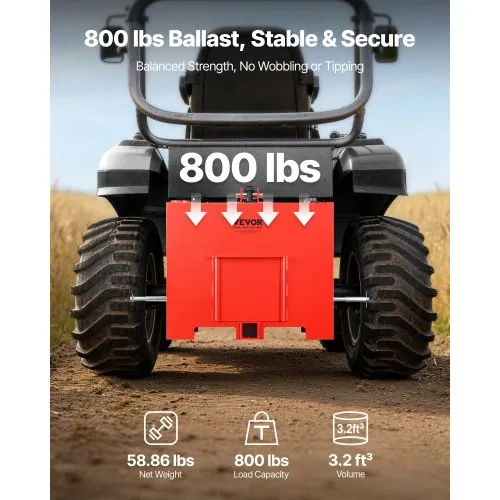
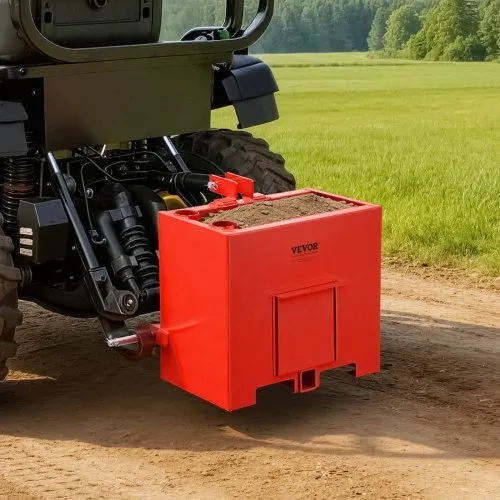
A tractor ballast box is a weighted attachment that mounts to the rear of a tractor to add counterweight. When a heavy load on the front of the machine shifts weight forward, the rear wheels lose grip and the front axle is overloaded, which makes the tractor unstable and hard to steer. A ballast box corrects this by placing mass behind the rear axle, pressing the rear tires back into the ground and easing pressure off the front. The result is steadier steering, stronger rear traction, and safer, more controllable handling whenever the machine carries a front-heavy load.
Most tractor ballast boxes share one design, a welded steel box on a Category I three-point hitch that you fill with sand, gravel, concrete, or steel plates, but they divide into a few classes by machine size. Compact boxes suit sub-compact and small tractors in the 15 to 35 horsepower range and carry lighter loads. Standard 3.2 ft³ boxes fit small to mid-size utility tractors from 20 to 60 horsepower. Larger 5 ft³ boxes serve mid-size and full-size machines up to 80 horsepower and hold more loose fill. Typical uses are counterbalancing a front loader, steadying a tractor on slopes, improving rear traction in mud or snow, and adding a towing receiver or toolbox to the back of the machine.
Four things decide which ballast box you need:
- Tractor size: match the box to your horsepower and rear hitch capacity so a heavy box does not overload a small machine.
- Target weight: a common guide is 10 to 15 percent of the tractor's operating weight, or enough to offset the loaded front implement.
- Fill material: concrete sets permanently, sand and gravel pour in and out easily, and steel plates let you adjust weight in increments.
- Box volume: a bigger cavity reaches the rated weight with lighter fill and leaves room for tools, while a smaller box needs denser material.
Browse VEVOR's full tractor ballast box collection to compare volumes and colors, or step up to the wider hitches and towing range for drawbars, receivers, and other rear attachments that work alongside a ballast box.
Tractor Ballast Box Types at a Glance
The table below sets the main ballast box classes side by side so you can match one to your tractor before comparing individual models.
| Sub-type | Suited Tractor (HP) | Rear Lift Demand | Front Load It Offsets | Selection Note |
|---|---|---|---|---|
| Compact-tractor ballast box | 15 to 35 HP | Low; light rear lift | Mower, blade, or small bucket | Keep the filled box light so a sub-compact's rear hitch is not overloaded |
| Utility-tractor ballast box | 20 to 60 HP | Moderate | A loaded loader bucket for daily work | Match the fill weight to the loader you run most often |
| Full-size ballast box | 40 to 80 HP | High; full rear lift | Heavy loader bucket that can top 1,000 lbs | Pick the larger volume so sand or gravel alone reaches 800 lbs |
VEVOR Tractor Ballast Boxes for Safer Operation, Better Traction, and Balanced Implement Work
Are you experiencing issues with rear wheel spin, front axle lift, or loss of steering control when using a front loader or heavy attachment on your tractor? Tractor ballast boxes attach to the rear three-point hitch and add counterweight, returning the machine to a balanced, controllable working position. The VEVOR collection of ballast boxes is available in standard and compact hitch categories, providing operators of full-size utility tractors and sub-compact machines alike with a suitably sized solution to keep their equipment stabilized under load.
Hitch Configuration and Tractor Compatibility: Getting the Right Fit from the Start
How a ballast box is hitched determines fit to the rear linkage and whether the weight placement provides the needed counterbalance. The tractor ballast boxes from VEVOR are built to the most common hitch specifications in the market.
Understanding the 3 Point Hitch Ballast Box and Why It Is the Industry Standard
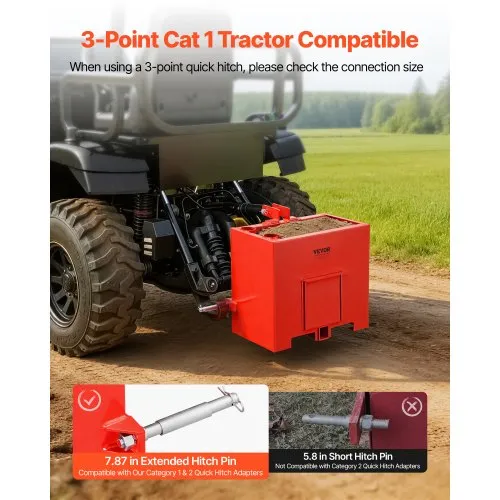
A 3-point hitch ballast box links to the rear Category I or Category II three-point linkage on the tractor, the same universal attachment method used by the great majority of tools in agricultural and landscaping applications. The standardized connection allows the ballast box to be mounted and dismounted rapidly, using the same technique as any other three-point device, with no adapters, special brackets, or tools required. VEVOR's 3-point hitch ballast box types are designed to fit the Category I hitch standard used on most small and mid-size utility tractors in the 20- to 60-horsepower range.
The three-point hitch mounts the ballast box behind the rear axle, which is mechanically ideal for counterbalance. The weight added at this location has the longest moment arm relative to the rear axle pivot point. Thus, a given ballast weight results in the highest feasible counterbalancing force against front-end lift. Therefore, a fully loaded 3-point ballast box provides more effective counterbalance per pound than ballast placed closer to the axle centerline.
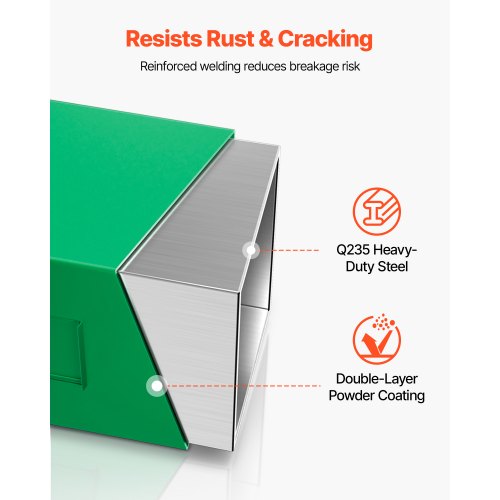
VEVOR's 3 point ballast box versions are made from welded steel plate with reinforced hitch pin sleeves to withstand repetitive lifting and lowering under the tractor's hydraulic lift system. The hitch connection points are machined to conventional dimensional tolerances, assuring a tight fit on compatible Category I tractors without the play and rattling associated with loosely toleranced aftermarket attachments.
Three-point ballast box sizing for full-size utility tractors
A three-point ballast box sized for a full-size utility tractor in the 40- to 80-horsepower range needs to carry enough ballast material to meaningfully counteract the weight of a mid-mount loader bucket loaded with soil or gravel, which can exceed 1,000 pounds of implement and material on the front of the machine. The larger 3 point ballast box types from VEVOR are designed with box volumes to hold a considerable amount of concrete, sand, or steel ballast weights.
The box dimensions for full-size versions are designed to fit within the tractor's rear wheel track so the ballast box isn't wider than the machine when working close to fence lines, gate openings, and building boundaries. Proper proportioning affects usability, because a ballast box that overhangs the rear wheel track causes clearance problems in tight spaces.
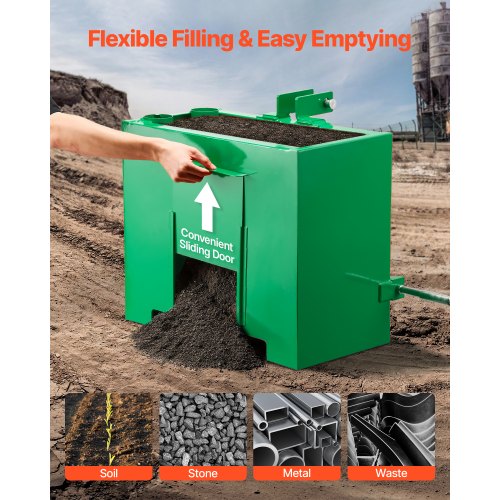
For operators who use a three-point ballast box as a permanent rear counterbalance throughout the working season, the design of the fill access is just as important as the box's structural integrity. VEVOR fill holes are designed to accommodate a standard-width shovel for easy filling with concrete or sand. The box base is sealed to prevent seepage when filling with liquid concrete, allowing a permanent ballast load that will not shift during operation.
Compact Tractor Ballast Box Options for Sub-Compact and Small Utility Machines
A compact tractor ballast box is sized and weight-rated for sub-compact and small utility tractors in the 15- to 35-horsepower range, where a full-size box could overwhelm the rear hitch capacity. All of VEVOR's compact tractor ballast box models are made with Category I hitch dimensions and are sized to the narrower rear track width and lower lift capability of smaller machines.
Sub-compact tractors are rising in popularity for residential and small-farm use, where a 25-horsepower machine is used for mowing, light loader work, and property care on all kinds of terrain. Even moderate bucket loads on a machine of this size, with a front loader, move enough weight forward to induce rear-wheel lift and steering instability on slopes. Filling a compact tractor ballast box with 200 to 400 pounds of ballast material can correct imbalance and restore rear traction and front-axle contact pressure for safer operation.
All VEVOR compact tractor ballast boxes use welded steel and reinforced hitch hardware like the larger models, scaled down in size but not quality. The same structural reliability that is so important in full-size utility machines is also important for operators of smaller tractors. The repercussions of a hitch connection failure are substantial, no matter the size of the tractor you operate.
Capacity, Fill Options, and Practical Features That Make Ballast Boxes More Useful
In addition to hitch compatibility and dimensions for the tractor ballast box, the extent to which it serves as a working tool for an entire season of use depends on its internal volume, the fill materials it will accept, and the practical elements integrated into its design.
Ballast Box Capacity and Fill Material Options for Different Weighting Needs
Ballast boxes are effective based on the weight of the fill material, with box volume limiting how much ballast you can carry. VEVOR's tractor ballast boxes are offered for both light counterbalancing and heavy-duty stabilization. Clear fill capacity figures are provided so operators can compute the approximate loaded weight for the fill material they choose.
Steel ballast plates are a cleaner alternative to poured or loose-fill materials when adjusting ballast without emptying the box. On larger VEVOR ballast box models, there are weight plate slots or internal ledges to accommodate standard tractor ballast plates, so weight can be added or removed in small increments as the front implement load changes from task to task. This adjustability is especially beneficial for operators who switch from a heavy loader to a lighter front blade on the same workday.
The sealed construction of VEVOR's models prevents water from entering poured concrete fills and stops loose ballast from washing out in wet conditions. This sealed structure helps maintain the ballast load over the long term, keeping the box at its rated counterbalancing weight throughout the season with no degradation.
Choosing a Fill Material for Your Ballast Box
The fill you choose decides the loaded weight and how easily you can change it, so the table below compares the common options on the factors that matter most.
| Fill Material | Weight per Volume | Adjustable After Filling? | Mess and Cleanup | Best Suited To |
|---|---|---|---|---|
| Concrete | High | No, sets permanently | Clean once cured; seal the box so it does not seep | Operators who want a fixed, season-long counterweight they never change |
| Sand | Moderate | Yes, shovel in or out | Can wash out if the box is unsealed; drains through the door | Those who adjust weight often and want fill that is easy to find and pour |
| Gravel | Moderate | Yes, pours in and out | Loose and dusty; empties quickly through the sliding door | Jobs needing a quick fill that still drains clean in wet conditions |
| Steel ballast plates | Very high | Yes, in set increments | No spillage or washout; cleanest to handle | Operators switching front implements who fine-tune weight by the plate |
Built-In Features That Extend the Usefulness of a Tractor Ballast Box
The most practically useful element installed in many tractor ballast boxes, beyond simple weight capacity, is the rear reception tube or toolbar mounting point built into the box structure. VEVOR's ballast box models feature a rear-facing 2-inch receiver hitch tube on select configurations, allowing attachment of a trailer ball mount, drawbar, work lights, or toolbox to the back of the ballast box.
Lift hooks are welded to the top of the box structure, allowing the ballast box to be moved with a loader bucket or overhead hoist when loaded with concrete or heavy ballast material, making it feasible to reposition the box without draining the filled box first. A fully loaded concrete-filled ballast box is difficult to move without heavy equipment or lift hooks.
For rear visibility, VEVOR's ballast box designs have a proportionate height. If a box rides too high relative to the tractor's rear window line, it obstructs the operator's view of the hitch connection area and the ground directly behind the machine, making backing maneuvers and implement alignment difficult. VEVOR's tractor ballast boxes are sized to allow an acceptable rear view from the operator seat, so the counterbalancing gear on the three-point hitch does not become an operational burden during use.
Best-Seller Comparison
The models below are the current best sellers in this collection, listed in catalog and compared on the specs that differ between them. Width, height, and net weight are for the box without the hitch fitted.
| Product | Internal Volume | Width | Height | Net Weight | Finish Color | Best For |
|---|---|---|---|---|---|---|
| 5 ft³ Ballast Box, Red | 5 ft³ | 16.06 in | 23.42 in | 71.65 lbs | Red | Largest box here, 16 in wide and 72 lbs empty; most counterweight capacity, in high-visibility red |
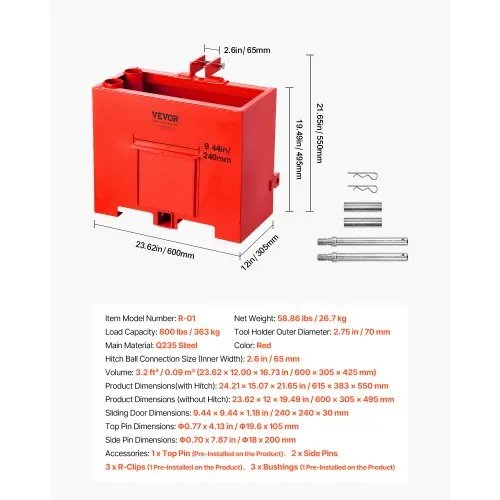
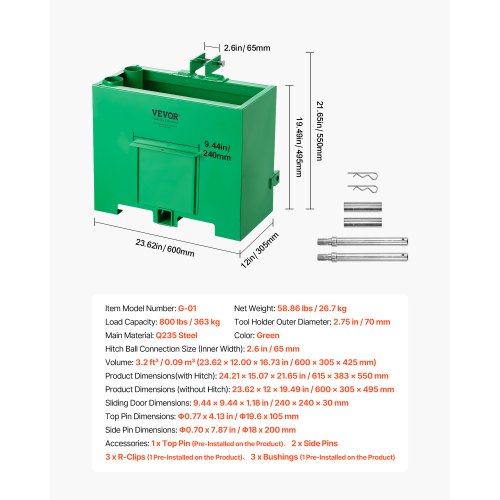
| 3.2 ft³ Ballast Box, Green | 3.2 ft³ | 12 in | 19.49 in | 58.86 lbs | Green | Narrowest 12 in footprint for tight wheel tracks; muted green for farm fleets |
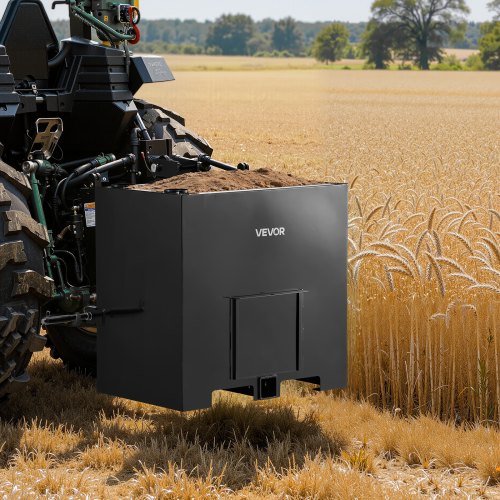
| 3.2 ft³ Ballast Box, Black | 3.2 ft³ | 12 in | 19.49 in | 58.86 lbs | Black | Same compact 3.2 ft³ box in low-key black that hides dust and scuffs |
| 5 ft³ Ballast Box, Orange | 5 ft³ | 16.06 in | 23.42 in | 71.65 lbs | Orange | Full 5 ft³ box in safety orange; the tallest, highest-visibility pick for shared yards |
| 3.2 ft³ Ballast Box, Orange | 3.2 ft³ | 12 in | 19.49 in | 58.86 lbs | Orange | Compact 3.2 ft³ box in safety orange; low 19.5 in height keeps rear sightlines clear |
Shop VEVOR Tractor Ballast Boxes for Better Balance and Safer Tractor Operation
VEVOR tractor ballast boxes have 3-point hitch designs for full-size utility tractors and compact tractor ballast box designs for smaller machines. VEVOR tractor ballast boxes are constructed of welded steel with strengthened hitch hardware and useful features such as rear receiver tubes and lift hooks. VEVOR tractor ballast boxes are competitively priced and provide solid after-sales service. Explore the full selection online and discover the ballast box that will restore stability, traction, and control to your tractor operation.
FAQs
What category hitch do VEVOR tractor ballast boxes fit?
Most VEVOR tractor ballast boxes fit Category I three-point hitches, common on tractors in the 20- to 60-horsepower range. Always check your tractor's hitch category before buying to ensure you have the correct pin specifications.
What is the best material to fill a tractor ballast box with?
Concrete provides high weight per volume and cures to a permanent ballast load. Sand and gravel are easier to add and remove, giving you customizable ballast. If you are switching ballast levels regularly between tasks, the cleanest solution is steel weight plates.
Can I attach a trailer ball to a VEVOR ballast box?
Yes. Certain VEVOR ballast box versions come with a 2-inch receiver tube at the back that fits a standard trailer ball mount or drawbar. This addition gives rear towing capability to tractors without a specific receiver hitch fitted from the factory.
How much ballast weight do I need for my tractor?
A common rule of thumb for front loader operation is to add 10 to 15 percent of the tractor's operating weight as rear ballast. Refer to your tractor's operator's manual for the manufacturer's recommendations for ballasting for the weight of the front implement being utilized.
Do VEVOR tractor ballast boxes require assembly after delivery?
Most VEVOR ballast boxes are welded and structurally complete; they need hitch pins installed to connect to the tractor. No major assembly required. The operator installs the box on the three-point linkage, then installs and fills with the chosen ballast material.
Where can I buy reliable ballast boxes for tractors?
You can buy them directly from VEVOR's tractor ballast box lineup, where every current model lists its capacity, volume, stock status, and buyer ratings. Ordering from the source gives you verified Category 1 fitment, welded steel construction, and after-sales support instead of guesswork from an unknown reseller.
How do I choose the right ballast box for my tractor?
Start with your tractor's hitch category and horsepower, then pick a box your rear lift can handle safely. Match the fill volume to the counterweight you need, and aim for roughly 10 to 15 percent of the tractor's operating weight for typical front-loader work.
Can ballast boxes improve tractor stability during heavy work?
Yes. A rear ballast box counterweights a loaded front implement, pressing the rear tires into the ground and taking strain off the front axle. That restores steering control and traction on slopes, in mud, and under heavy loader loads, lowering the risk of tipping.
What are the main types of ballast boxes for tractors?
The main types are compact boxes for sub-compact tractors, standard 3.2 ft³ boxes for small to mid-size utility machines, and larger 5 ft³ boxes for full-size tractors. All mount on a Category 1 three-point hitch, and some add a rear 2 inch receiver for towing and attachments.