Wire Rope












Results for Wire Rope
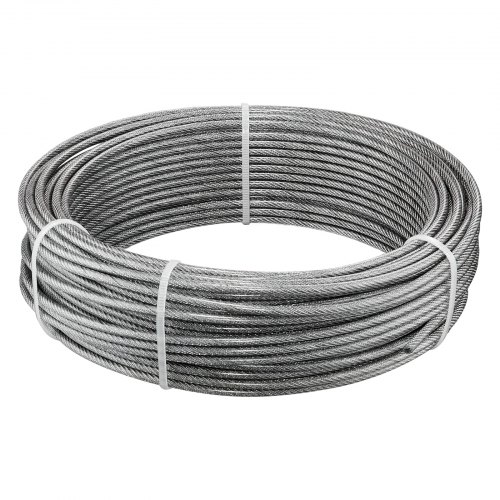
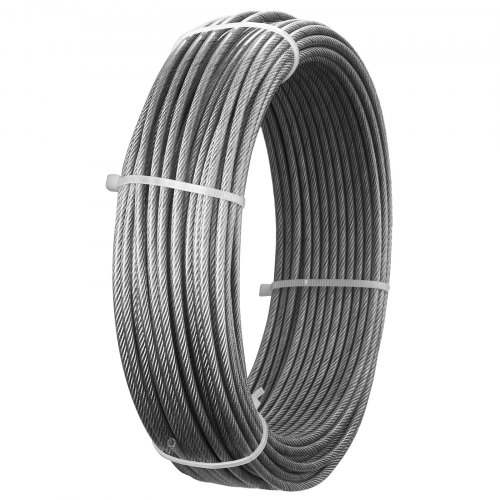
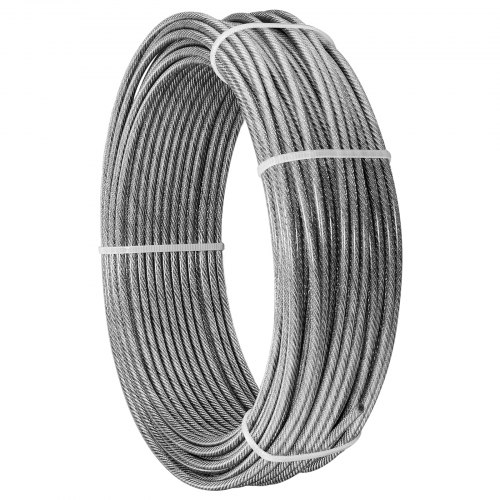
VEVOR wire ropes provide builders, DIYers, and marine users with a corrosion-resistant way to build railings, fences, trellises, and rigging that lasts. Diameters: 3/32, 1/8, 5/32, 3/16, and 1/4 inch in T304 and T316 stainless steel with lengths from 100 ft up to 1000 ft. Choose 1x19 strands for a clean railing appearance or 7x7 and 7x19 for more options with breaking strengths suited to the project. Whether you're stringing deck cable railing, hanging string lights, or anchoring a load, you'll find the right diameter and length for the job.
VEVOR Wire Ropes in Stainless Steel for Railings, Decking, Fencing, and Rigging
Want a cable that holds strain and won't rust out in one season? Made of T304 and T316 stainless steel, VEVOR wire ropes resist corrosion on decks, docks, and fences. Available in 3/32 to 1/4 inch diameters and 100 to 1000 ft lengths, 1x19, 7x7, and 7x19 strand configurations. Many are sold in ready-made kits, including a cutter and gloves, so building cable railings, garden trellises, and runs of string lights is easy DIY.
Choosing Wire Ropes by Diameter and Length Configuration
When you buy cable, two parameters do most of the work: diameter, which determines strength and looks, and length, which determines how much of a run one reel covers. VEVOR's wire ropes come in a wide range of sizes, so here's how to match them to your project.
Diameter: From 3/32 to 1/4 Inch
Diameter drives strength and appearance, so it's the first choice. The 3/32" is the thinnest, with 450 lb breaking strength, and is perfect for light-duty string lights and delicate trellises where you want the cable to almost disappear.
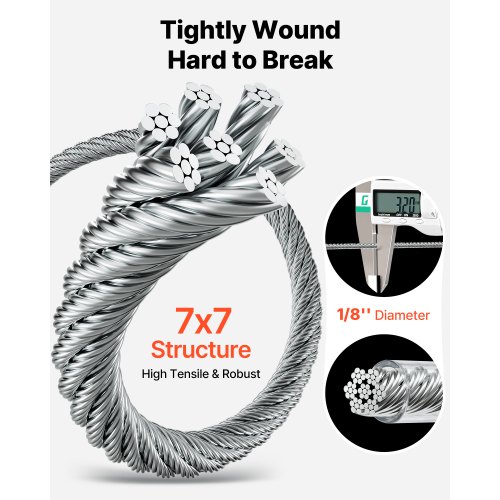
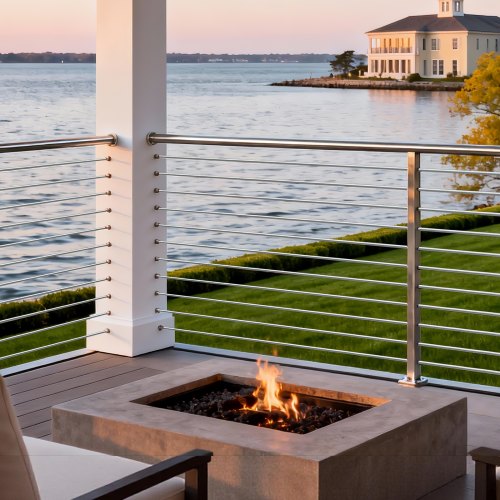
Switching to a 1/8-inch stainless steel cable gives you the most common size for deck and stair railings, with breaking strengths between 1,600 and 1,760 lbs, depending on strand type. It's thin enough to keep the view, but sturdy enough to meet railing infill requirements. Many deck builders choose this size because it blends a compact profile with great strength.
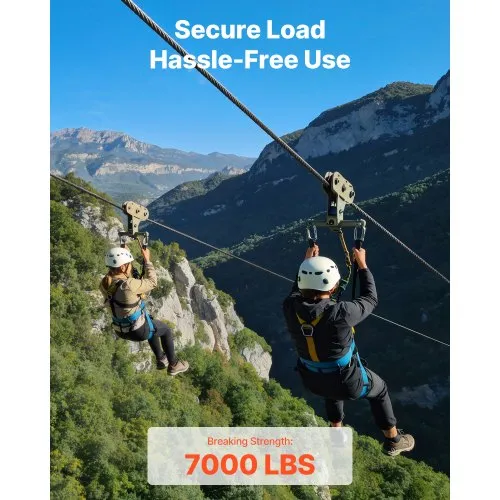
For higher loads, a 3/16-inch stainless steel cable supports up to 4,200-4,700 lb, making it excellent for longer railing spans, laundry lines, and shipbuilding. On top is a 1/4-inch stainless steel cable with a breaking strength of around 6,400 to 7,000 lbs for rigging, overhead lifting, and structural support. So the single most critical stage is matching the diameter to the load. These wire ropes are sorted by size, so the call is straightforward.
Length: From 100 ft to 1000 ft Reels
Diameter is one thing; length is how many posts or spans one reel will cover. VEVOR offers short and long runs, so you buy what the project needs instead of splicing or wasting cable.
Usually, a 100-ft wire rope kit or a 200 ft wire rope reel is plenty for a small deck or a single railing wall. The 100-ft kit ships with a cutter and is ready for installation. In between is a 165-ft kit for string lights and trellis lines, with a little room to spare for hobbyists.
Mid-size projects use a 250 ft wire rope or a 500 ft wire rope to maintain full deck perimeters and multi-section fences with no mid-run connections. For the largest operations, a lengthy fence line or whole-property railing on a single continuous reel uses a 600 ft or 1000 ft wire rope. For instance, if you're a home shopper looking for a 50 ft wire rope, you'll find that VEVOR's 100 ft kit is the smallest feasible option, giving you a little extra to work with rather than coming up short. With these wire ropes, the safer decision is to buy one length up from your estimate. Offcuts are a lot easier to manage than a run that falls short.
Reading Strand Construction
The difference between a strong, sleek cable and a flexible one is in the minutiae of strand structure. VEVOR offers three major types of wire ropes, each suited to a different job.1x19 construction means 19 wires bundled tightly together. This creates a smooth, low-stretch cable that looks great on a horizontal railing. The go-to for a modern cable railing kit where looks matter.
7x7 – Seven strands made of seven individual wires. It offers a balanced combination of strength and flexibility, making it a popular choice for 1/8-inch kits. Easy to handle and work with by hand.
A 7x19 design is significantly more flexible, which is why you see it on winch">winch and airplane-style wire that must bend around pulleys. Choosing the appropriate construction means your wire ropes will perform the way the work requires, whether you want a rail line that's hard or a cable that's flexible without kinking.
Matching Diameter, Length, and Strand to Your Project
It is easier than it sounds to put it all together. Begin with the load, select a diameter with clearance and a little margin, then select a length that covers your run with a little to spare.
Most people end up with 1/8-inch, 1x19 cable on a 500 ft reel, or a matched cable railing kit for a deck railing. Garden trellises or string lights need a narrower 3/32 or 1/8-inch reel in 100 to 250 ft.
For rigging or hoisting, step up to 3/16- or ¼-inch in a 7x19 structure for flexibility under stress. The higher breaking strengths of these sizes provide the safety margin overhead and structural work require. Whatever the combination, VEVOR's wire ropes are organized so you can line up diameter, length, and strand in minutes and order exactly what your project needs.
Material and Application Across VEVOR Wire Ropes
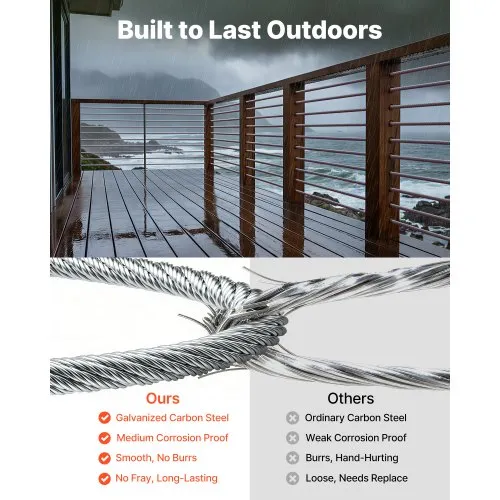
The diameter and length determine the fit. But the steel grade determines how long the cable lasts outdoors. VEVOR wire ropes are made of marine-grade stainless steel. This means it lasts longer than lower-grade cables.
T304 vs T316 Stainless Steel Construction
Grade determines longevity. VEVOR provides wire rope cables that are made from T304 and T316 stainless steel. The difference is corrosion resistance. T304 is a hard-wearing, multipurpose stainless steel wire rope cable, with good corrosion resistance in most dry, inland conditions. Its characteristics make it an inexpensive alternative for garden trellises, interior railings, and fences that are not exposed to salt.
T316 has molybdenum added to improve corrosion resistance and is hence labeled marine grade. If your project is near the seashore, a pool, or in often damp conditions, always choose a T316 stainless steel cable wire rope so salt and spray will not pit the surface. Both grades feature the chromium-oxide layer. This layer helps stainless steel resist rust, but T316 is the safer long-term bet whenever salt is in the air. Spending a little more up front usually costs a lot less than fixing mangled wiring down the road. Always pick the right quality from the very start, and these SS wire cable options will serve you for years, not decades.
Real-World Applications and Kits
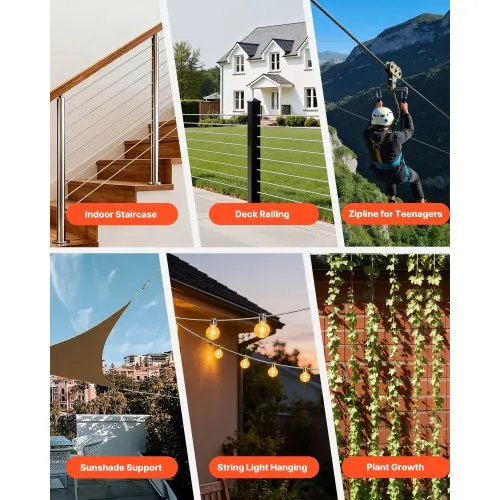
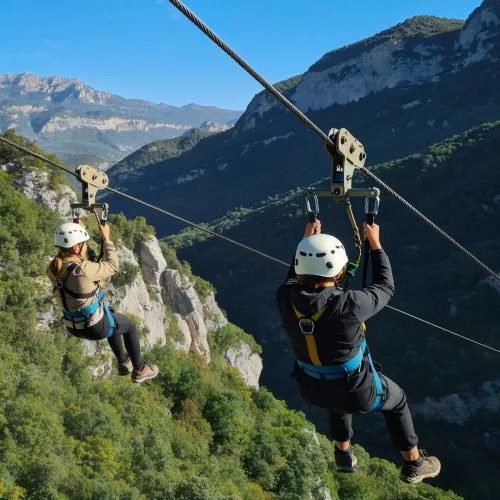
The 1/8-inch T316 alternatives, with a cutter and gloves as a cable railing kit, make deck and stair railing a weekend activity. This creates the sleek, view-preserving horizontal cable style. This stainless steel wire cable is also used for garden trellises, clotheslines, string-light runs, fencing, and DIY balustrades. In rigging, overhead lifting, and shipbuilding, where a rugged stainless steel wire rope cable earns its keep, larger diameters are used.
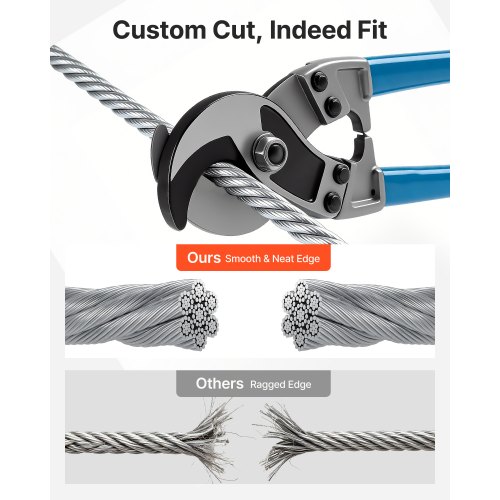
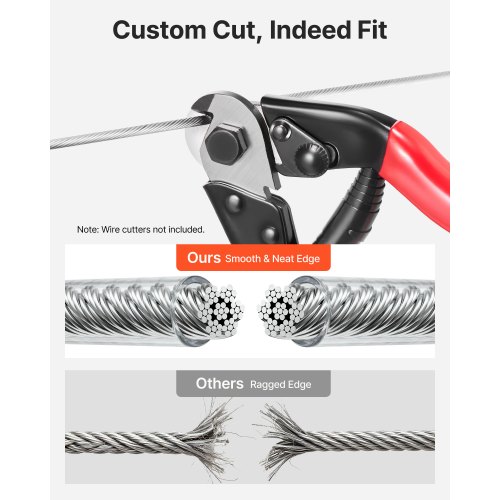
Many kits include an integrated cutter, so you don’t have to hunt for equipment mid-install. Bundling is a big reason DIYers choose VEVOR: you get the cable, the cutter, and gloves all in one order. Choose your grade for your locale and your diameter for your load. One reel of these wire ropes can last you for years, from a pretty railing to a functioning trellis.
Why Choose VEVOR Wire Ropes?
VEVOR wire ropes are ready for any railing, fence, trellis, and rigging project. Our range is available in 3/32- to 1/4-inch diameters and in lengths from 100-ft kits to 1000-ft reels. Made from corrosion-resistant T304 and T316 stainless steel in 1x19, 7x7, and 7x19 designs. You get marine-grade toughness, DIY kits with cutters and gloves, prompt after-sales support, and a simple return policy. No more repairing rusty cable year after year. Browse the full VEVOR selection now, choose your project diameter and length, and add heavy-duty cable to your cart.
FAQs
What diameter wire rope do I need?
Choose the wire rope diameter according to the load. 3/32–1/8 inch for lights, trellises and railing infill 3/16 inch for larger spans and clotheslines 1/4 inch for heavy-duty rigging, lifting and structural support
What is the difference between T304 and T316 stainless steel?
Both are rust-resistant. T316 has a small amount of molybdenum to improve marine-grade rust resistance. Use T304 in dry, inland applications and T316 in coastal, poolside, or other high-moisture situations where salt and spray would kill lesser cable.
What length should I buy?
Choose a reel that will cover your run and a bit more. A 100 ft package is fine for a small deck, 250 to 500 ft covers full perimeters, and 600 to 1000 ft reels are good for long fence lines without splicing mid-run.
What does 1x19, 7x7, or 7x19 mean?
These explain how the strand is built. 1x19 is a strong, sleek cable for smooth railing lines. 7x7 provides a good blend of strength and flexibility. 7x19 is the most flexible, perfect for winch cable and anything that bends around pulleys.
Do VEVOR wire ropes come with tools?
Many kits include a cutter and gloves so that you can measure, cut, and install without extra expense. So cable railing, fence, and trellis projects are a breeze- a DIY task right out of the box.