Belt Disc Sander
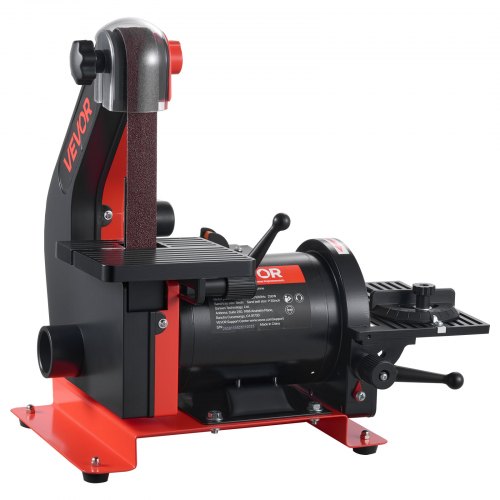


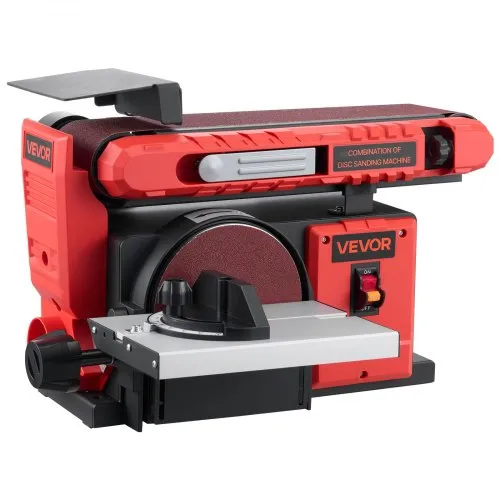


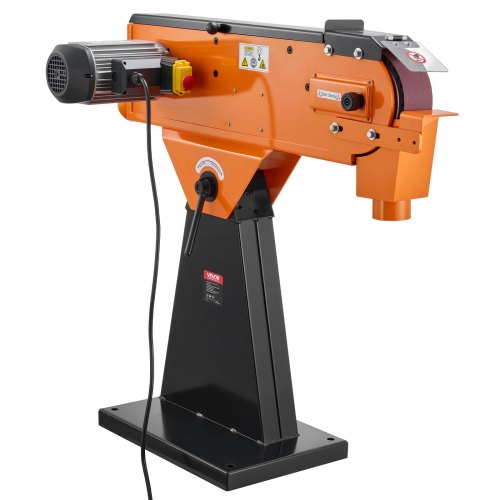


Results for Belt Disc Sander
With its wide selection of belt disc sanders, VEVOR can handle a wide range of common sanding jobs, from removing rough material to smoothing surfaces. Our lineup has everything you need for your workshop, whether you're a seasoned pro or a determined hobbyist. VEVOR offers the performance, durability, and flexibility you need to confidently take on any sanding job, from small mini belt sanders for fine details to full-size belt and disc sander combos for heavy-duty use.
VEVOR Belt Disc Sanders: Precision Sanding Solutions
Are you looking for a sanding machine you can trust to work well on both flat areas and curved edges? Fans of woodworking, metalworking, and do-it-yourself projects who want reliable, professional-grade results will love VEVOR's belt disc sanders. Whether you need a powerful disc and belt sander for a busy production workshop or a small one for your home workshop or small workspace, VEVOR has the right tool for your budget, space, and needs.
How Belt/Disc Size & Motor Power Define Your Sanding Performance
When choosing a belt disc sander, it's not just about price; you also need to make sure that the machine's size and power level are right for the job. Before you buy, the two most important specs to consider are the belt size and the motor rating. Knowing how these two numbers work together will help you avoid machines that are too weak and slow down production, or too big and take up too much bench space.
Belt Size: Matching the Sanding Belt Dimensions to Your Material and Task
The sanding belt is the most important part of a belt disk sander. The width and length of the belt directly affect how quickly you can remove material and shape pieces. A mini belt sander usually has narrow belts that are about 1 inch by 30 inches. These belts are ideal for fine detail work, sharpening tools, and finishing small metal or wood parts where control is more important than speed. Full-size belt and disc sander combos usually come with wider belts, typically 4 x 36 inches or 6 x 48 inches. These belts let you work with bigger stock, flatten wide panels, and quickly remove material from large areas.
The length of the belt also affects how well it moves heat and how long it lasts. When you sand for a long time, longer belts stay cooler because the rough surface has more time to lose heat before it returns to the contact point. When looking at a disc and belt sander, make sure the belt-tightening and tracking system lets you change the belt quickly and without tools. This will significantly reduce downtime when you're working on projects that use multiple materials. The belt specs on VEVOR belt disc sanders are clearly labeled, and the tensioning mechanisms are simple to use, so you can keep working as usual.
Disc Size: How Platen Diameter Affects Versatility and Finishing Capability
A belt disc sander combo has a sanding disc that can finish edges, make bevels, and do fine surface work that a belt alone can't do as well. Disc sizes range from 5 inches for small machines to 9 or 12 inches for professional ones. A larger disc gives you a larger sanding area, which is helpful when you need to square off the ends of a piece of work, shape a curved profile, or blend joints flush before finishing.
The disc is generally mounted on the side of the belt platen in belt, and disc sander combo units, and the disc table usually tilts between 0 and 45 degrees to allow for angled sanding and miter cutting. With its sanding belt and tilting disc table, the belt disc sander is one of the most useful tools you can have in your workshop. Anyone working with metal parts can also use the disc as a deburring surface by pairing it with the right abrasive sizes.
Motor Power: Understanding Amperage and Horsepower Ratings for Real-World Use
A belt grinder sander that can work with both hardwood and steel is different from a light-duty tool that stops working when it gets too heavy. Most of the time, motors with 1/3 to 1/2 horsepower can easily handle softwoods and medium-density materials for woodworker projects. You should get at least 3/4 horsepower if you work with oak or maple a lot or if you use your belt disc sander combo to grind and shape metal, which puts a steady load on the motor.
An amperage rating tells you quickly how much electrical current a tool draws. For example, a mini belt sander with a 4-amp motor is good for light finishing, while a full-size disc and belt sander with a 6-amp or higher motor can handle more work without overheating. VEVOR builds its motors with thermal safety systems that prevent overheating and burning out during long sanding sessions.
Matching Size and Power to Your Workspace and Workflow
If your belt disc sander is too big for your area, it can be dangerous and challenging to move around. Conversely, if your belt disc sander is too weak for your materials, it will cause more inconvenience than benefit. For hobbyists and small shop owners working on craft projects, furniture, or cabinets, a mid-size belt and disc sander combo with a 4 x 36-inch belt and a 6-inch disc is the best fit in terms of size and power.
Larger belt grinder-sander configurations with wider belts, larger discs, and motors that deliver continuous power under load are better for professionals working in production settings. Think about how often you switch between coarse and fine sizes and whether you work with metal and wood. Working with multiple materials puts additional stress on both the motor and the belt-tracking system.
Key Features & Adjustability That Make Belt Disc Sanders More Useful Every Day
A belt disc sander's features, not just its size and power, determine the safety, comfort, and accuracy of your daily sanding experience. How well the machine adjusts, how well it handles dust, and how flexible the table is are what set a truly capable machine apart from one that limits your output.
Adjustable Tables, Fence Systems, and Belt Angle for Precision Work
The movable work table is one of the best features of a powerful disc and belt sander, yet it doesn't get enough attention. If your table can tilt from 0 degrees to 90 degrees, you can sand exact bevels, chamfers, and compound angles without having to use a separate jig. When combined with a moving miter fence, a belt disc sander becomes a reliable tool for leveling, shaping, and finishing dimensional lumber, metal bar stock, and custom-crafted items.
There are a lot of belt and disc sander combos that have belt arms that tilt, which lets you change the belt's position from vertical to horizontal. When you want to sand the sides of flat panels or work on longer pieces that would be hard to control against a vertical belt, place the belt horizontally. This ability to work in both directions makes the machine much more useful without increasing its size. There are clearly written angle scales and lockable table positions on VEVOR's belt disc sander combo models.
Dust Collection Ports, Eye Shields, and Build Quality for a Safer, Cleaner Shop
Integrated dust-collection ports are not a nice-to-have; they are a must-have for a belt disc sander or belt grinder because they generateit generates a lot of fine dust and debris. Most good belt disc sanders have dust collection ports on both the belt and the disc. This option lets you add a shop vacuum or dust collector to remove airborne particles at their source.
Features like eye shields, spark guards on models compatible with metal, and rubber feet to reduce vibration are further signs of a machine's overall build quality. Heavy-gauge steel bases and cast-iron or aluminum tables on VEVOR's belt disc sanders keep them from shaking and bending during rough sanding passes. You can use a mini belt sander for light hobby work or a full-size belt/disc sander combo in a professional shop.
Why Choose VEVOR Belt Disc Sanders?
VEVOR belt disc sanders offer the right size options, motor power, and useful features for users of all experience levels, from hobbyists just starting to shop to professionals who have been working in the trade for years. VEVOR has a wide range of belt sanders, from small mini belt sanders to heavy-duty belt-and-disc sander combo models, so that they can fit any need or budget. VEVOR is the best choice because of its low prices, high-quality construction, and reliable customer service after the purchase. Check out the whole selection right now to find the belt disc sander that's perfect for your next project.
FAQs
Can I use a belt disc sander for both wood and metal?
Yes. Many belt disc sander combo models handle both materials. Use appropriate abrasive grits for each: coarser for metal stock removal and finer for wood finishing, and ensure the motor rating is sufficient for the harder material.
What belt size is best for a beginner or small workshop?
A 4 x 36-inch belt paired with a 6-inch disc is the most versatile starting point. It fits comfortably on most workbenches and handles most woodworking and light-duty metalworking tasks without taking up excessive space.
How do I know if a mini belt sander has enough power for my needs?
Check the amperage rating. A 4-amp motor is suitable for light sanding and tool sharpening. If you plan to work with hardwoods or metal regularly, look for a disc and belt sander with at least 6 amps to maintain consistent performance.
Does the belt orientation matter on a belt and disc sander combo?
Yes. A vertical belt is better for edge sanding and contour work, while a horizontal belt is better for flat-panel sanding and longer stock. Models with adjustable belt arm angles offer the most flexibility for a range of tasks.
How often should I replace the sanding belt?
Replace the belt when it stops cutting efficiently, shows visible wear, or glazes over. Frequency depends on usage and material; heavy-metal grinding dulls belts faster than light-wood sanding.