
Belt Sanders












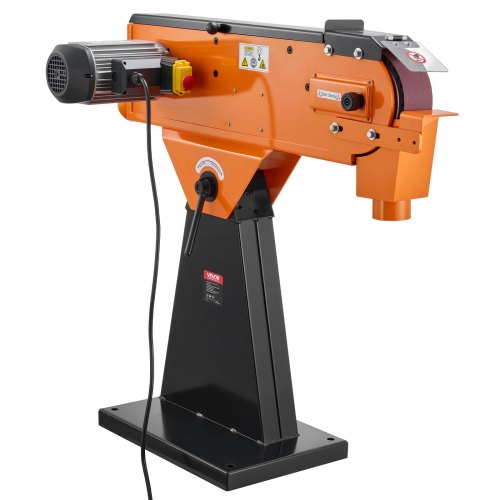


Results for Belt Sanders
VEVOR belt sanders remove material quickly and accurately from wood, metal, and composite surfaces. Every VEVOR machine is designed to perform well across a wide range of applications, including small file belt sanders for fine details. We also have heavy-duty belt disc sanders and units that combine a grinder and a belt sander. VEVOR has the right sanding option at the right price, whether you need to finish wood, sharpen blades, or shape metal.
VEVOR Belt Sanders – File, Disc, Bench & Combination Sanders for Wood and Metal Work
Want a belt sander that can do everything from smoothing out fine wood to aggressively removing metal stock and sharpening blades? Having the right belt sander can mean the difference between a smooth, well-controlled finish and hours of annoying repair. VEVOR's belt sanders are perfect for a wide range of tasks, including file belt sanders for smoothing tight corners with precision. Our collection features tough belt disc sanders and knife-grinding machines. Their motors and build quality are perfect for use in the workshop or on the job site.
Selecting the Right Belt Sanders by Belt Size and Sander Type
The two most basic things that tell you if a belt sander will do the job you need it to do are the belt size and the type of sander. If you get both right from the start, you'll spend less time fighting your tools. You’ll get more time getting clean, accurate results on every shape and material you work with.
Bench Belt Sanders and Standard Belt Sizes with Matching Abrasive Surface to the Task
Standard belt sizes and bench belt sanders let you match the abrasive surface to the job.
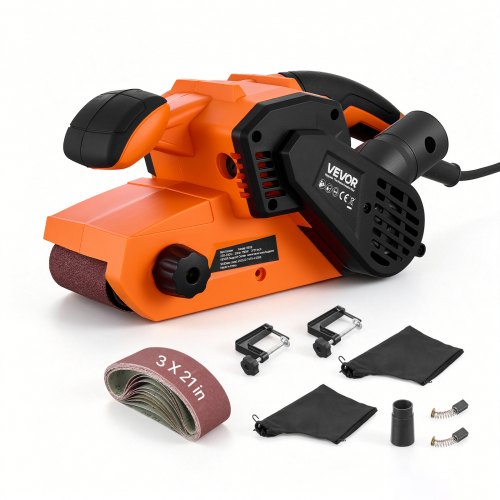
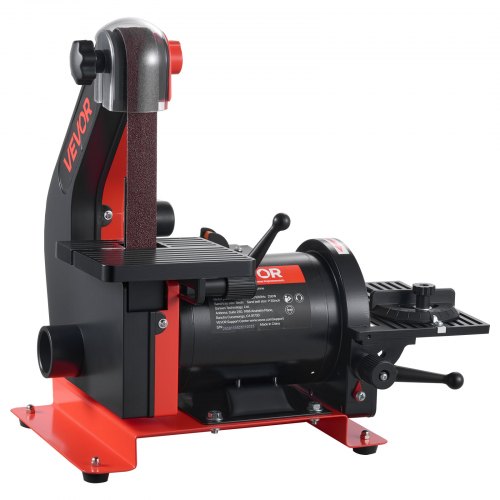
In woodworking shops, manufacturing studios, and serious home workshops, bench-mounted belt sanders are the workhorses. They provide a stable, controllable abrasive surface for flattening, shaping, and finishing pieces that require consistent material removal across a flat plane. Benchbelt sanders come with the most common belt sizes, such as 1" x 30", 4" x 36", and 4" x 24". These belt sizes are good for everything from light finish sanding on small wood parts to aggressive stock removal on bigger pieces.
The main thing to look at when matching a belt to a workpiece or job is its width. For finishing small details, edges, and curved profiles, belts that are 1" to 2" wide work best. That is because they don't let the wider platen come into contact with the surface. Belts that are 4 inches or wider cover more surface area in a single pass. It improves them for sanding flat panels, preparing tabletops, and removing stock from broad object faces.
How quickly a belt heats up during long-term use depends on its length, which determines the total abrasive surface running through the machine. Bench belt sanders use standard belt lengths that are easy to find in all grit grades, from 40 to 400. It means that users can easily find new belts locally or online, without having to deal with proprietary size restrictions. Some bench types feature variable-speed control that lets you adjust the belt speed between 400 and 1,400 surface feet per minute. It means the same machine can perform both rough shaping at high speed and fine finishing at a lower speed.
File Belt Sanders for Precision Sanding for Profiles, Contours, and Tight Spaces
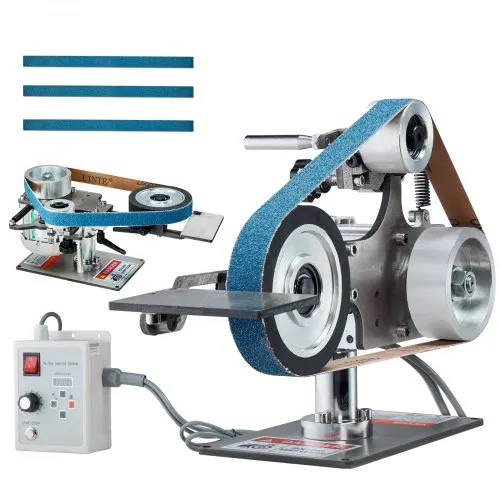
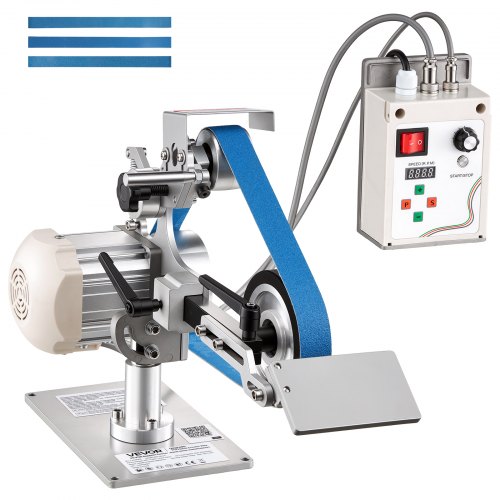
File belt sanders are a unique and very useful type of belt sanders. They use thin abrasive belts spread over a thin platen arm that can reach into profiles, contours, and recesses that wider belt sanders can't. Woodworkers can use the file belt sanders to smooth out routed profiles, while metalworkers can use them to deburr drilled and cut parts.
A file belt sander's narrow belt format gives you great control over removing material from three-dimensional forms. Curved platen attachments come with some file belt sander types. They let the abrasive belt fit into convex and concave shapes without creating the flat spots that happen when a rigid platen touches a curved surface. Platen shoes that can be switched out have flat, rounded, and pointed shapes. This lets you use the same machine on a wider range of workpiece shapes.
File belt sanders offer variable speeds. The belt speed can usually be set from 400 to 1,200 surface feet per minute. When working with heat-sensitive materials like thin-section knife steel, fine-grained hardwoods, and plastics that melt, use slower speeds. The small motor housings on the file belt sanders are designed to be used for extended periods one‑handed without excessive fatigue. They feature rubberized grip areas and even weight distribution, making it easier on the operator during 30- to 60-minute sessions of thorough finishing.
Belt Disc Sanders and Grinder and Belt Sander Combinations for Versatility in One Machine
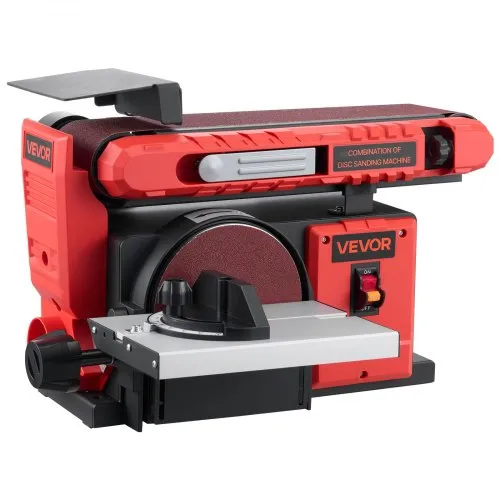
Combination machines with belt and disc sanding surfaces, or with belt sanding and grinding capabilities, offer the flexibility of two or more separate machines in a small space. It makes them a great investment for workshops with limited bench space and many different tasks. Belt disc sanders have a motorized platform with a horizontal or tilting abrasive belt and a vertical disc sanding surface. This lets the user switch between belt and disc sanding without changing machines or setups.
A belt disc sander disc part usually has an abrasive disc that is 6" to 9" in diameter and spins at a set or variable speed. The disc provides a flat surface for squaring end grain, sanding mitered joints, and finishing small curved pieces. The belt part handles the longer, flatter jobs of removing material, since the disc's round surface would leave uneven scratch marks.
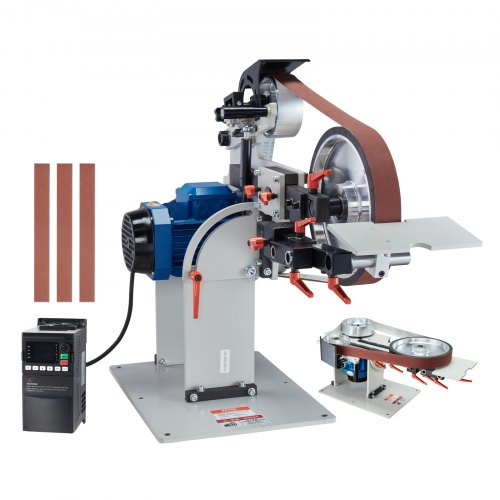
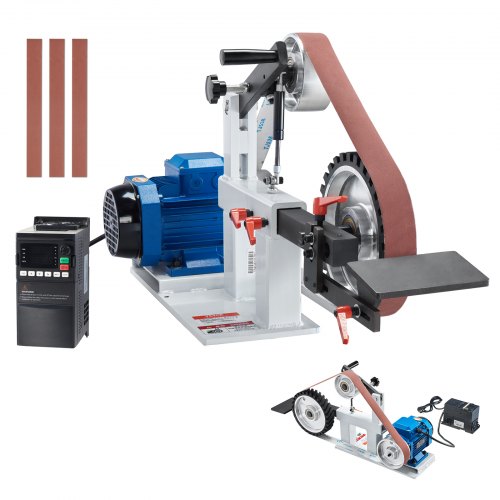
A grinder and belt sander is a combination unit that features a grinding wheel and an abrasive belt. It is ideal for users who need to remove stock by grinding and finish the surface by sanding, in a single setup. The grinder and belt sander units can rough-grind blade shapes and tool steel parts before moving on to belt sanding to smooth out the bevels. The knife grinder machines have work rest tables with angle stops that can be adjusted from 0 to 45 degrees. It lets you get the same bevel grinding and sanding angles every time without having to guess.
Evaluating Belt Sanders by Power Output and Key Features
Motor power and built-in features determine how well a belt sander removes material and how consistently it works under load. Belt sanders are designed with motors and features that meet the needs of each machine type and its intended use.
Motor Power, Amperage, and Belt Speed with Matching Power to Material and Task
Motor power is the spec that directly affects a belt sander's ability to maintain constant belt speed under load. It is the real-world performance indicator that tells you which machines can handle heavy workpieces. Motor power for belt sanders ranges from 3/4 HP for small file belt sanders to 1.5 HP. It ranges higher for heavy-duty bench belt disc sanders, grinder and belt sander combo units.
When comparing tools with limited power sources, amperage draw is a useful way to gauge available power. The middle-range belt sanders use about 5 to 8 amps at 110V, which is well within the range of a normal 15-amp workshop circuit. This usually doesn’t require special wiring. A separate circuit is helpful for larger combination machines that draw 10 to 12 amps, so they don't trip when sanding dense hardwoods or thick metal stock.
The belt speed, measured in surface feet per minute (SFPM), determines how hard the abrasive hits the workpiece. It directly affects how much material is removed and how smooth the surface is. Variable-speed belt sanders can be adjusted over a useful range, usually 400 to 1,400 SFPM. It gives users the freedom to find the best speed for the material and grit combination they are using. When sanding softwood and mild steel, high speeds with coarse grits remove the most stock. On the other hand, slower speeds with fine grits produce a cleaner, more uniform surface finish on hardwood and stainless steel.
Dust Collection, Work Rests, Tilting Platens, and Safety Features
A belt sander's useful features, not just its raw power, decide how well, safely, and accurately you can use it. All of the belt sanders include safety guards, adjustable work rests, tilting platen assemblies, and dust‑collection ports.
Every belt sander used in a closed workshop must have a dust-collection system. Most belt sanders have built in dust collection ports, typically 1.5" to 2.5" in diameter. Effective dust extraction at the source reduces airborne particle levels and keeps the workpiece surface clear for accurate eye inspection during sanding.
On bench belt sanders and combination machines, the work rest tables can be tilted from 0 to 45 degrees. That gives you a reference surface for sanding at the same angle on the ends, bevels, and mitered surfaces of your workpieces. Positive stops at 90 and 45 degrees speed up common setups because you don't need to use an angle gauge to check each change.
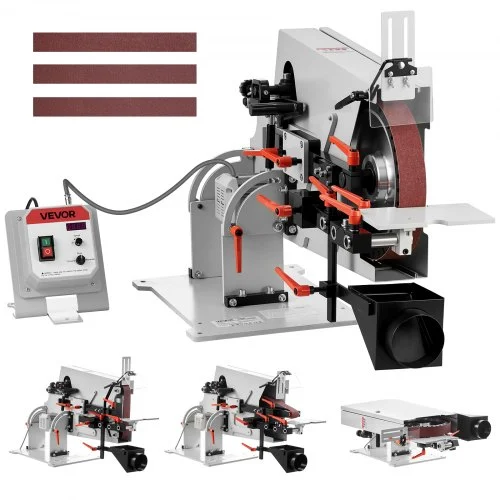
Some belt sanders feature tilting platen systems that can rotate the entire belt-sanding surface from horizontal to vertical. It lets the same machine be used for both flat sanding and edge sanding without changing any tools. VEVOR grinder and belt sander types come with spark guards and eye-level belt tracking windows. These features make the machines safer and easier to use in metalworking and knife-grinding tasks where sparks and accurate belt tracking are important.
Shop VEVOR Belt Sanders for Every Workshop, Material, and Application
VEVOR offers a wide range of well-made, reasonably priced abrasive sanding machines. We have small file belt sanders for precise profile work, to large belt disc sanders and grinder and belt sander combination machines. Each machine is made with the exact motor power, belt size, and useful features it needs to work reliably on wood, metal, and hybrid materials. VEVOR belt sanders are a great investment for any workshop, whether you work with metal or wood. They are also easy for serious do-it-yourselfers to use. Browse all our belt sanders to find the right one for you now.
FAQs
What belt size should I choose for my belt sander?
Belt size varies depending on what you're doing and the size of the workpiece. For work on details and profiles, belts 1" wide or less are best. For cleaning flat panels and removing stock, wider belts (4" or more) work better. Before buying new belts, check the sizes to ensure they fit your model.
Can belt sanders be used for metal sanding and grinding?
Yes, grinder and belt sander combos, as well as some bench belt sanders, can be used to remove metal stock, smooth edges, and finish surfaces. For steel and non-ferrous metals, use aluminum oxide or zirconia belts. You should always wear the appropriate face and eye protection when grinding metal.
What is a file belt sander used for?
File belt sanders use very thin abrasive belts, usually 1/2" to 1" wide. These belts can reach small profiles, contours, inside curves, and recessed areas that wider belt sanders can't. They are especially useful for making knives, joining wood pieces, and deburring metal.
Do VEVOR belt sanders come with dust collection?
Yes. Most belt sanders have built-in dust-collection ports that work with standard shop vacuums and dust-collection lines. Effectively collecting dust at the source extends belt life, keeps the work area clean, and reduces airborne dust while sanding.
