Commercial Vegetable Fruit Chopper








Results for Commercial Vegetable Fruit Chopper
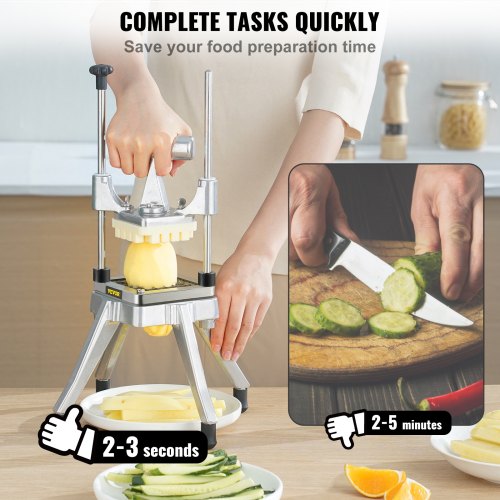
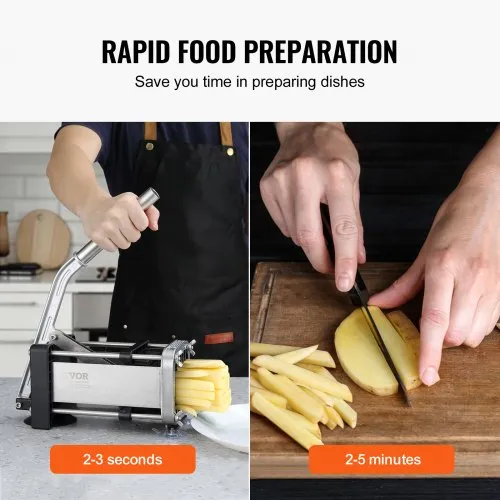
A laborious morning of hand-slicing becomes a few minutes with the right tools. These commercial vegetable fruit choppers include lever French fry cutters, Kattex-style dicers, lemon and lime wedgers, a rotating cheese grater, and a pull-out potato extruder. The blades and frames are stainless steel, and the blades pop out for quick changes, whether you're at a café, a food truck, or a home kitchen. Fries, cubes, wedges, or shreds- whatever the ticket calls for- one of these pieces of equipment has a whole tray of produce cut and ready in seconds.
VEVOR Commercial Vegetable Fruit Choppers for Fry Shops and Home Cooks
How many potatoes do you cut up in a week, and how much of that time would you rather have back? Most of that time can be saved with the right commercial vegetable and fruit choppers. VEVOR offers stainless steel lever fry cutters, box-style dicers, section wedgers, and a few specialty tools, plus hand-powered and electric vegetable slicers with quickly interchangeable blades. The decision will come down to whether you can lock in the cut you like best and how firmly you press.
Cutter Types and Orientation
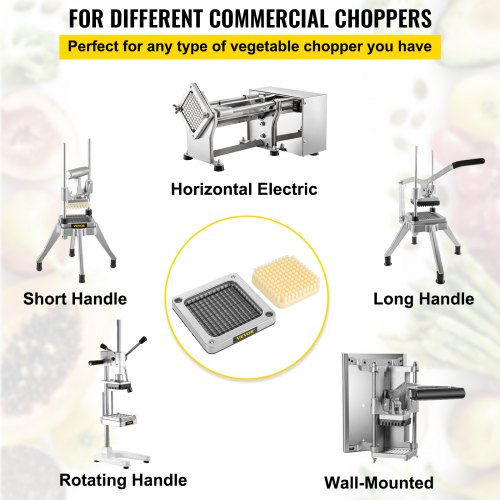
Arrange these commercial vegetable and fruit choppers by the cut you want, then by how they sit on your counter. Here are four quick sketches. One for each cut.
Swap Blades for Shoestring, Classic, or Steak-Cut Fries
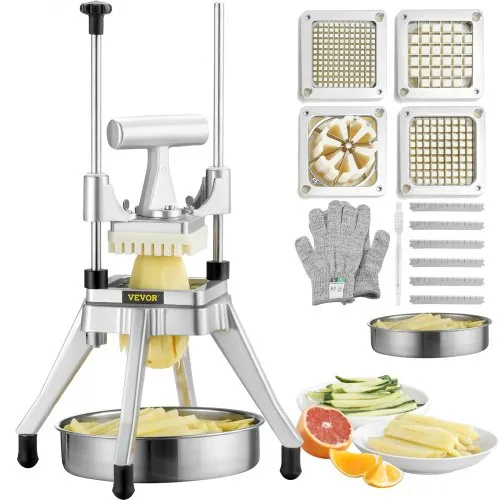
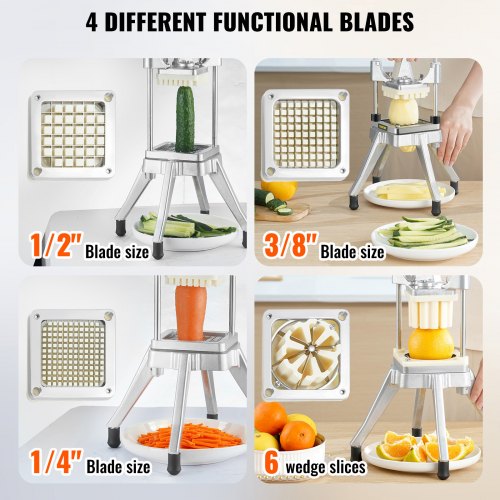
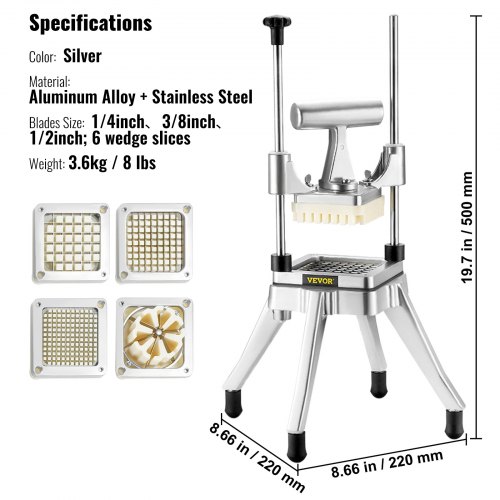
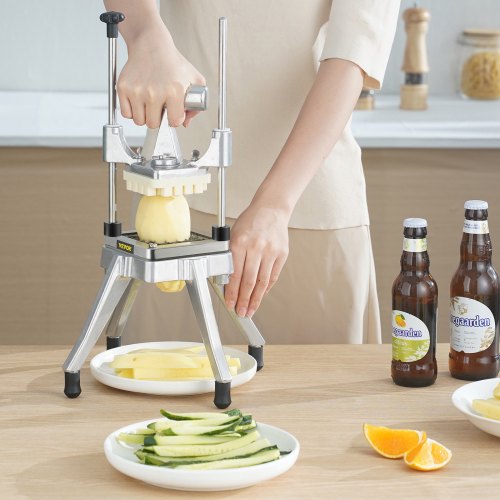
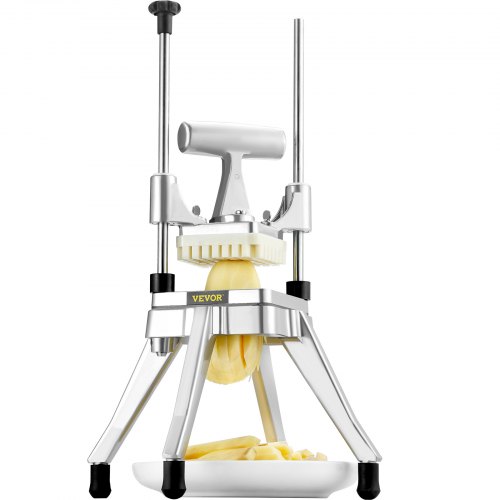
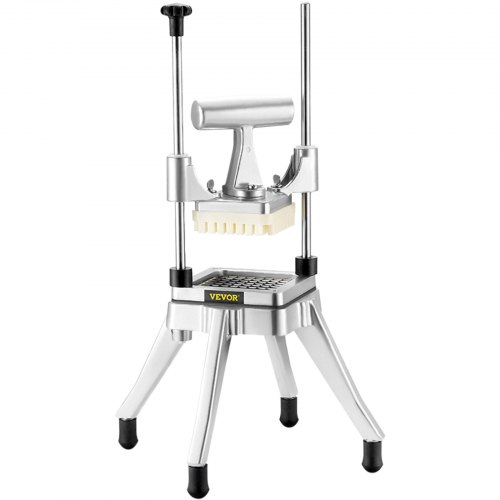
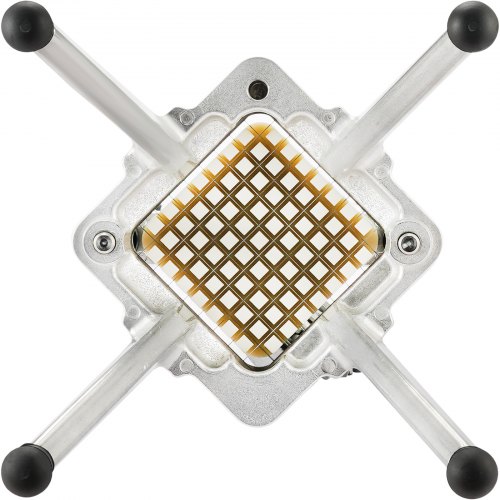
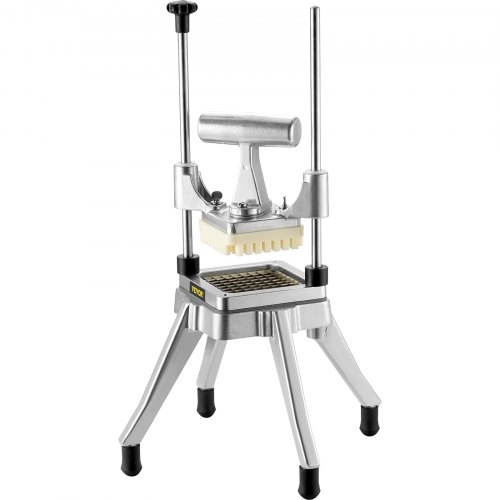
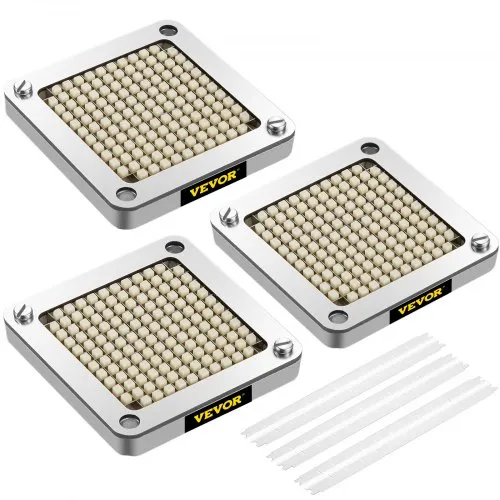
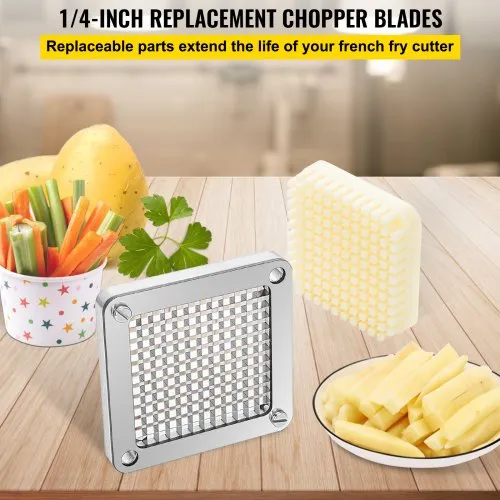
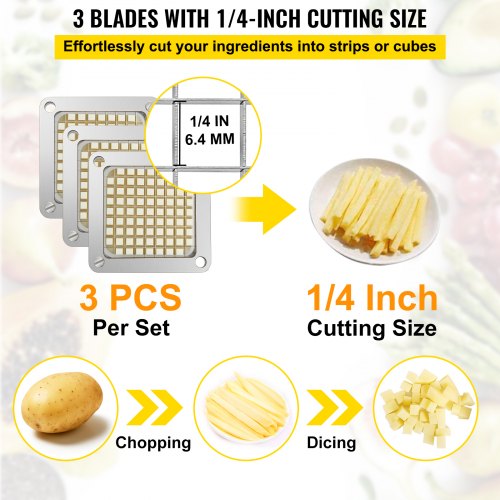
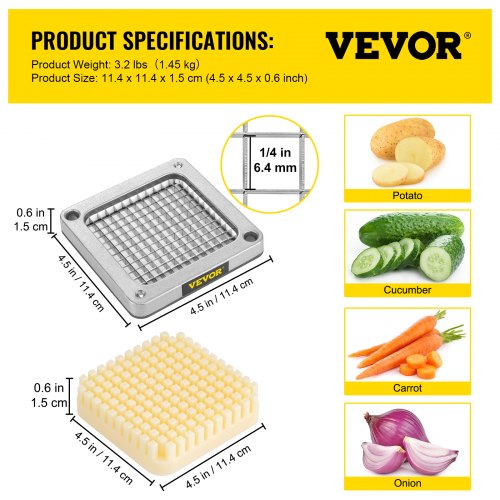
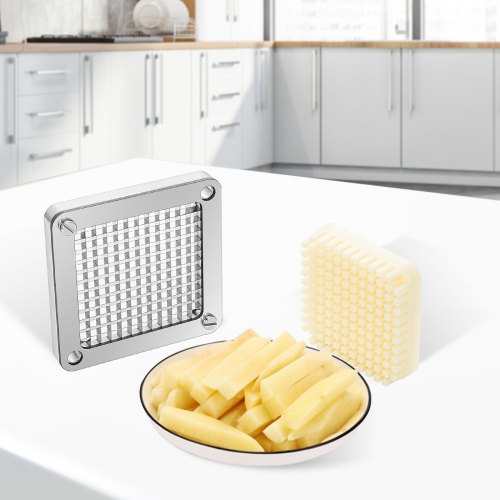
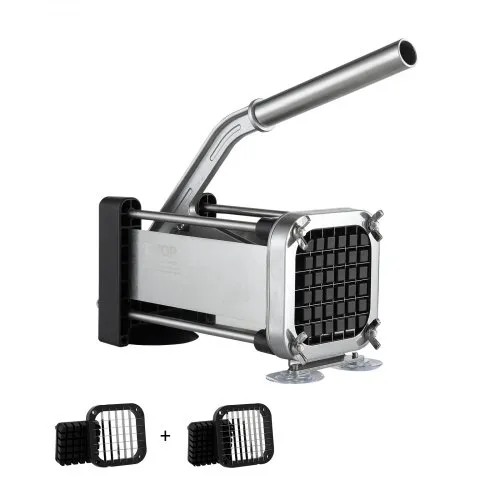
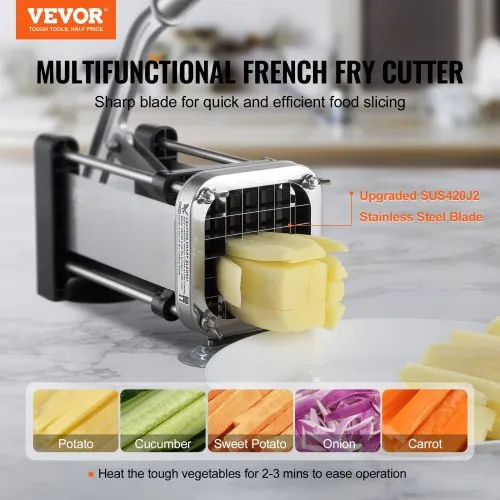
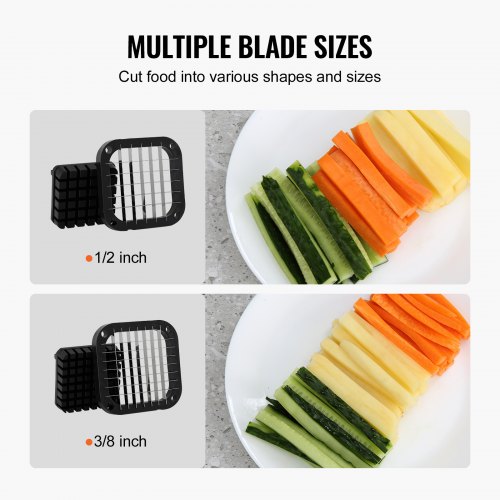
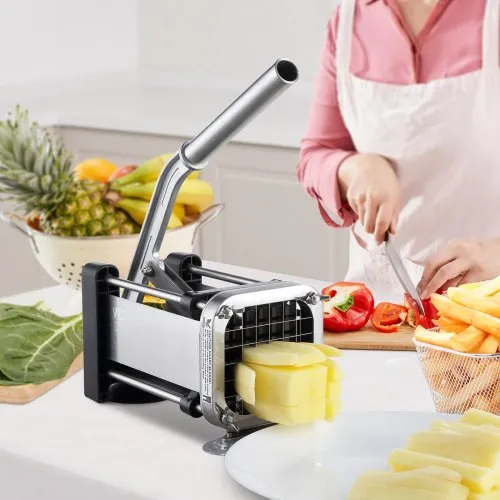
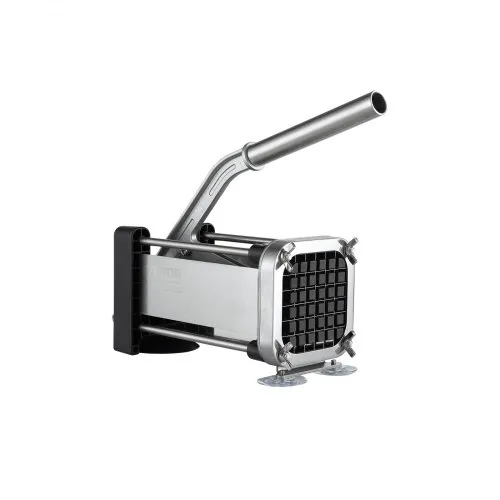
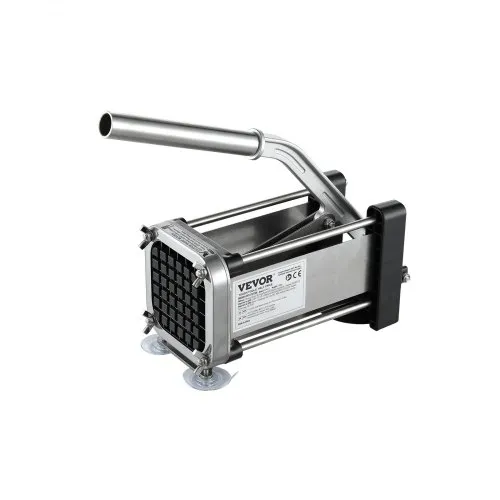
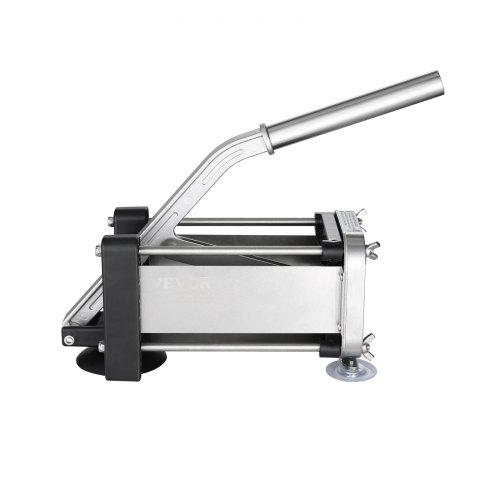
Pull the lever, and a handful of fries drops through the grid from a whole potato. That's the pitch on every French fry cutter here, and the cut is up to you: a 1/4" blade for shoestrings, 3/8" for the classic restaurant fry, and 1/2" when you want thick steak wedges that can hold up to gravy.
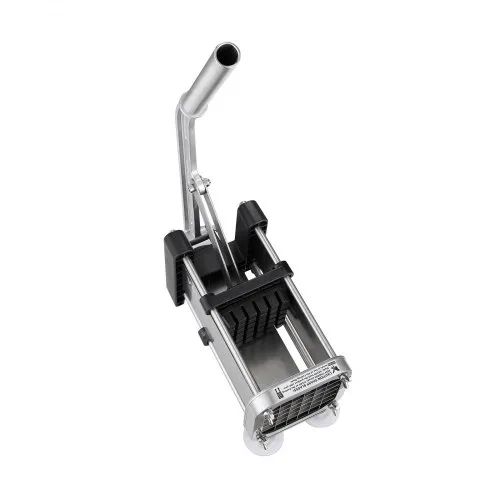
The bodies are stainless steel, with a rubber-gripping lever and a base that either suctions to the counter or bolts to the wall. A push block pushes the potato onto the blades, fingers well clear, and sticks full length. Several packages include a 6-wedge insert and an apple corer, so one commercial potato cutter handles fries, apple wedges, and cored fruit.
Of these commercial vegetable fruit choppers, lever French fry cutters are the ones a fry-heavy menu counts on most. They also handle onions, carrots, and peppers. Keep a backup blade in the drawer, and you won't be stuck in the middle of a rush.
Turn a Whole Tomato Into Neat Cubes in One Push
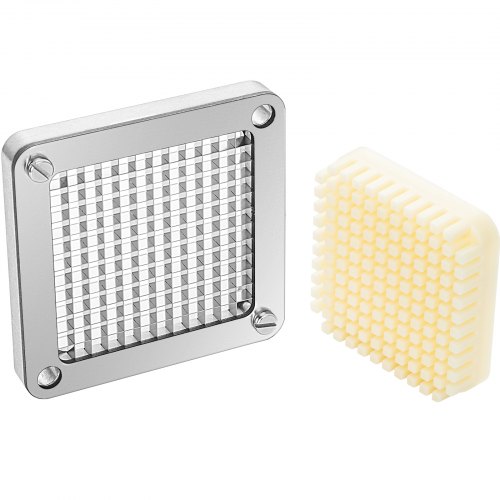
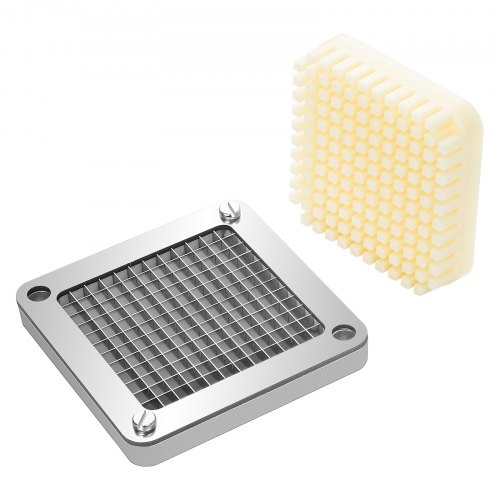
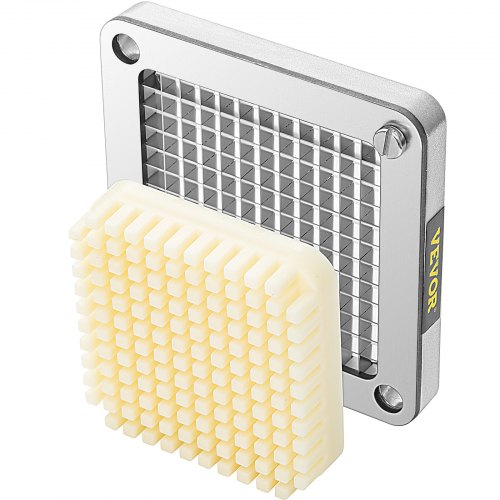
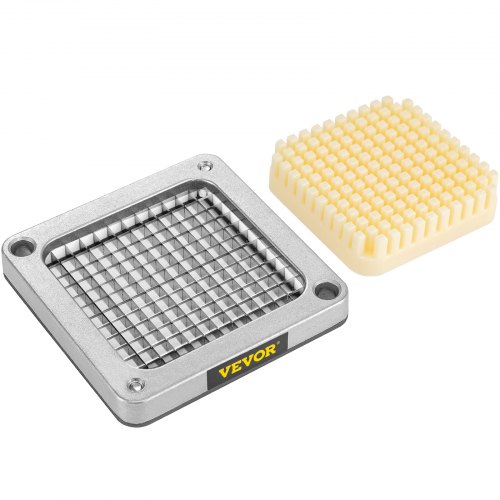
Strips are one thing; cubes are another, and that's what food dicers do. VEVOR's heavy-duty Kattex-style devices force a tomato, onion, pepper, potato, or mushroom through a bed of crossed blades in a single stroke, dumping out clean 1/4" or 3/8" dice.
The grid has a catch tray underneath, so every cube stays in one spot. Nothing goes flying around, and the wipe-down takes seconds. The blades are sharp enough to slice a ripe tomato without crushing it, the very moment a weary old vegetable cutter gives up and leaves you with mush.
This sort of commercial vegetable chopper is a silent hero for salsa night, a large batch of mirepoix, or any prep sheet that calls for the same cube a hundred times over. And when food items are the same size, they cook at the same rate, so nothing in the dish is raw in the middle or burnt at the perimeter. It has a push block to hold your knuckles high above the grate. Set the produce. Press. Done.
Section Lemons, Core Apples, and Shred Cheese
A few specialty commercial vegetable fruit choppers cover the gap for bars and dessert stations that need shapes a fry grid can't make. The wedge cutters release a lemon, lime, apple, or potato into 6 or 8 clean parts with one squeeze, the sort of item a busy bar goes through by the crate on a Friday.
It doesn't end with wedges. A rotary option from the cheese graters and mandolines family spins cheese or veg through five swap-in cones into a 2.5L bowl. The pull-out fry extruder machines squeeze cooked potato into long, ribbon-like strips for loaded fries or a variation on the typical side.
A simple food chopper or hand corer saves real minutes during a shift. Match the gadget to what you plate most: citrus at the bar, apples at the pie bench, cheese on the line. A wedger with a catch base holds the parts in place and keeps your fingertips away from the blade. You pick up a couple, and the whole station loosens up.
Lever Straight Down or Feed From the Side
Which machine you choose can depend on how you want to work. A vertical potato dicer/cutter has a downward motion on the lever, so gravity and your shoulder help you cut. This can be easier on your wrists while you are prepping huge volumes of food during a busy shift.
A horizontal potato cutter slides the food side to side at counter height. Most cooks find this position steadier and easier to handle, especially when working quickly. Both models can be attached to suction feet or a wall bracket to help keep the machine in place as you work.
With commercial vegetable fruit choppers, counter space and operating position are often the primary concerns. Vertical machines use less counter space; however, you may need some headroom above the machine. Horizontal models fan out more but keep the cutting action closer to elbow height. The loading height also matters. A side-loading design may be more comfortable for shorter users than reaching up to a taller lever.
Power and Commercial Features
Once you've chosen a model, two things matter. What powers the blade and what the machine is built from. Both determine how long these commercial vegetable fruit choppers last in real-world use.
Hand Lever or 40-Watt Copper Motor
The first is muscle versus motor. A silent hand lever needs no plug and rarely breaks, making it ideal for a small kitchen or a fast lunch run. Press it, cut it, rinse it, done.
When orders start piling up, it's worth getting an electric potato cutting machine. The electric VEVOR versions (a 40W cutter for potato chips with a built-in copper motor, for instance) breeze through a whole sack in a single tap, leaving you fresh for the next activity instead of out of breath.
An electric French fry slicer earns its keep on a truck or in a diner slinging fries from open to close, whereas cranking by hand would flatten a cook before the lunch bell sounds. It keeps the same cutting pace from the first potato to the last, so orders look the same all day. The engine pushes so a single cook can keep the fryer fed without needing extra help. Among these commercial vegetable fruit choppers, volume is the deciding factor. Light service is still manual. Steady production goes electric.
420J2 Steel, Grippy Feet, and Pop-Out Blades
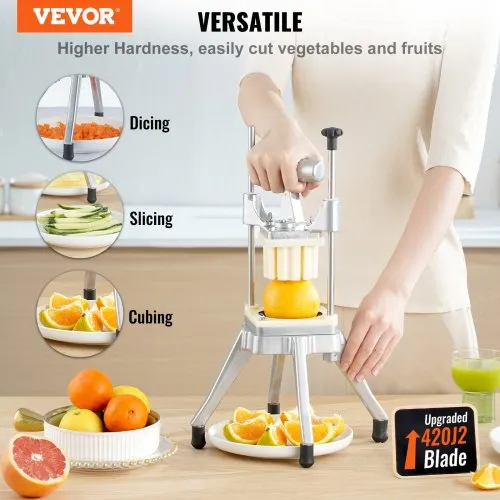
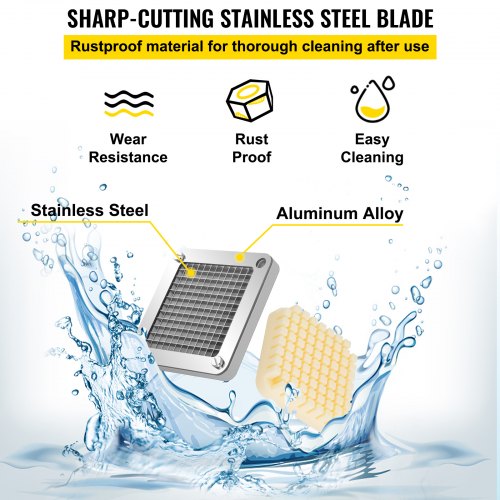
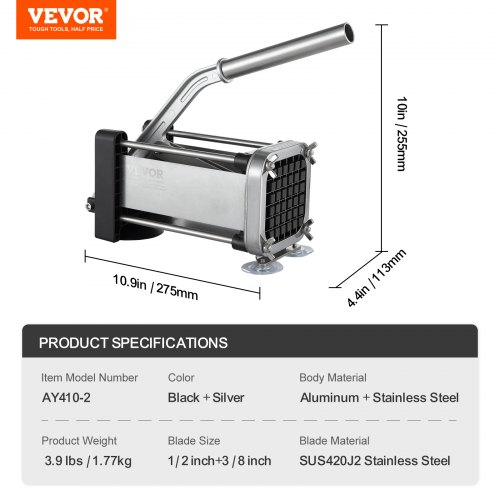
Thanks to steel and a few clever innovations, commercial vegetable fruit choppers last a long time. Look for food-grade stainless steel like the 420J2 in VEVOR’s models, which is corrosion-resistant, easy to clean, and can withstand the acid in tomato and citrus juices that may eat away at lesser metals.
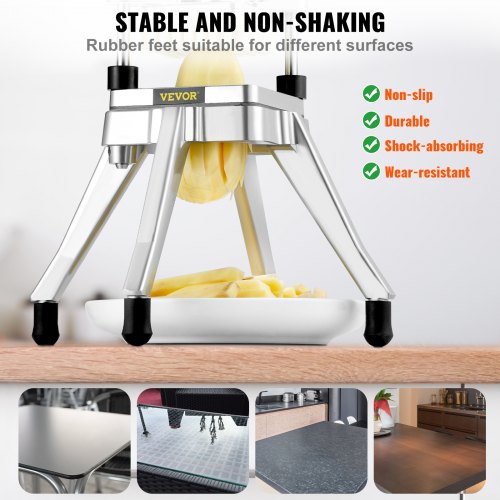
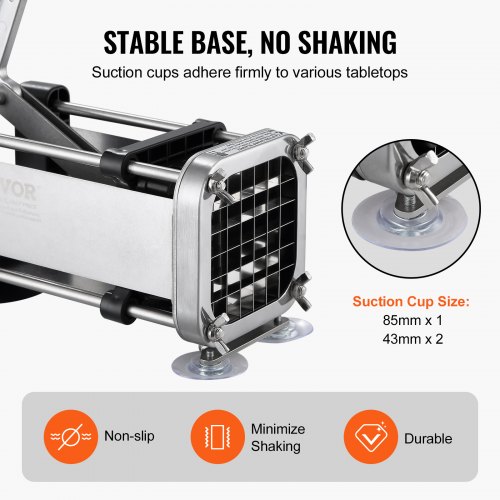
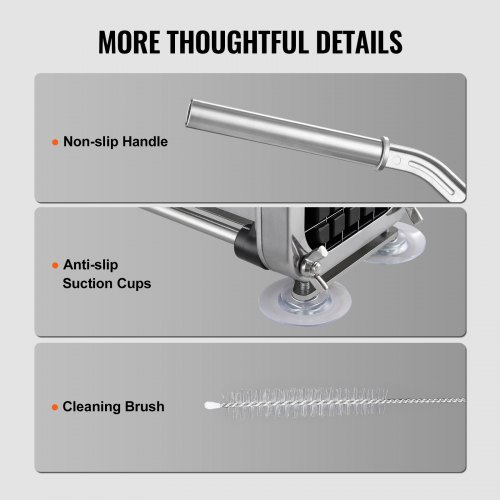
Now glance down to the bottom. Suction cups or anti-slip feet anchor the machine so it won’t creep under a hard shove, and a firm wall mount recovers counter space while remaining rock-solid. The curved rubber grip lever on top preserves your palm from over 100 presses.
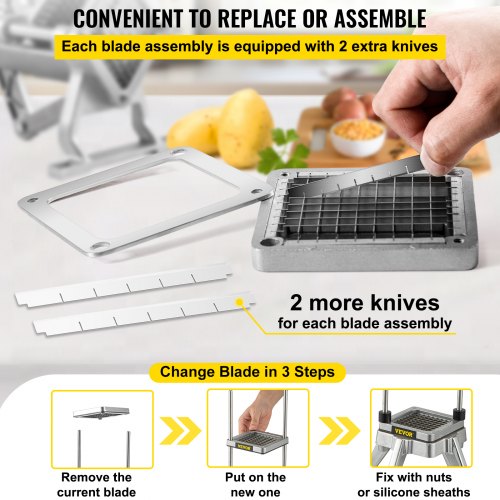
Finally, make sure the blades pop out and are affordable to replace. A fresh edge cuts cleanly. You can lift it out, which speeds up rinsing between loads when the rail is piled. Service the knives and steel with a damp cloth, then apply a little oil to the moving parts from time to time, and a good chopper will keep paying for itself for years.
Shop VEVOR Commercial Vegetable Fruit Choppers
VEVOR offers a complete selection of professional commercial vegetable fruit choppers, including lever fry cutters and Kattex dicers, as well as lemon wedgers, a rotary grater, and an electric potato cutter with a copper motor, all in stainless steel with blades you can change in seconds. You get fast, even cuts and gear that can handle daily service at a price point that works for a food truck or a home kitchen alike. We offer solid after-sales care with every order, so check out the full range today and let the machine do the prep list for you.
FAQs
What can these machines cut besides potatoes?
Quite a bit. They can handle onions, carrots, cucumbers, peppers, tomatoes, mushrooms, apples, lemons, and limes. Or swap the blade for a wedger, dicer, or grater, and one machine can do fries, cubes, wedges, and shreds across the prep sheet.
Manual or electric, which fits me?
Volume is king. A hand lever is quiet, needs no plug, and works well in tiny kitchens. A copper-motor electric potato cutter chops through enormous daily loads at one tap and pays for itself in food trucks and full restaurants.
Which fry blade sizes can I get?
The standard set is 1/4", 3/8", and 1/2", covering thin, classic, and thick fries. Many systems include multiple blades and a 6-wedge insert, and you can buy replacement blade assemblies separately when an edge wears out.
How do I keep the blades sharp and clean?
After use, wipe the blades and stainless steel with a moist cloth. Apply a little lubricant to the moving parts from time to time. When the cuts start to tear rather than slice, replace the blade with a fresh one to keep it cutting cleanly.