Voltage Transformers


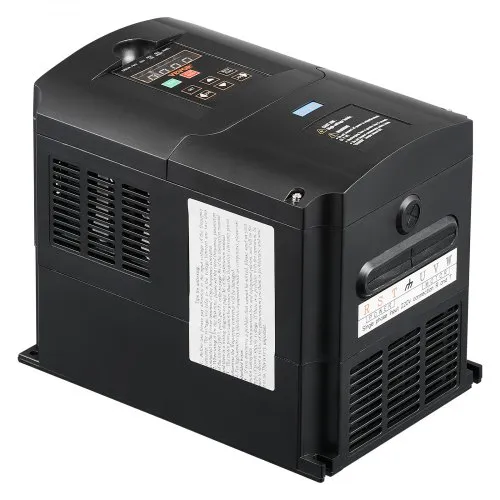


Results for Voltage Transformers
A voltage transformer is an electrical device that changes the voltage of an alternating current supply between its input and output, so equipment built for one voltage standard can run on a supply of another. It works through electromagnetic induction between two windings wound on a shared magnetic core, with no moving parts in the basic design: the ratio of turns between the two windings sets how much the voltage rises or falls. It transfers power at the same frequency rather than generating it, and differs from a plug adapter, which only reshapes the pins and leaves the voltage unchanged.
The range covers four conversion tools. Voltage converter transformers step voltage up or down between 110V and 220V in fixed steps, rated from 500VA to 6000VA, many with dual US and EU outlets, USB and an LCD readout. Variable transformers (Variacs) dial output continuously from 0 to 130V off a 110V input at around 2000VA and 15.3A. Variable frequency drives convert both voltage and frequency from 0.4kW up to 30kW to control AC motor speed, in single and three phase versions. Digital phase shifters convert single phase to three phase from 2HP to 20HP for motors with no three phase supply. Typical uses are running imported appliances abroad, lab and bench testing, workshop motor speed control, and powering three phase machinery from a single phase line.
Four things decide what you need:
- Conversion type: match the tool to the job, a converter for voltage, a drive or phase shifter for motors.
- Capacity: size the VA or kW at least 20 to 30 percent above the load it must carry.
- Direction: choose step down, step up, or a dual unit that switches both ways.
- Phase: single phase suits home and travel, three phase suits shop motors and CNC machines.
Browse the full voltage transformers range to match conversion type and capacity, or step up to the wider power distribution category.
Voltage Transformer Types at a Glance
| Type | What It Converts | Output Control | Phase Support | Best For |
|---|---|---|---|---|
| Voltage converter transformer | Voltage, between fixed 110V and 220V steps | Switches between two fixed voltages | Single phase | Running imported appliances on a foreign voltage standard |
| Variable transformer (Variac) | Voltage, continuously from 0 to 130V | Manual rotary dial | Single phase | Lab testing, burn-in and dimming that need a dialed voltage |
| Variable frequency drive | Voltage and frequency together | Digital parameter panel, programmable | Single or three phase | Adjusting AC motor speed on pumps, fans and CNC spindles |
| Digital phase shifter | Phase count, single phase to three phase | Automatic, digital | Single phase in, three phase out | Driving a three phase motor where only single phase exists |
VEVOR Voltage Transformers for Safe, Efficient Power Conversion at Home and Work
Do you need to protect delicate equipment from power fluctuations or use a 220V appliance on a 110V outlet? The purpose of VEVOR voltage transformers is precisely that. VEVOR provides dependable power solutions for home, travel, and commercial applications, ranging from single-phase step-up/step-down units to variable frequency drives for motor control.
Understanding Transformer Types & Voltage Conversion Options
Knowing the sort of conversion your equipment requires is the first step in selecting the appropriate voltage transformer. Every major transformer type is available in VEVOR's inventory, making it easy to match the right equipment to your power needs.
Step Up vs Step Down Voltage Transformers
The most popular power conversion devices for both home and travel use are step-up and step-down voltage transformers. While a step-down transformer lowers voltage in the opposite direction, a step-up transformer raises it, such as from 110V to 220V. When utilizing imported equipment made for a different power grid standard, these voltage transformers are crucial.
Dual-function VEVOR step-up/step-down voltage converter transformers enable users to switch between conversion directions based on the task at hand. Expatriates, foreign business travelers, and anyone who frequently works with appliances sourced from other nations may find this flexibility very helpful.
When looking for step-up or step-down units, look for versions rated with copper windings, toroidal core design, and automatic thermal protection. These requirements shield linked devices from voltage spikes and lessen heat accumulation during prolonged operation. This group of VEVOR units, which range in power from 500W to 5000W, may power everything from small devices to large kitchen appliances, power tools, or medical equipment.
Variable Transformer (Variac) for Adjustable Output
Instead of alternating between two fixed values, a variable transformer, also known as a Variac, enables you to dial in a precise output voltage manually. Because of this, variable transformers are ideal for applications that require precise voltage control, such as lab testing, equipment burn-in procedures, and lighting dimming.
With a rotating control knob and a continuous autotransformer winding, VEVOR variable transformers allow output adjustment from 0V to 130% of the input voltage. This implies that a device with a 120V input could provide an output of up to 156V, which is helpful in some industrial testing situations.
The current rating in amps, the dial graduation for fine control, and the housing's enclosed or open-frame design are important factors to consider. Dusty workshop settings are better suited for enclosed models. When direct access to the core is occasionally required, open-frame variable transformers are more frequently used in lab or electronics workbench situations. Both types are available in VEVOR's range, with wattage ratings ranging from 500W to 2000W to suit light and heavy-duty applications.
Digital Phase Shifter for Advanced Power Management
In applications such as motor speed control, power factor correction, and RF signal processing, a digital phase shifter modifies the phase angle of an AC signal. A digital phase shifter is a more complex instrument than a straightforward voltage transformer since it modifies the time of the AC waveform itself.
With digital readouts and fine-increment phase changes, VEVOR digital phase shifters are made for accuracy. Power electronics testing, industrial automation, and audio engineering all frequently employ these machines. Analog dials cannot consistently produce repeatable, accurate settings, while the digital interface does.
When choosing a digital phase shifter, consider the maximum load it can handle, the frequency range it supports, and the phase adjustment resolution (measured in degrees). The majority of North American and European electrical systems are compatible with VEVOR models, as they typically accept single-phase input and conventional 50Hz/60Hz power frequencies. For comprehensive diagnostic procedures, these instruments work well with oscilloscopes and signal analyzers.
Variable Frequency Drive for Motor Control Applications
To regulate the speed of AC induction motors, a variable-frequency drive (VFD) converts voltage and frequency; it is not a transformer in the conventional sense. VFDs are widely used in HVAC systems, conveyor belts, pumps, and CNC machines, anywhere accurate motor speed control enhances process control or energy efficiency. By converting fixed-frequency AC power into a variable-frequency output, VEVOR variable-frequency drives enable motor RPM adjustment without mechanical gearing. This feature minimizes energy consumption during partial-load operation, reduces mechanical wear, and enables soft-start capabilities, which shield motors from inrush current damage at startup.
VEVOR VFDs have output ratings between 0.4kW and 7.5kW and come in single-phase and three-phase input versions. LCD parameter displays, RS485 communication ports for industrial integration, integrated PID control, and overload protection are among the features to search for. These drives are an affordable solution for updating existing industrial equipment without completely replacing the motor, as they work with typical squirrel-cage induction motors.
Choosing a Voltage Transformer by Use
Different jobs call for a different conversion tool. Use the table below to match your situation to the right pick and the single factor that matters most for it.
| Use Case | Priority Pick | Key Consideration | Why It Fits |
|---|---|---|---|
| Imported appliance on a foreign outlet | Dual step up/down converter, 500VA to 2000VA | Direction | Switches both ways so one unit covers 110V and 220V equipment |
| Motor-driven appliance such as a treadmill | Converter sized 3x the rated wattage, up to 6000VA | Headroom | Oversizing absorbs the startup inrush that trips a tight unit |
| Bench testing and burn-in | Variable transformer (Variac) | Fine control | A continuous dial sets any voltage from 0 to 130V on demand |
| Shop motor speed control | Variable frequency drive, 0.4kW to 30kW | Frequency | Varying frequency changes RPM without mechanical gearing or wear |
| Three phase motor on a single phase line | Digital phase shifter, 2HP to 20HP | Horsepower | Generates the third phase so the motor runs where none is wired |
Matching Wattage Capacity & Key Features to Your Needs
Your voltage transformer's long term reliability will depend on your choice of wattage and your understanding of the attributes important to your use case. Oversizing a unit adds needless expense, whereas undersizing a unit causes overheating and failure. Finding the ideal capacity and features is simple with VEVOR's portfolio.
How to Calculate the Right Wattage for Your Transformer
When buying a voltage transformer, matching wattage capacity is the most crucial step. A rated wattage is printed on the label or in the user manual of every electrical item. Generally speaking, you should choose a transformer that is at least 20–30% larger than the maximum wattage of the item it powers.
For instance, select a voltage converter transformer rated at least 1500W if you are powering a 1000W treadmill. Additional headroom is crucial for motor driven appliances, such as air conditioners, refrigerators, and power tools, which frequently draw three to seven times their rated watts at startup due to inrush current.
VEVOR voltage transformers come in clearly marked wattage categories, with the most popular being 500W, 1000W, 1500W, 2000W, 3000W, and 5000W. Selecting the appropriate tier extends the transformer's operational life, prevents heat shutdowns, and protects your connected equipment from undervoltage. Always compare the peak and continuous duty ratings, VEVOR product listings make this distinction quite evident.
Essential Features That Improve Safety and Usability
Beyond wattage, a voltage transformer's features dictate how conveniently and safely it fits into your everyday routine. VEVOR voltage transformers offer several useful and safe features that should be considered before purchase. To safeguard the transformer and any connected devices from harm, automatic thermal protection turns off the unit if internal temperatures exceed acceptable limits. Circuit breakers and fuses protect against overloads and short circuits. When using earthed appliances, grounded three prong outlet configurations guarantee safe functioning.
Real-time output voltage monitoring is enabled by display features such as LED voltage meters or digital readout panels, which are especially helpful in variable transformer models. For frequent use, on/off power switches with indication lights provide convenience. While carrying handles or wall-mount compatibility increase location options, a sturdy, small housing with rubber feet keeps it from slipping on workbenches.
Higher-capacity VEVOR models are suitable for production lines or fixed workshops, as they feature terminal block connectors for hardwired installation. VEVOR's voltage transformers are made with important practical features in mind, whether you need a permanent installation for a commercial area or a portable unit for travel.
Best-Seller Comparison
Here is how the five most popular products on this page compare side by side.
| Product | Type | Capacity | Direction | Outlets | Display | Best For |
|---|---|---|---|---|---|---|
| 3000VA Step Down Converter | Converter transformer | 3000VA | Step down, 220V to 110V | 2 US, USB | LCD | Dedicated step down for running US 110V gear abroad |
| 5000W Step Up/Down Converter | Converter transformer | 5000W | Step up and down, 110V and 220V | US, EU, 5V USB | LEDs | Highest capacity here; large appliances in either direction |
| 2000VA Step Down Converter | Converter transformer | 2000VA | Step down, 220V to 110V | 2 US, USB | LCD | Lowest capacity of the five; smaller 110V appliances |
| 3000VA Step Up Converter | Converter transformer | 3000VA | Step up, 110V to 220V | 2 EU, USB | LCD | Only step up only unit here; 220V EU gear on a 110V supply |
| 500VA Step Up/Down Converter | Converter transformer | 500VA | Step up and down, 110V and 220V | US, EU | / | Smallest and most portable; low-wattage travel devices |
Why Choose VEVOR Voltage Transformers?
From small 500W travel units to large 5000W industrial grade models, VEVOR voltage transformers provide dependable power conversion on all scales. VEVOR offers competitively priced solutions for all power requirements, including variable transformers, digital phase shifters, voltage converter transformers, and variable frequency drives. VEVOR is the wise option for safe, effective power management, supported by solid after-sales service and quality-tested components. Explore the entire selection and make a purchase now.
FAQs
Can I use a VEVOR voltage transformer with motor driven appliances, such as treadmills or refrigerators?
Yes, but pick a transformer that is at least three times as powerful as the appliance's stated wattage. When they first start up, motor-driven gadgets might overload an undersized unit due to their high inrush current. For these uses, VEVOR has heavy-duty variants up to 5000W.
What is the difference between a voltage converter transformer and a variable transformer?
A voltage converter transformer alternates between two fixed voltages, such as 110V and 220V. A variable transformer provides greater accuracy for testing, dimming, or calibration by allowing you to adjust the output voltage within its range.
Are VEVOR voltage transformers suitable for continuous 24/7 operation?
The majority of VEVOR types are rated for continuous duty use; however, the duty cycle rating can be found in the product specifications. Compared to low-cost aluminum-wound alternatives, units with copper windings and thermal protection can withstand prolonged operation.
What does a variable frequency drive do differently from a standard voltage transformer?
To vary the speed of an AC motor, a variable-frequency drive regulates both the voltage and the frequency output. It does more than merely convert voltage; in motor-driven industrial equipment, it enables accurate RPM control, soft-start prevention, and energy savings.
Will a transformer work with DC voltage?
No. A transformer relies on a changing magnetic field, which only alternating current produces, so steady DC passes no power through it and can overheat the winding. For DC, use a variable frequency drive or converter built for that input instead.
What should I consider when choosing a voltage converter for international travel?
Check the destination voltage, whether you need step up or step down, and the total wattage of your devices. A dual direction unit with both US and EU outlets covers most trips. Size it above your highest-draw appliance.
Are there any safety tips for using voltage step-down transformers?
Keep the unit ventilated, never exceed its rated capacity, and confirm the output matches your appliance before plugging in. Choose a model with circuit breaker and thermal protection, and unplug it when not in use. Grounded converter transformers add further safety.
How do high voltage transformers differ from regular transformers?
High voltage transformers handle far larger voltage differences and need heavier insulation, cooling, and clearances, so they belong to grid and industrial systems. The units in this category are low voltage consumer and workshop transformers for 110V and 220V appliances, not grid-level equipment.
How many low voltage lights per transformer?
Add up the wattage of every fixture and keep the total under about 80 percent of the transformer's rating. A 300W unit, for example, safely runs around 240W of lighting. Low voltage landscape lighting is outside this category, which covers appliance and motor conversion.
Can a transformer be used to step up DC voltage?
No. A standard transformer only changes AC voltage, because its operation depends on a varying magnetic field that DC does not create. Stepping DC up requires a different circuit such as a boost converter, not a transformer.