Bench Metal Lathe
























Results for Bench Metal Lathe
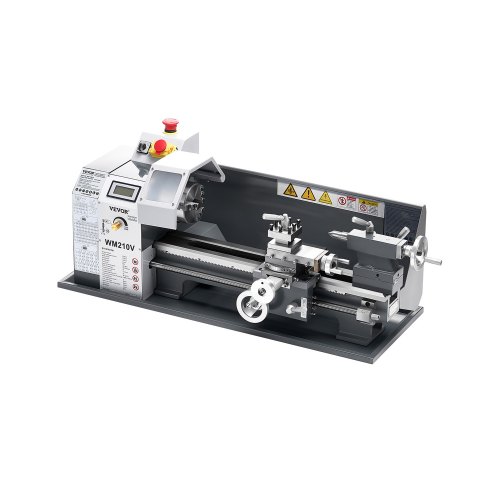
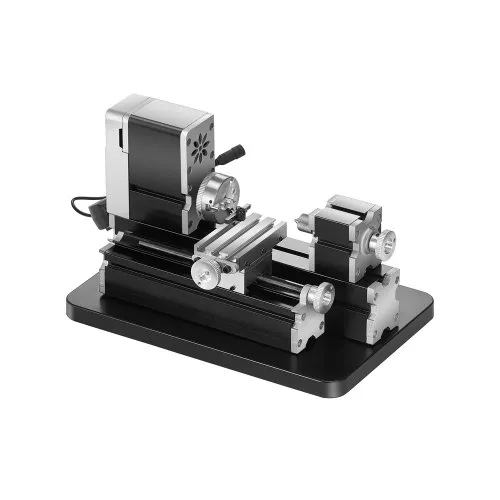
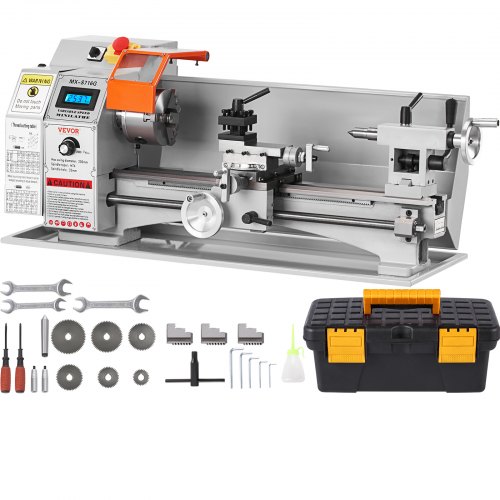
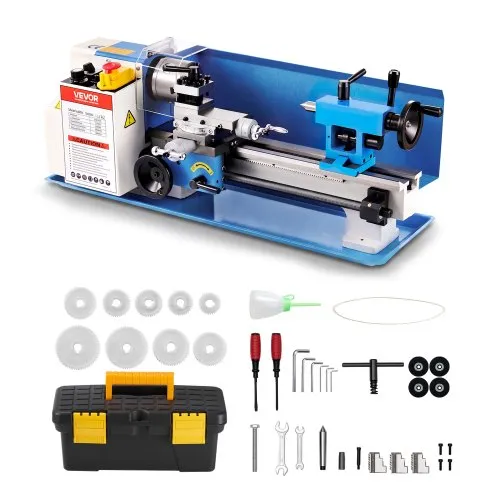
VEVOR offers a wide selection of bench metal lathes for hobbyists, machinists, and pros working in small shops. In VEVOR's benchtop metal lathes, you can find models ranging from 7x12 inches, which are great for learning and light turning, to 8.7x39 inches, which are big enough for serious production work. All of these models offer precision, variable speed control, and long-lasting construction at reasonable prices. You can find a metal bench lathe in this range that is perfect for your task, whether you need to thread, face, or turn complicated parts.
VEVOR Bench Metal Lathes – Variable Speed, Multi-Size Machines for Home Shops and Professional Metalworking
Want an accurate, dependable bench metal lathe that fits your space and workload without the high cost of an industrial floor machine? A benchtop metal lathe is small enough to fit in a home garage, small machine shop, or technical workshop, but it can perform real machining work. When you bolt VEVOR's bench metal lathes to a workbench, you can get professional-level accuracy from motors with variable speeds, metal gear drives, and cast iron beds.
Lathe Size & Application — Choosing the Right VEVOR Bench Metal Lathe
Any bench metal lathe has two main specs: the swing width and the bed length. Bed length and swing determine how big a piece of work the lathe can turn over the bed. VEVOR's bench metal lathes come in a lot of different sizes, from small models for teaching to heavy-duty 8.7x39-inch production machines, so you can find the right one for your needs.
Small Bench Metal Lathes – 7x12 and 7x14 Inch Models for Hobbyists and Beginners
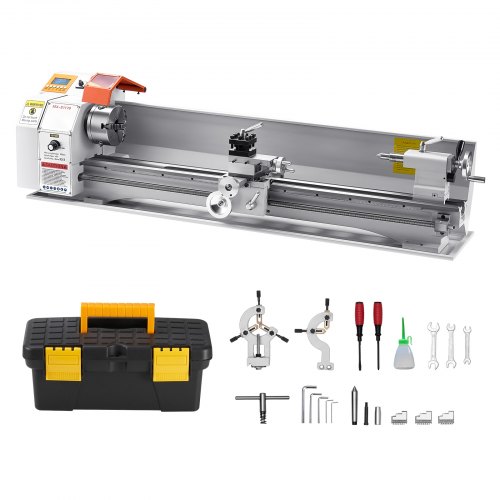
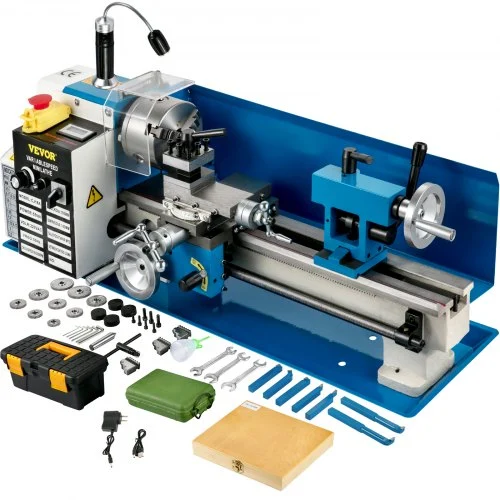
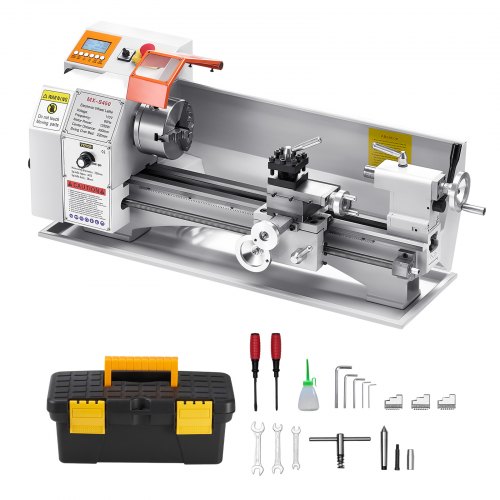
In the 7x12 and 7x14-inch classes, you can start doing real metalworking on a bench. The VEVOR 7x12-inch 550W metal bench lathe features a cast-iron bed that does not wear down easily, a speed range of 50–2500 RPM, a movable work lamp, and nylon gears that make the machine quieter during operation. Hobbyists who like to turn small shafts, bushings, pins, and fittings will find this size useful. These are the kinds of precise parts that are common in model engineering, firearm repair, and jewelry repair.
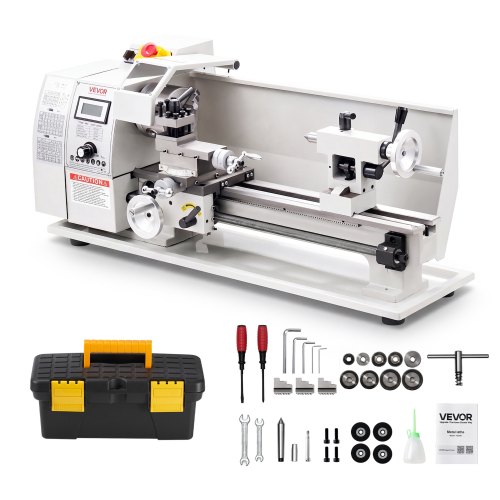
The 7x14-inch compact metal lathe has a bed that is two inches longer than the 7x12-inch model. This is enough to fit slightly longer workpieces without needing a bigger machine. This model is one of VEVOR's most popular for home shop owners who need a reliable, easy-to-use metal lathe machine for occasional to regular turning jobs. It has a 550W motor, a digital speed display, and a 3-jaw chuck. The 7x14 model with 800W power and a 150-2500 RPM range increases the motor's output for harder materials and more demanding turning cycles, while still fitting on most workshop benches.
Mid-Size Bench Metal Lathes – 7x16 and 8x14 Inch Models for Intermediate Machinists
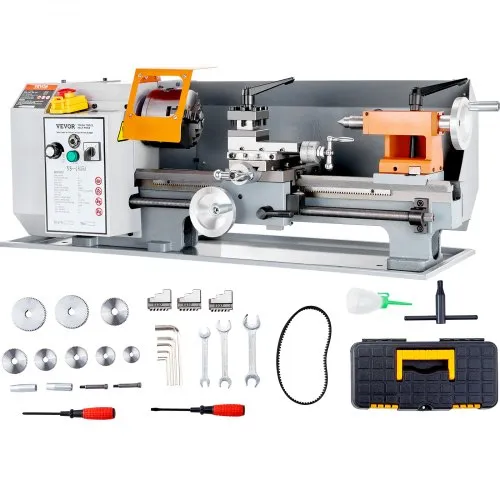
The 7x16-inch and 8x14-inch classes are where mid-size metalworking becomes more capable. The VEVOR's 8x14-inch 650W metal lathe machine has a full 8-inch swing, which is enough room to turn most standard shaft and flange diameters found in car, bike, and light industrial repair work. The 2250 RPM speed range can be used for both slow, high-torque turning of steel and fast, fine-finish passes on aluminum and brass without changing pulley settings.
The 8x16-inch benchtop metal lathe offers 0.0003-inch spindle accuracy, with a spindle accuracy of 0.0003 inches. For parts that require very precise sizes, such as bearing journals, precision bushings, and threaded parts that must fit and function properly, the 0.0003-inch spindle runout standard is very important. For machinists who work with different standards, this type is useful because it can cut threads in both imperial and metric sizes. The metal gear drive keeps the thread straight at all speeds because it does not have the slip or distortion that plastic gear trains experience under load.
Large Bench Metal Lathes – 8.7x18 to 8.7x39 Inch Models for Advanced Metalworking
Large-format benchtop metal lathes from VEVOR are between small metal lathes and full-size industrial equipment that stands on its own. With the 8.7x18-inch model with 1250W brushless motor and automatic feed, the surface finish is much more consistent over long turns because the manual handwheel feeding is no longer needed. When cutting heavy materials from mild steel, stainless steel, or cast iron, a brushless motor is very important because it maintains strong torque at low RPM.
The 8.7x39-inch 1250W automatic feed bench metal lathe is VEVOR's most powerful
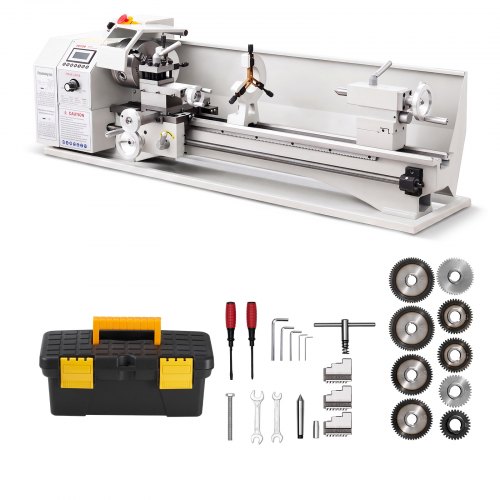
workbench machine. In terms of bed length and work capacity, it can compete with entry-level floor lathes. Smaller bench lathes cannot do long shaft turning, lead screw threading, or extended face turning, but this one can because the centers are 39 inches apart. This model is among the most capable bench metal lathes for small professional shops, prototype facilities, and serious advanced amateurs who need production-level capabilities but do not want to buy a full-size floor machine.
Features & Capacity — Key Specs That Define VEVOR Bench Metal Lathes
The features of a benchtop metal lathe, besides its size, determine how well it cuts, how safely it operates, and how many types of materials and tasks it can handle. Bench metal lathes from VEVOR always come with cast-iron beds, variable-speed motors, metal gear drives, and 3-jaw chucks. These features make the machine suitable for serious work.
Variable Speed Control & Motor Types – From Brush to Brushless
Using a high spindle speed for smooth finish cuts on metal and a low speed with high torque for deep stock removal are two very different tasks that need very different spindle speeds. The base models from VEVOR have brushed DC motors that can adjust speed continuously, ranging from 50 to 2500 RPM. The 7x12-inch model has a top speed of 2250 RPM, which is good for most non-ferrous materials and general steel turning.
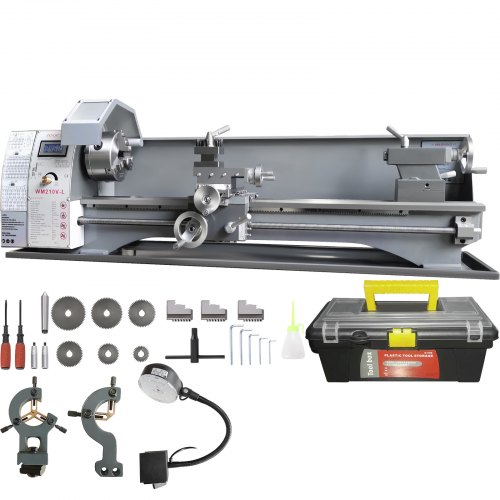
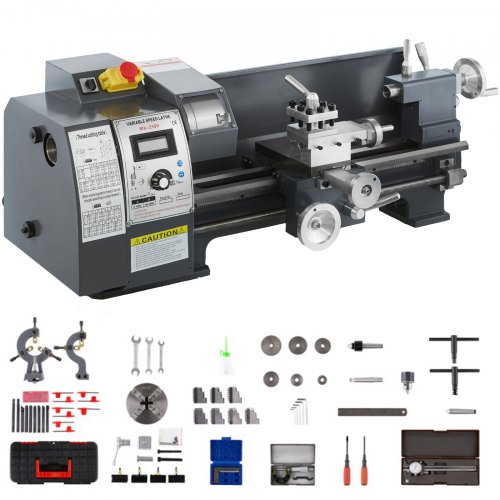
The middle- and high-end VEVOR models have brushless motors, which are more capable than brushed motors. Because there is no carbon brush wear, brushless motors have a much longer service life and produce more power at low RPM. They also run cooler under constant load. The 8.3x29.5-inch model with 750W brushless motor and the 210x720mm 750W brushless model offers a strong balance of power, efficiency, and longevity in VEVOR's benchtop metal lathe range. The switch to a brushless motor is a smart, long-term investment for machinists who use their metal lathe for extended periods.
Chuck, Gearbox & Build Specs – What Separates Precision Machines from Basic Turners
VEVOR bench metal lathes come with a 3-jaw chuck as standard equipment. The diameter of the chuck changes by model, going from 3.9 inches on smaller machines to 4 inches on mid-size ones. A wider chuck jaw range lets you use larger-diameter workpieces without having to buy a new chuck. With VEVOR's chucks, you can be sure that the concentricity will stay the same even after repeated tightening cycles. This is important for precision turning, where repeatable centering is important.
The type of gear drive is also very important. The entry-level VEVOR models have nylon gears, which are quieter and require less lubrication but cannot handle as much power. Benchtop metal lathes in the middle and upper price ranges use all-metal gear drives. The 7.87x13.78-inch model has metal gears and a 600W brushed motor, while the 7x13.78-inch 500W metal-gear model can handle higher cutting forces without gear bending or loss of accuracy from wear. All VEVOR metal lathes have a cast-iron bed that absorbs vibrations during cutting. This maintains the quality of the surface finish and the accuracy of the dimensions even after long turning sessions.
Why Choose VEVOR Bench Metal Lathes?
Bench metal lathes from VEVOR come in a wide range of sizes, from 2.76x5.12-inch models for teaching to 8.7x39-inch machines for production-level work. With brushless motors, metal gear drives, automatic feed options, and variable speed control across the lineup, there is a model for every metalworker. VEVOR is a good choice for both home shops and small professional workshops because it offers reasonable prices and good post-sale customer service. Browse the full lineup now.
FAQs
What size bench metal lathe do I need for home shop use?
A 7x12 or 7x14-inch compact metal lathe handles most hobby and light repair tasks — turning bushings, pins, shafts, and small fittings. If you regularly work with longer workpieces or harder materials, step up to a 7x16-inch or 8x14-inch model.
What is the difference between a brush and a brushless motor on a metal lathe machine?
Brushless motors run cooler, last longer, and deliver higher sustained torque at low RPM, making them better suited for continuous use and heavy cuts in steel or stainless steel. Brush motors are more affordable and perform well for lighter, intermittent turning tasks.
Can VEVOR benchtop metal lathes cut threads?
Yes. Most VEVOR metal bench lathe models support both imperial and metric thread cutting via the change gear system. Select models, particularly the 8x16-inch precision machine, offer direct thread engagement with metal gears for consistent, accurate thread profiles.
What is spindle accuracy, and why does it matter?
Spindle accuracy (runout) measures how precisely the spindle rotates around its true center. VEVOR's 8x16-inch model specifies 0.0003-inch runout, critical for bearing journals, precision shafts, and any part where dimensional tolerance affects fit or function.
Is a cast-iron bed important on a benchtop metal lathe?
Yes. Cast iron absorbs vibration during cutting, which improves surface finish and dimensional accuracy. All VEVOR bench metal lathes use cast-iron beds, making them significantly more rigid and accurate than machines built on aluminum or welded-steel frames.