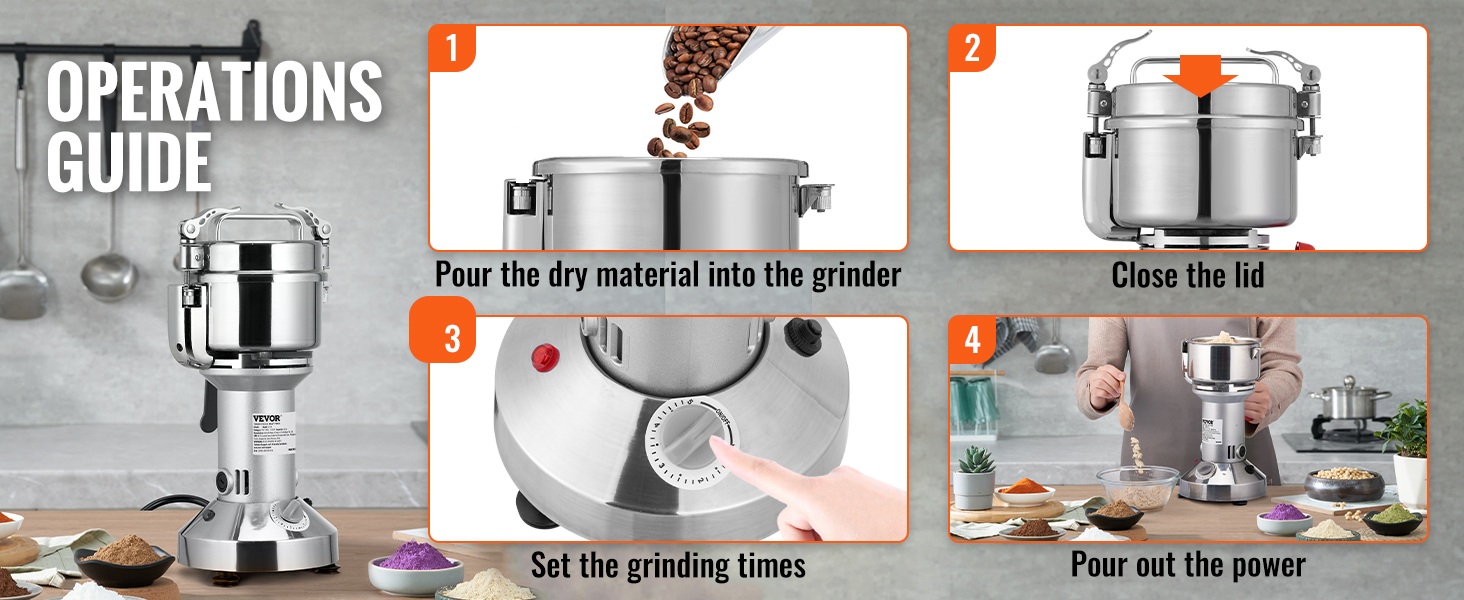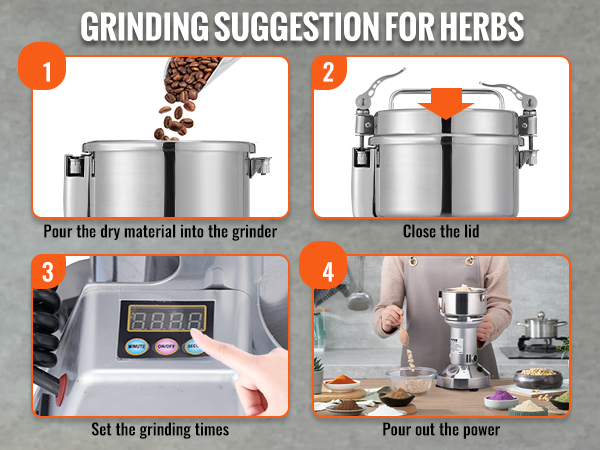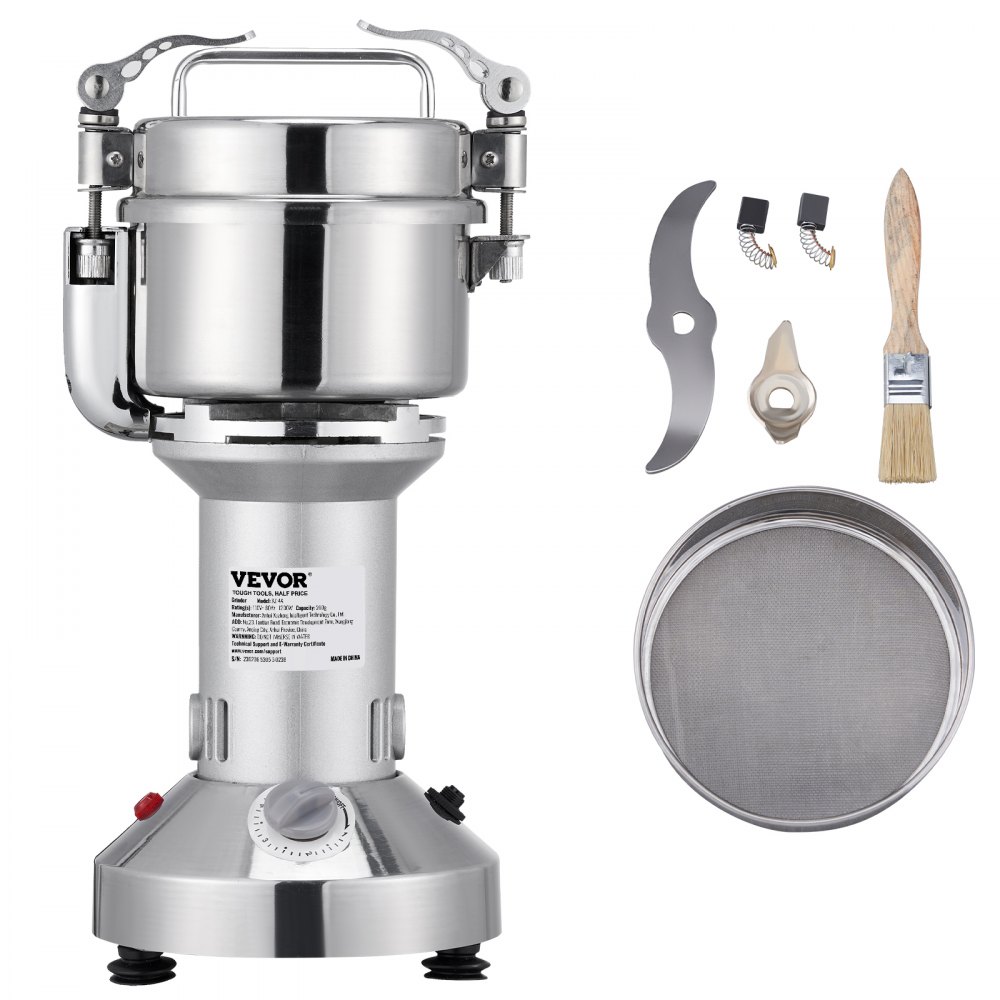



A: This machine can work continuously for 5 minutes, then rest it for 5–10 minutes.
A: It can deal with various dried materials, including grains, spices, and herbs. Not suitable for wet, fresh, oily, or sticky materials.

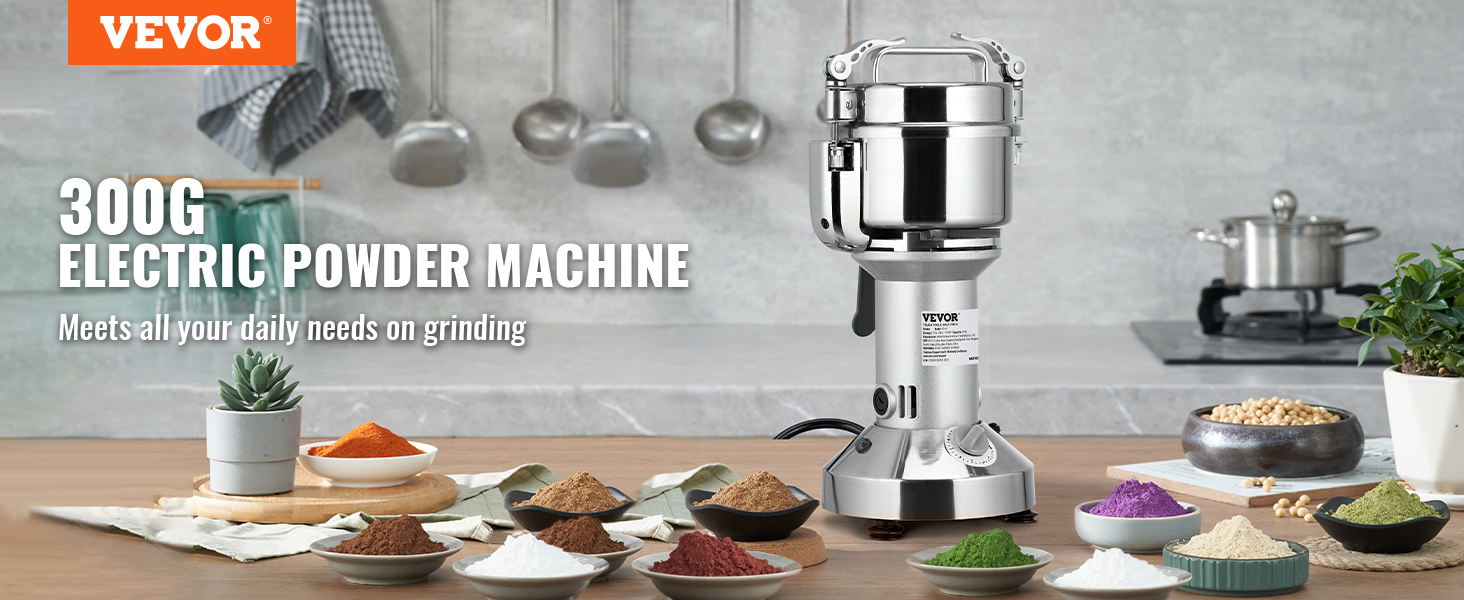
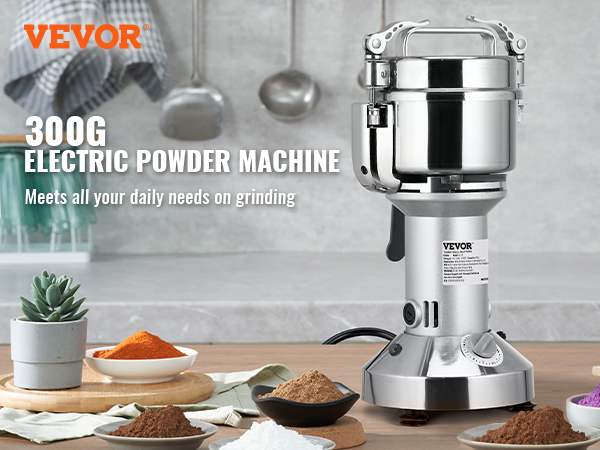
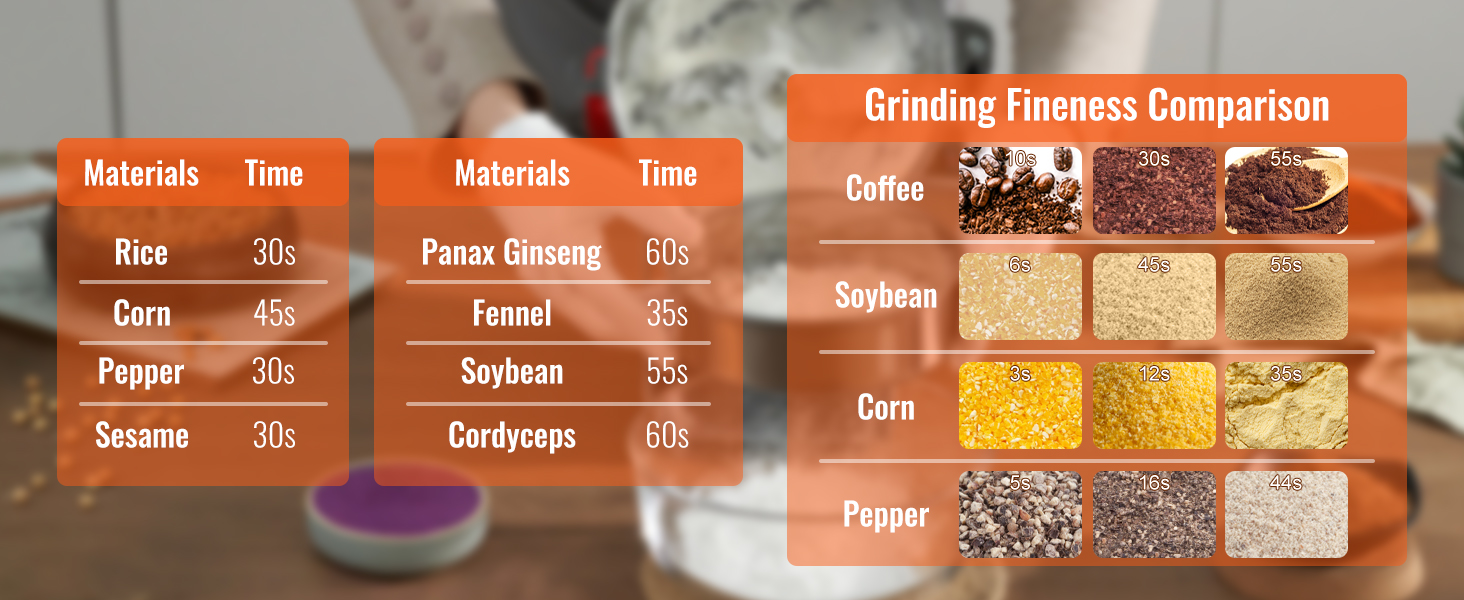
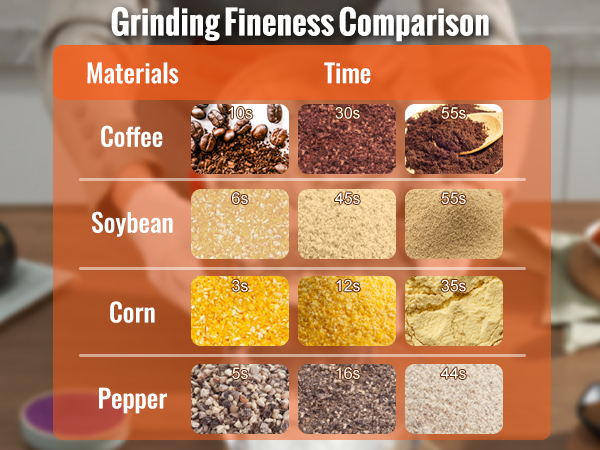
Grinding dry spices into a fine, consistent powder often means running a blade for way longer than you need to, but this commercial spice grinder is built around a three-layer blade system specifically designed to cut that time down. The dehydrated material then passes through a crushing blade, a horn blade, and a powder removal blade, each processing a different stage, so that the material is broken down into a fine powder in as little as 30 seconds, instead of several minutes with repeated passes through a single blade.
That layered-blade approach is most important for tougher ingredients like cinnamon bark or dried rosemary stems, which don’t break down evenly with a single flat blade doing all the work. If you pass your ingredients through three different cutting stages in one shot, you will achieve a more uniform result than if you pulse a basic grinder until the texture looks approximately right and hope for the best through the whole batch.
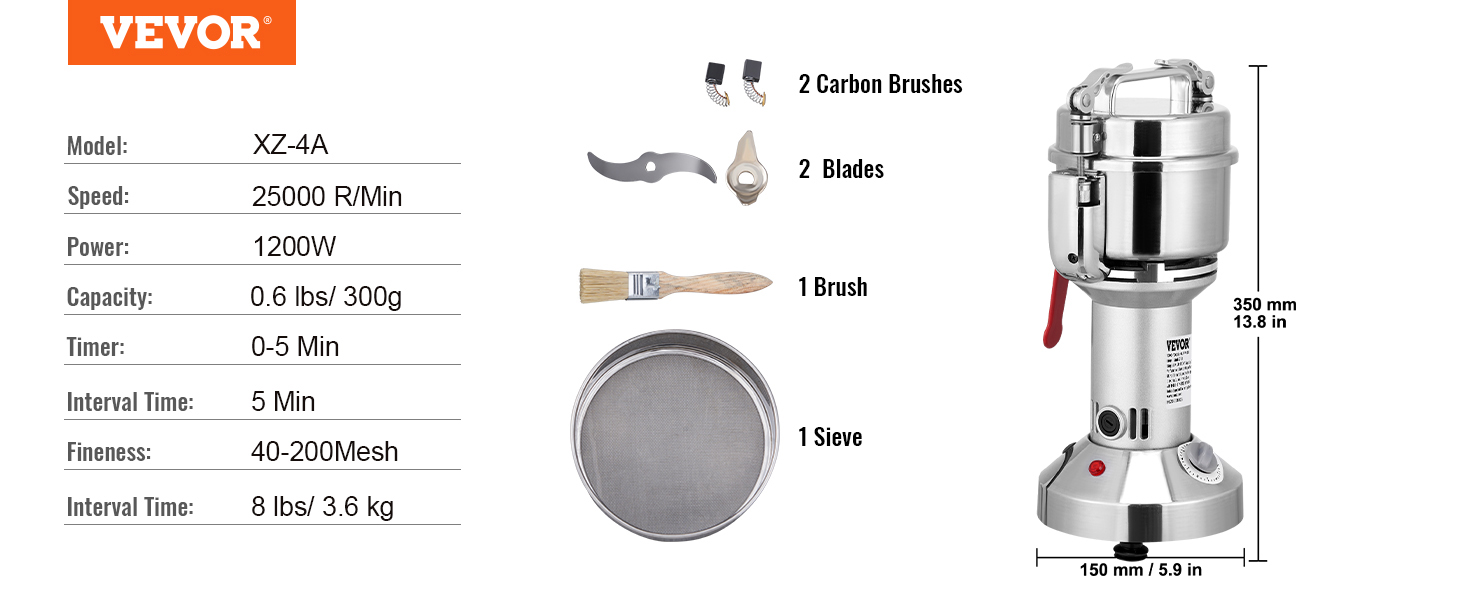
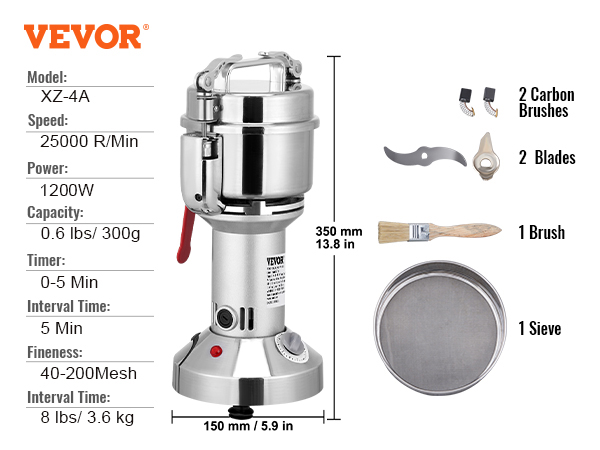
This commercial spice grinder has a 25000 RPM motor, 1900W load power, and 1200W rated power, so it offers plenty of speed to achieve superfine mill consistency. You can adjust the fineness between 40 and 200 mesh depending on what you are processing at the time. The range is from a coarse cracked grain to a fine powder, suitable for spice blends or herbal preparations that require a very fine texture to work properly.
The speed at which that fineness can be achieved also prevents the jar from overheating during grinding, which is key to maintaining the flavor and potency of spices that lose their kick if overheated during a long, slow grind. In the end, a fast, high-speed pass will generally give better results than a slower grind that takes longer to reach the same particle size, while sacrificing flavor along the way.
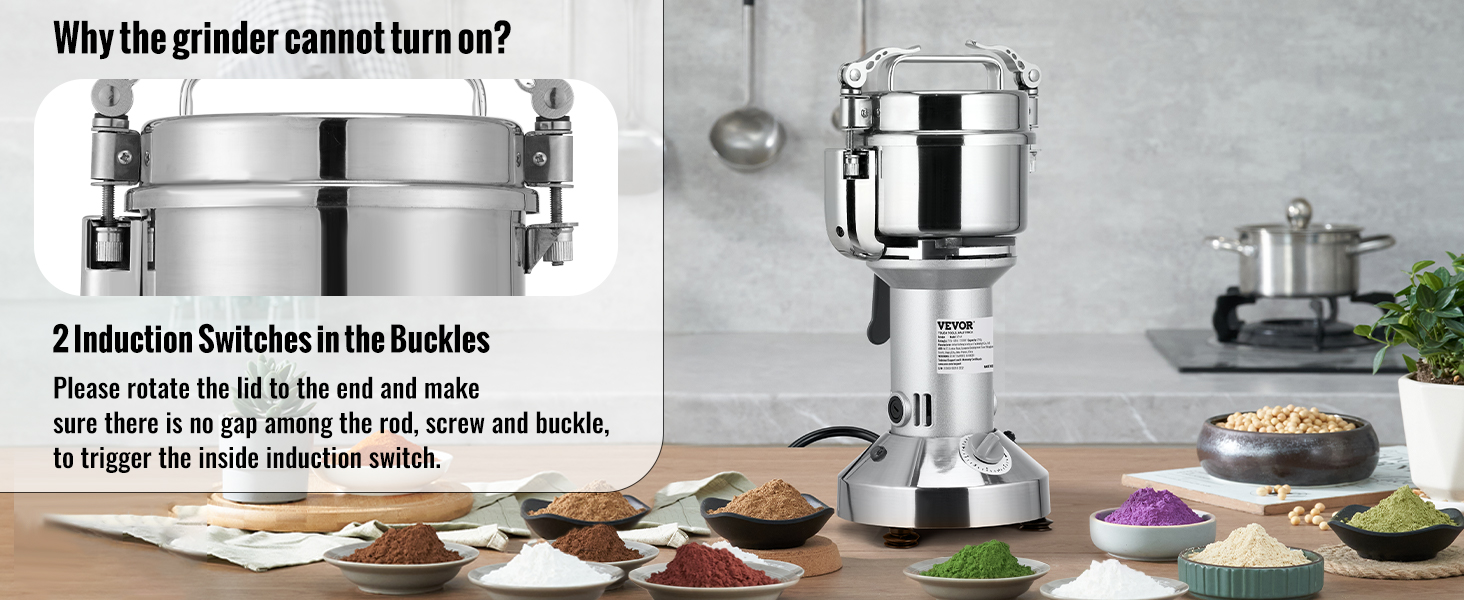
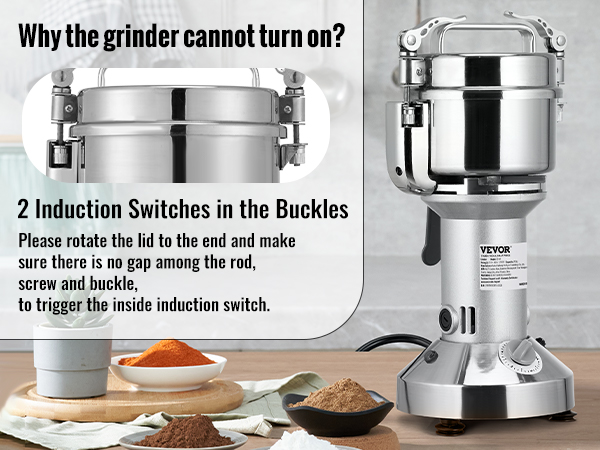
This unit is made of food-grade stainless steel, which helps prevent contamination that can occur when lower-grade materials come into direct contact with food during grinding, and this is important for anything a customer or family member will eventually eat. The lid is secured with a buckle structure for durability and security, keeping the ground material in place and preventing it from flying out around the edges when operating at high speed.
Instead of assuming that each cycle has to produce a perfect grind the first time every time, you can sieve out coarse particles and run them through again to get a finer result if a first pass doesn't get you to the texture you are looking for. That flexibility is important for ingredients with mixed textures, like whole peppercorns or dried herb stems, which don’t always break down at a uniform rate on the first pass through the blades.
Two safety features help protect against the most common hazards with a high-speed grinder: the unit will cut off automatically if the lid is lifted during a cycle, and the overload protector will trip if the motor draws more current than it should during operation under heavy load or if a blade jams. The two systems together address both accidental opening and mechanical strain problems before either becomes a real hazard to a nearby user.
Such multi-layered protection is especially important in a busy kitchen or processing environment, where the grinder may be used several times during a shift, compared to once or twice at home for a single recipe. Built-in safeguards reduce the risk of injury or motor damage without requiring the operator to monitor every cycle for potential problems during operation.
The 0- to 5-minute timer lets you directly control the length of each grinding cycle, which is critical because different materials require varying processing times to achieve a consistent texture without over-processing or burning the batch. The timer, along with a required 5- to 10-minute rest interval between cycles, helps prevent the motor from overheating during repeated back-to-back use over the course of a longer processing session in a busy setting.
That rest interval will invariably extend the motor's useful life, especially when the grinder runs several consecutive cycles rather than just one batch, sometimes over the course of a day. By considering the timer and rest interval as a working pair, instead of overlooking the suggested downtime, this commercial spice grinder operates reliably for many more sessions without early wear.
This unit is capable of processing a wide range of dry materials, from grains such as soy, corn, barley, wheat, oats, rye, peas, and coffee beans to spices such as fennel, pepper, cinnamon, and rosemary, all of which require a fine, even process. Harder herbs should be chopped first, but otherwise the unit will handle most dry, low oil ingredients without needing a different tool for each one.
This commercial spice grinder is meant to be used only for dry materials, not wet, fresh, oily, or sticky ingredients, which can clog the blades or damage the lid seal over time. But in that dry-material range, it hits home kitchens, small processing operations, and even pharmaceutical processing environments that need consistent, fine results from a single reliable machine.